
 Buy & Sell
 All EV Sales
 Explore
 Account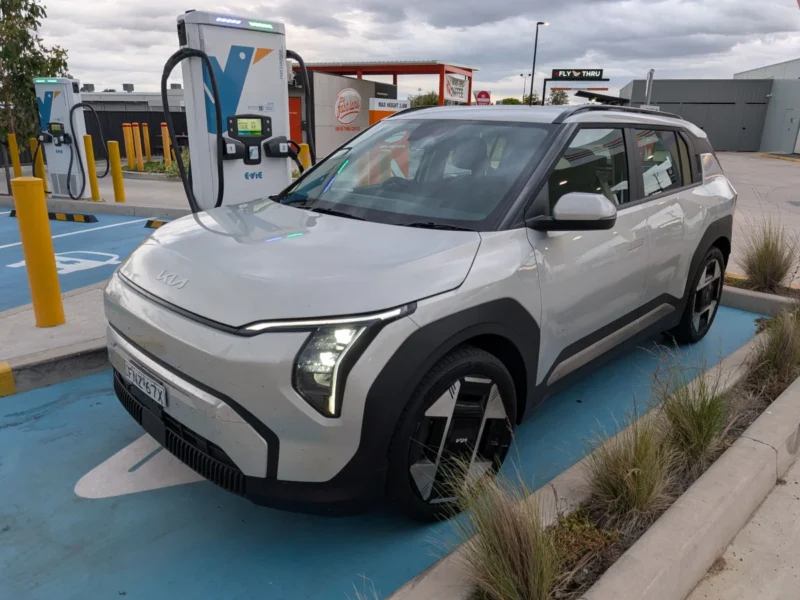
The global electric vehicle (EV) sector continues to accelerate into 2025 with a combination of breakthroughs in affordability, government policy, advanced driver-assistance technology, and supporting infrastructure. The latest set of announcements from across the world — from budget-friendly compact cars to high-profile technology demonstrations — paints a vivid picture of how fast the industry is evolving. The news underscores that electric mobility is no longer niche territory; it’s a broad movement reshaping transportation policy, manufacturing priorities, and consumer expectations worldwide.
Affordable EVs reach critical markets
One of the most eye-catching developments is Geely’s push into key right-hand-drive markets with the Geely EX2 electric hatchback, starting at under $A20,000. The sharp pricing strategy signals that the Chinese automaker is focusing on accessibility and volume rather than luxury appeal. Bringing a fully electric small car to emerging mass-market regions could mark a turning point for affordability — traditionally one of the largest barriers to EV adoption. As manufacturing efficiencies improve, the EV market is beginning to mirror the competitive dynamics of the early internal combustion era, where price and practicality dictated mass uptake.
Germany has also taken steps to ensure affordability remains at the center of the transition. The German government approved a €3 billion subsidy scheme aimed at lowering the cost of electric mobility for low- and middle-income households. By targeting social groups most affected by the high initial cost of EVs, this policy strengthens the social sustainability of the country’s emissions reduction efforts while stimulating domestic demand. Combined with similar initiatives at the European and municipal level, it reinforces Europe’s ambition to lead not only in high-end EV tech but also in equitable access to clean transport.
Tesla sharpens its software and global presence
Tesla remains a major driver of both technological innovation and market momentum in the EV industry. Several recent announcements show the company’s intensified rollout strategy on multiple fronts. The long-anticipated Full Self-Driving (FSD) Supervised system has landed in Europe, although currently only for passenger demonstration rides. This limited deployment allows Tesla to showcase the capability of its latest supervised autonomous functions while staying aligned with regional safety regulations.
Complementing the demonstration rollout, Tesla will offer a free 30-day trial of FSD Supervised in key markets. The trial, aimed at converting curiosity into confidence, invites hundreds of thousands of Tesla owners to experience its driver-assistance technology. This approach resembles the software industry’s adoption funnel — enticing customers through direct experience rather than up-front purchase. Analysts see this as a clever lever to generate more recurring revenue through software subscriptions.
Meanwhile, Tesla continues to extend its physical product footprint. The Cybertruck has begun deliveries outside North America, a milestone that redefines the company’s production logistics and global reach. The first customers in Asia are receiving their vehicles, with speculation mounting about future deliveries to Australia and beyond. The expansion underlines the pickup’s global appeal and Tesla’s readiness to ship complex vehicles across regions — a logistical achievement in its own right.
Competitive price adjustments and refreshed line-ups
China’s Xpeng Motors joined the headlines by introducing new incentives on its G6 electric SUV, including cashback offers of up to $5,000. This move reflects strategic price competition as brands prepare for new model year releases. Incentive programs are often signals of both healthy inventory management and an increasingly crowded marketplace. By clearing 2025 stock ahead of anticipated upgrades, Xpeng shows flexibility — an essential quality in an industry where new powertrain technologies, infotainment systems, and battery chemistries evolve at breakneck speed.
New entries and reviews highlight expanding consumer choice
At the same time, automakers like Kia are demonstrating that compact EVs can offer serious performance and practicality. The new Kia EV3 Earth has drawn attention for its impressive range and roomy cargo space within a compact footprint. Early reviews emphasize not only its efficiency but also usability — signs that mainstream manufacturers are finding the balance between innovation and everyday convenience. Such models make EV ownership increasingly approachable for traditional car buyers transitioning from fuel engines.
Battery chemistry and supply chain strategies diversify
The steady growth of sodium-ion battery research also took the spotlight, with Sinopec and LG Chem agreeing to collaborate on new sodium-based materials. This partnership aims to support both low-speed electric vehicles and grid storage solutions. Sodium-ion batteries promise lower cost and improved safety, if not yet the energy density of lithium-ion. Progress in this area suggests a broadening of the technological base underpinning electrification. It’s a reminder that the battery industry is becoming more diversified — reducing potential risks from overreliance on lithium mining or geopolitically sensitive supply chains.
Infrastructure and energy flow innovations
Australia added its own milestone with the launch of a locally made bidirectional EV charger certified for home use. This kind of V2X (Vehicle-to-Everything) technology allows EVs to act as flexible energy storage units, assisting grid balancing and renewable integration. Turning personal vehicles into micro-grid participants has long been a vision for clean-energy advocates; the arrival of commercially available hardware brings that vision closer to practical reality. For homeowners, such technology can also mean cost savings, especially when combined with rooftop solar.
Emerging global trends
The common thread running through all these stories is the deepening maturity of the electric mobility ecosystem. Policymakers are focusing on inclusivity, automakers are broadening access to both technology and pricing, and energy innovators are bridging the gap between transportation and grid resilience. Even markets once hesitant about EV feasibility are now committing substantial funds and policy support to electrification.
Yet challenges remain. Infrastructure deployment must keep pace with rising demand; production scalability will determine cost curves; and continued supply chain shocks could alter timelines. Nevertheless, the flurry of developments in late 2025 suggests the electric transition is no longer theoretical — it is an active redefinition of global transportation economics.
From sub-$20,000 hatchbacks to smart home chargers, and from European legislation to Asian technology collaborations, the message is clear: electric mobility has entered its decisive decade. The next stage is not just about faster cars or longer ranges, but a harmonised ecosystem that makes clean transport a default expectation rather than a futuristic novelty.
All EV Sales Research Team
12/1/2025