
EVs Enter a More Complicated Era of Autonomy, Efficiency, and Market Pressure
The EV market is moving beyond a simple battery-versus-gasoline debate
The latest electric-vehicle news paints a market that is expanding in several directions at once. Automakers are still introducing new battery-electric models, but hybrids and range-extender systems are gaining renewed attention. At the same time, autonomous driving is moving from ambitious demonstrations toward limited commercial services, while charging companies face the difficult task of turning rapid infrastructure growth into a profitable business.
The result is an industry that appears both more mature and more uncertain. Consumers have more choices than ever, yet questions about price, reliability, charging access, battery longevity, regulation, and real-world usability remain central to the EV conversation.
Efficiency remains one of the strongest selling points
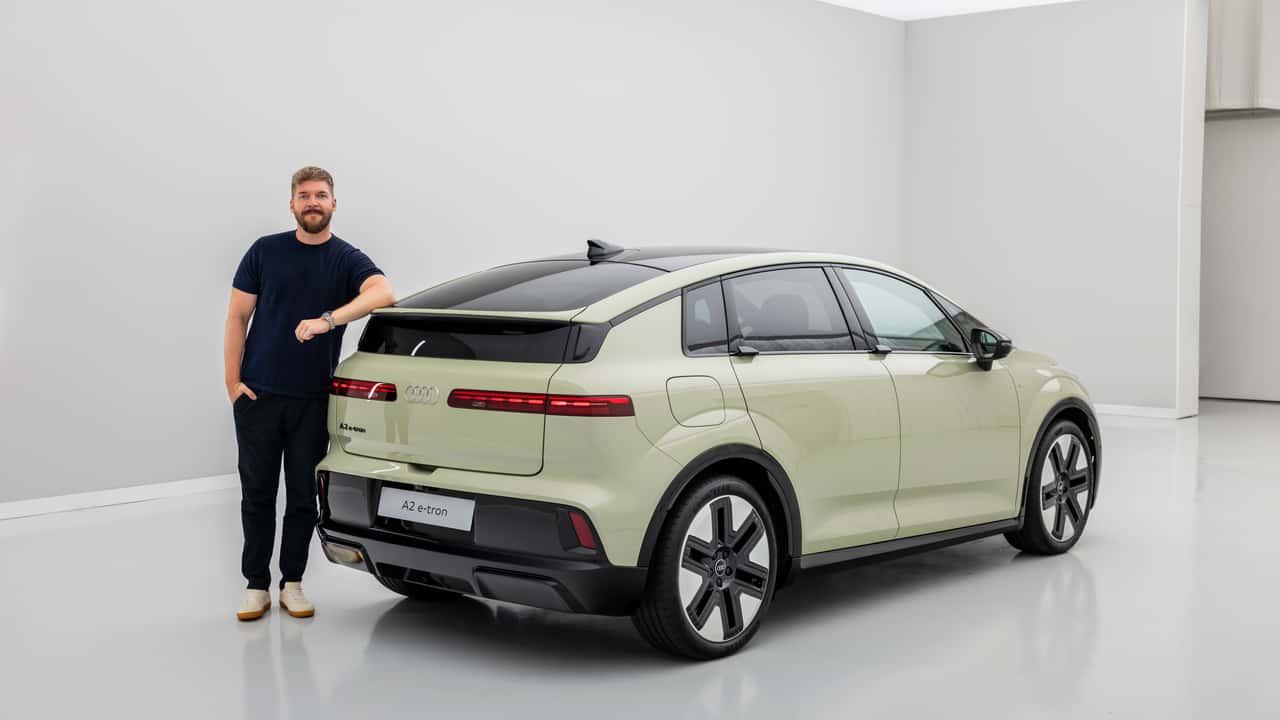
Several developments in the feed highlight how important efficiency continues to be. The new A2 is positioned as a successor that preserves its predecessor’s focus on economical operation while retaining distinctive styling. A production-spec Skoda Peaq reportedly traveled 582 miles on a single charge, although the result depended on secondary roads and hypermiling techniques rather than ordinary mixed driving. Such tests demonstrate what is technically possible, but they also underline the difference between record-setting range and the experience most drivers can expect every day.
Efficiency is becoming a broader measure than battery size alone. Aerodynamics, weight, software, tires, thermal management, and driving conditions all influence how far an EV can travel. Smaller and lighter vehicles may ultimately offer a more convincing efficiency story than increasingly large electric SUVs and trucks, even if those larger vehicles attract more attention in the showroom.
A kei-class EV from BYD also illustrates the importance of designing vehicles for specific markets. Its compact dimensions, practical interior, and thoughtful engineering appear suited to Japanese roads and urban conditions. Rather than treating electrification as a race to build the biggest or most powerful vehicle, such models show how electric technology can work within established patterns of local mobility.
Range extenders and hybrids are gaining momentum
While battery-electric vehicles remain the long-term focus for much of the industry, hybrids are benefiting from immediate consumer concerns. Rising gasoline prices are encouraging some Americans to seek better fuel economy without committing fully to a vehicle that depends on public charging. This does not necessarily signal the end of the EV transition, but it does show that buyers are making decisions based on convenience, cost, and confidence as much as environmental goals.
Range-extender electric vehicles may serve as a bridge between these preferences. The Jeep Wagoneer EREV is expected to begin production in November, while the Ram 1500 EREV is planned for the following year. These vehicles aim to provide electric driving for many daily trips while using an onboard combustion engine to generate electricity or provide additional range when necessary. For large SUVs and pickup trucks, where towing, long-distance travel, and limited charging access remain significant concerns, this approach could be particularly attractive.
The growing interest in hybrids and range extenders reflects a market that is becoming more pragmatic. Automakers are not abandoning electrification, but they are adapting product plans to meet customers where they are rather than assuming every buyer is ready for a full battery-electric transition.
Autonomous driving reaches a public test phase
Self-driving technology is another major theme. Tesla’s Cybercab launch represents a significant moment for a company that has spent years promising widespread autonomous vehicles. The two-seat vehicle is designed without a steering wheel or pedals, requiring engineers to rethink braking, steering, passenger safety, and emergency intervention. Initial vehicles began operating in Austin, Texas, where passengers reportedly completed uneventful trips without apparent human control.
The service is still being watched closely. Federal regulators are already examining the vehicle, and questions about oversight, operational limits, liability, and safety are likely to intensify as autonomous taxis move from staged demonstrations into public streets. Reports of a driverless vehicle navigating difficult Brussels traffic, including a maneuver passengers described as illegal, further illustrate both the promise and the complexity of the technology.
The launch also demonstrates that autonomy is becoming a competitive field rather than a single-company experiment. Rivals have continued developing driver-assistance and robotaxi systems, and the success of any service will depend not only on its ability to drive but also on public trust, regulatory approval, fleet management, and the quality of its response to unusual situations.
Software and charging are becoming defining parts of ownership
Software updates are now an important way for automakers to extend the value of vehicles after delivery. Rivian’s latest update for older R1 models adds features to an existing fleet, showing how connected vehicles can improve over time instead of remaining fixed at the moment of purchase. However, software-based upgrades also make reliability and transparency increasingly important. Owners need to know which features are included, which require payment, and whether older hardware can continue supporting newer capabilities.
Charging remains a less glamorous but equally important challenge. Ultra-fast chargers attract attention because they promise shorter stops, but charging operators must still generate enough revenue to cover electricity, maintenance, land, and network costs. A station that produces impressive charging speeds may not be economically sustainable if utilization is low or installation expenses are too high. Reports of a public fast-charging session that left a driver waiting in the sun for 40 minutes reinforce the gap between advertised capability and real-world experience.
Competition and protectionism are increasing
The global EV industry is also becoming more politically sensitive. A major automotive lobby group is asking Congress to block Chinese imports before they establish a foothold, while Xiaomi is preparing to enter Europe through a network of dealership groups. These developments point to a broader struggle over technology, pricing, supply chains, and industrial policy.
Chinese manufacturers are bringing competitive vehicles and rapid development cycles to international markets, while established automakers and governments are weighing tariffs, incentives, and restrictions. Consumers may benefit from greater choice and lower prices, but trade tensions could limit which vehicles are available and raise the cost of imported technology.
At the same time, battery durability remains a crucial factor in consumer confidence. A study involving roughly half a million EVs reportedly placed Tesla near the bottom of the rankings for battery longevity. Whether the findings reflect specific model years, usage patterns, charging behavior, or broader design issues, such results demonstrate why long-term ownership data matters. Battery degradation can have a greater effect on resale value and total cost of ownership than headline range figures.
Taken together, the news suggests that the EV market is entering a more complicated phase. Efficiency, autonomy, software, charging economics, hybrids, international competition, and long-term durability are all becoming part of the same conversation. Electric vehicles are no longer judged solely by acceleration or zero tailpipe emissions. Their future will depend on whether they can deliver dependable, affordable, and convenient transportation across a wide range of real-world conditions.