
EV Market Shifts Into a More Complicated New Phase
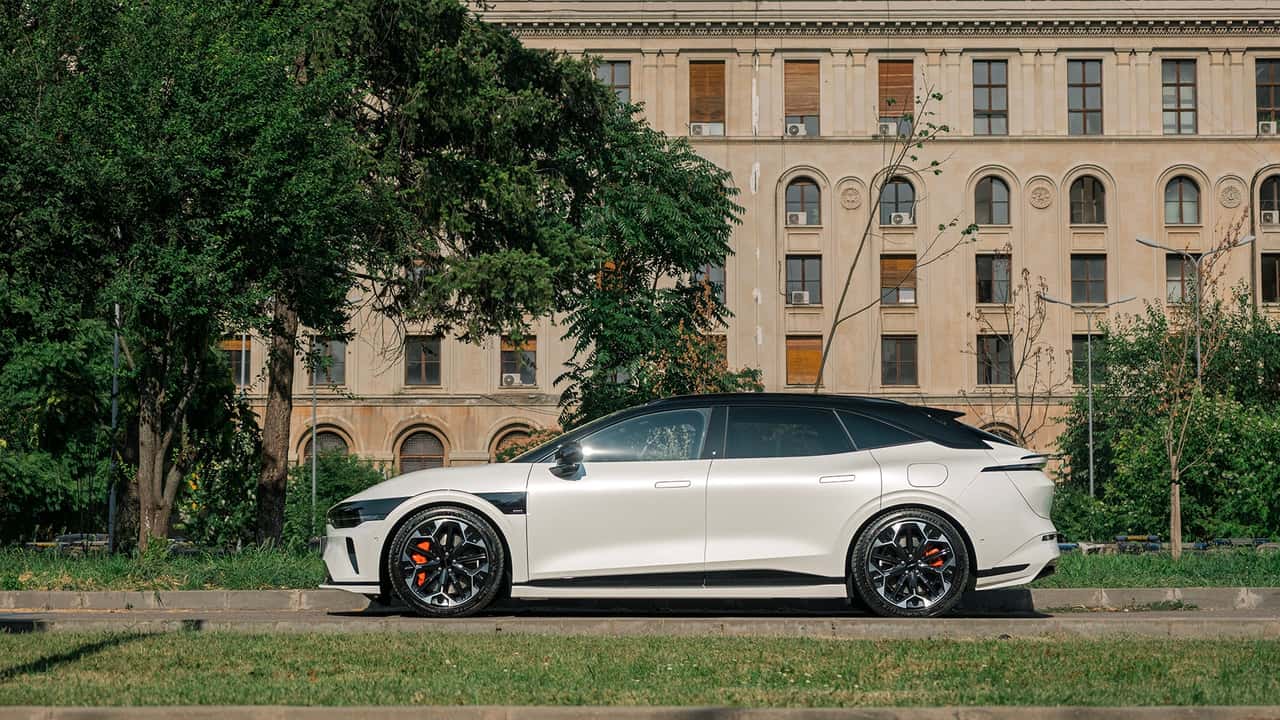
EV Market Shifts Into a More Complicated New Phase
The electric-vehicle market is entering a period defined by both momentum and uncertainty. Across the latest developments, EVs are gaining ground with consumers, expanding into more vehicle categories, and benefiting from improving charging technology. At the same time, automakers are slowing or reconsidering product plans, manufacturers are confronting production limits, and governments are changing the policies that helped accelerate the transition away from gasoline.
One of the clearest themes is that the move toward electrification is no longer limited to wealthy early adopters or a handful of premium models. More affordable electric cars are attracting buyers in Europe, where sales continue to rise even as the broader automotive market remains under pressure. Price is an important factor, but it is not the only reason consumers are switching. Lower running costs, increased model availability, improved range, and growing familiarity with home charging are also making EV ownership more practical.
The continued decline of conventional gasoline-powered cars is creating additional opportunities for EVs. Some analysts now believe electric cars could become the dominant type of new vehicle by 2030, although the pace of that transition will vary widely by market. In countries where fuel prices are high, charging infrastructure is improving quickly, or government incentives remain strong, adoption may move faster. Elsewhere, affordability, unreliable public charging, and limited access to home charging will continue to slow the change.
Recent events in Russia illustrate how external pressures can reshape consumer behavior. Gasoline shortages are reportedly pushing buyers toward electric cars and plug-in hybrids, most of which are imported from China. The development shows that EV demand is not driven solely by environmental concerns or long-term policy goals. Energy security, fuel availability, and everyday operating costs can be equally powerful motivations. Chinese automakers are increasingly positioned to benefit from this demand because they offer a broad selection of electric and plug-in hybrid vehicles at prices that are often competitive with older models from established brands.
Plug-in hybrids are also playing an important role in the transition. The Jaecoo 7, offered with a plug-in hybrid powertrain, became the United Kingdom’s best-selling new car in September. Its success demonstrates that buyers may be interested in electrification without being ready to abandon combustion engines completely. Plug-in hybrids can provide electric driving for short trips while retaining the flexibility of gasoline power for longer journeys, though their real-world environmental benefits depend heavily on how often owners charge them.
The product landscape is expanding beyond conventional sedans and compact crossovers. Renault’s electric reinterpretation of the Espace brings battery power to a name associated with European family transportation and minivans. Jeep’s Recon is being developed with a boxy, trail-focused design intended for off-road use, while its highway capability highlights the practical compromises involved in making specialized EVs. High-performance models are also gaining attention. The electric M3 is appearing in increasingly light camouflage, suggesting that battery-powered sports sedans are moving closer to production. The Hyundai-linked GV60 Magma and other performance EVs are exploring how electric vehicles can deliver excitement through acceleration, handling, software, and distinctive features rather than engine noise alone.
Automakers are experimenting with simulated engines, gear changes, and other artificial sensations to make EVs feel more familiar or engaging. Some enthusiasts may appreciate these additions, but the strongest electric vehicles may not need to imitate combustion cars. Instant torque, precise power delivery, quietness, and the ability to package performance in new ways can give EVs their own identity. The challenge is to ensure that novelty features enhance the driving experience rather than distract from efficiency and usability.
Practicality is becoming another area of innovation. Vehicle-to-load systems, which allow an EV to power appliances or other equipment from its battery, can be especially useful during outages, camping trips, or work at remote locations. A household power outlet integrated into a vehicle makes more sense when the energy comes from a large battery rather than from burning fuel in a generator. These capabilities may become a meaningful differentiator as consumers begin to view EVs as mobile energy-storage devices instead of transportation alone.
Charging standards are also moving toward greater standardization. Starting with the 2027 model year, General Motors EVs are expected to receive Tesla-style charging ports from the factory, with the Escalade IQ receiving an additional feature. The shift reflects the growing influence of Tesla’s charging connector and network, as well as the industry’s need to reduce confusion among drivers. Easier access to reliable fast charging could help remove one of the biggest barriers to EV adoption.
However, the business environment remains difficult. The list of paused, canceled, or delayed EV programs continues to grow as automakers respond to changing regulations, weaker-than-expected demand in some segments, high battery costs, and policy uncertainty. A rollback of clean-car rules in the United States could alter investment plans, while companies must balance long-term electrification goals against short-term profitability. One American EV startup delivered fewer than 4,000 vehicles in a quarter and remains limited to a single production shift, underscoring how difficult it is for new manufacturers to reach scale.
Battery technology presents a similar tension. China is pushing toward large-scale production of new battery chemistries, but the world’s largest EV battery maker has warned that making the technology affordable will be a separate challenge. Higher energy density, faster charging, longer life, and improved safety are valuable only if manufacturers can produce batteries at a cost consumers can accept.
Tesla’s slightly lower third-quarter sales show that even the most established EV brand is not immune to market pressure. Competition is increasing, product lineups are aging in some regions, and consumer expectations are rising. Yet the decline is not necessarily a sign that electric cars are losing relevance. Instead, it reflects a market becoming more competitive and more mature.
Taken together, the feed points to an EV industry that is still advancing, but no longer following a simple upward trajectory. Affordable models, plug-in hybrids, electric SUVs, performance cars, utility features, and improved charging standards are broadening the appeal of electrification. Meanwhile, policy changes, production constraints, battery economics, and uneven demand are forcing companies to become more selective. The next stage of the transition will depend less on enthusiasm alone and more on whether automakers can deliver dependable, affordable, and genuinely useful vehicles at scale.