
EV News Roundup: Faster Charging, Broader Lineups, Software Surprises, and a More Competitive Global Market
The electric vehicle market is entering a more practical, competitive phase
The latest electric vehicle news points to an industry moving beyond simple questions about whether EVs can replace gasoline-powered cars. Automakers, charging companies, battery suppliers, and governments are now competing on convenience, design, price, efficiency, software, and the ability to fit electric vehicles into everyday life. The developments in this feed cover everything from curbside charging and long-distance range to new electric crossovers, pickup trucks, recalls, sales growth, and the changing fortunes of established manufacturers.
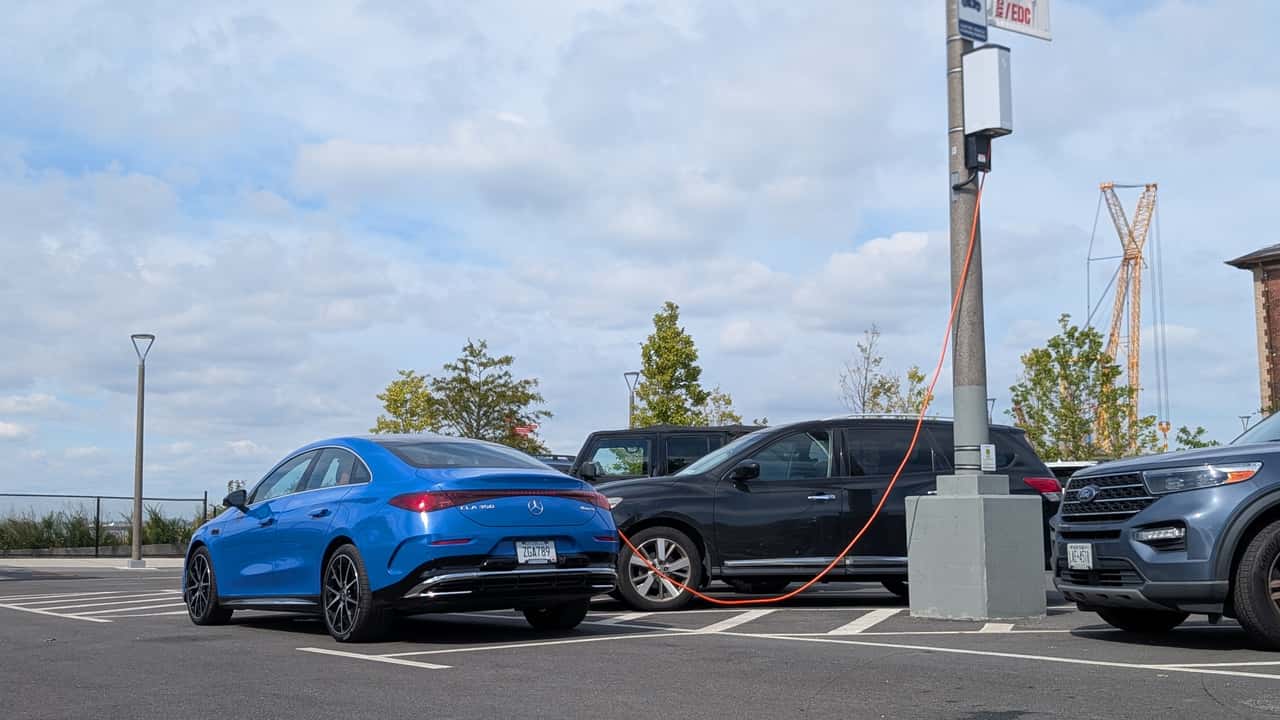
One of the most important themes is the continuing effort to make charging easier for drivers who do not have a private driveway. A proposed solution to curbside charging involves placing charging equipment above the street, potentially using overhead infrastructure to provide power without filling sidewalks with bulky hardware or requiring extensive excavation. This could be especially useful in dense urban neighborhoods where many residents park on the street and cannot install a home charger. The broader charging network is also expanding through public investment. One state is offering to cover as much as 100% of eligible costs for new public DC fast chargers, with funding of up to $100,000 per charger. Meanwhile, Pilot’s first Megacharger station has opened in Georgia, with additional locations under construction. Although the Megacharger network is aimed primarily at larger electric vehicles and commercial applications, its arrival reflects the growing importance of high-power charging for regional and long-distance transportation.
Range remains a major selling point, but the market is becoming crowded enough that range alone no longer guarantees a vehicle’s success. Nearly 50 electric cars available in the United States now offer at least 300 miles of estimated range. That milestone gives consumers more choice, but it also creates a new challenge for automakers: differentiating vehicles that may have similar battery capacities and driving distances. Efficiency can be just as important as the headline range figure. A highway test of the Chevrolet Bolt showed that it used energy much more efficiently at 60 mph than at 70 mph, highlighting how speed, aerodynamics, weather, and driving habits affect real-world range. As public charging improves, buyers may increasingly evaluate how efficiently a vehicle uses energy rather than focusing only on the size of its battery.
Design is another major factor shaping consumer interest. Some vehicles may not claim a clear technological advantage over their competitors, yet their styling makes them more appealing. The growing number of electric models means that buyers are looking for emotional and practical reasons to choose one vehicle over another. New crossovers are arriving with familiar shapes, family-friendly interiors, frunks, additional physical buttons, and one-pedal driving. These features suggest that automakers are responding to customers who want modern electric powertrains without giving up the usability and straightforward controls associated with conventional cars.
Performance variants are also becoming more common. Volkswagen has opened orders for the ID. Polo GTI, with revised specifications and a slightly higher price than previously advertised. BMW is preparing an M version of its new electric crossover, using a redesigned motor and other performance upgrades. At the larger end of the market, BMW’s first electric iX4 is reportedly approaching the unusually high range of the iX3. Together, these vehicles demonstrate how manufacturers are attempting to apply familiar performance identities to electric platforms, rather than treating EVs as a separate category focused only on economy and efficiency.
The electric vehicle lineup is also expanding into segments where buyers expect practicality and recognizable proportions. Hyundai is reportedly considering two additional electric SUVs that could offer more familiar shapes and family-oriented packaging. Nissan’s Frontier Pro plug-in hybrid pickup, developed and manufactured in China, is planned as a global product. Its international ambitions illustrate how quickly vehicle development is becoming global, with Chinese engineering and production increasingly supporting models intended for markets beyond China. Geely has also announced plans to sell vehicles in Canada under its own brand beginning in 2027, although specific models have not yet been identified.
Software continues to be both a selling point and a source of controversy. Rivian is preparing a special software update for its entire vehicle range, accompanied by a distinctive R1 model and an appearance by actor Bill Murray. At the same time, changes to newer Rivian R2 vehicles have caused frustration among some reservation holders. The latest vehicles reportedly no longer direct air through their seat backs, and some buyers say that the change is significant enough to cancel their orders. The episode shows how software updates and equipment revisions can create strong reactions when customers have ordered vehicles based on early expectations.
Safety and reliability remain essential as battery-powered vehicles become more widespread. A recall notice warns that an issue with certain batteries could cause a fire when charging above 80%. Although recalls are a normal part of the automotive industry, battery-related problems receive particular attention because they can involve thermal events and charging behavior. Manufacturers must therefore balance rapid product expansion with careful quality control, transparent communication, and effective remedies for affected owners.
Business results are painting a mixed but generally encouraging picture. Mercedes-Benz reported a 61% year-over-year increase in EV sales during the third quarter, while Polestar achieved record sales helped by American buyers. However, Polestar’s weaker performance in other regions demonstrates that strong results in one market cannot necessarily offset difficulties elsewhere. LG Energy Solution also posted record third-quarter sales, supported by Europe’s electric vehicle growth and increased demand for energy-storage batteries in the United States. The company’s results underline the increasingly close relationship between electric cars and stationary energy storage, as battery manufacturers serve both transportation and grid-related markets.
Finally, Jaguar has revealed its first electric vehicle following a controversial brand reorganization. Its design is already generating polarized reactions, reinforcing the idea that bold styling can attract attention but also divide potential customers. Across the feed, the central message is clear: EV competition is becoming broader and more sophisticated. Charging access, efficiency, familiar design, performance, software quality, safety, and regional business strength are all becoming equally important. The next stage of the electric vehicle market will not be defined by a single breakthrough, but by how successfully manufacturers combine these factors into products people want to use every day.