
EV Market Shows Signs of Recovery as Automakers Race to Cut Costs, Expand Charging, and Reinvent Electric Mobility
EV Market Shows Signs of Recovery as Automakers Race to Cut Costs, Expand Charging, and Reinvent Electric Mobility
The electric-vehicle market appears to be finding its footing after a difficult year marked by slowing demand, high interest rates, pricing pressure, and uncertainty over government incentives. The latest developments across the industry suggest that the next phase of EV growth will depend less on novelty and more on affordability, charging speed, practical design, and the ability of manufacturers to build profitable vehicles at scale.
One of the clearest challenges is the cost of producing electric vehicles. Executives in the industry have acknowledged that some current models, including electric buses, remain too expensive to manufacture. New vehicle platforms are expected to address that problem by allowing automakers to share components, simplify production, and spread development costs across larger volumes. Lower costs could eventually make electric cars more competitive without relying so heavily on discounts or subsidies.
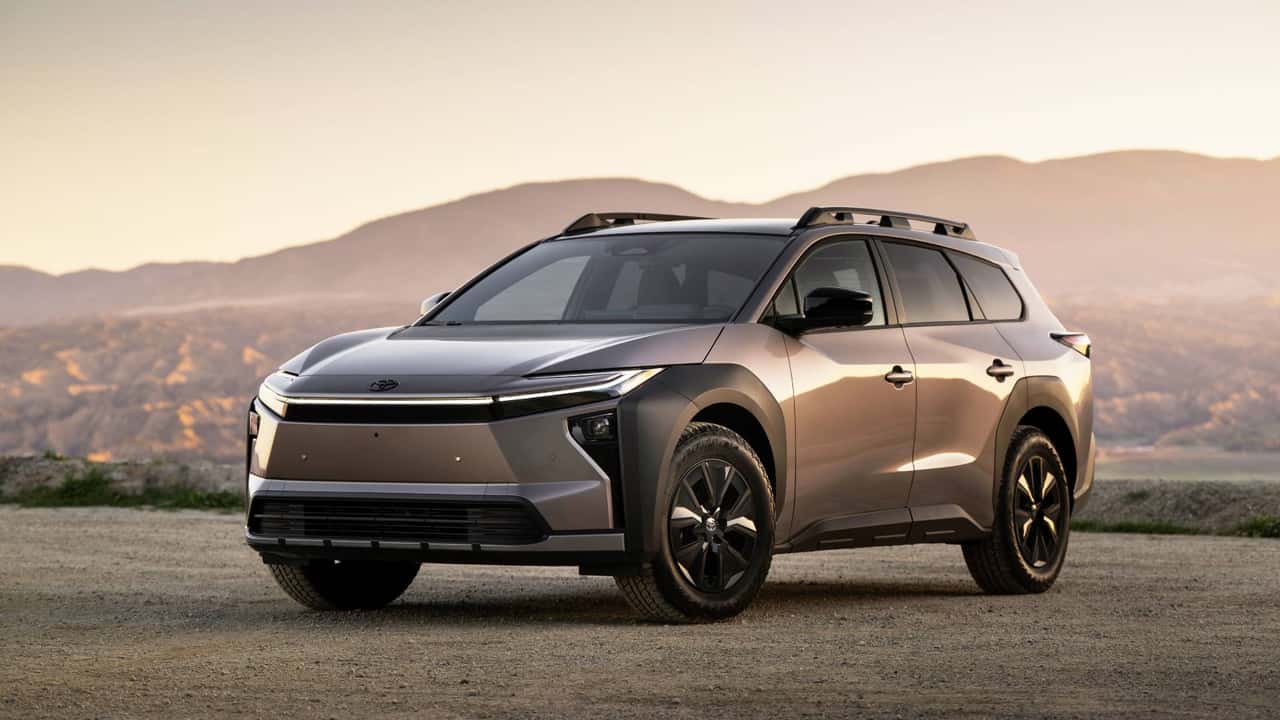
That pressure is especially visible among legacy manufacturers. Some are currently depending on existing inventory while waiting for new electric products to arrive. Upcoming vehicles such as a new electric SUV are therefore important not only as additions to a lineup, but also as evidence that manufacturers can move from first-generation EVs to more efficient and commercially viable models. The transition is taking place while companies attempt to balance investments in combustion engines, hybrids, and battery-powered vehicles.
The market is also being shaped by a new generation of ambitious products. Tesla’s forthcoming Roadster continues to attract attention because of its extraordinary claimed performance, although questions remain about when, or whether, the car will reach production. Other concepts offer a more immediate look at the industry’s direction. Peugeot’s E-T16 concept, for example, combines extreme motorsport-inspired styling with technologies intended to preview the next electric 208. Its proposed solid-state battery and 1,000-volt electrical architecture point toward a future in which charging times could approach the convenience of refueling a gasoline car.
Charging speed is becoming one of the most important areas of competition. BYD has promoted technology for its Atto 8 that could take the battery from 10 to 70 percent in roughly five minutes and reach 97 percent in less than ten minutes under suitable conditions. Although real-world performance will depend on the charger, temperature, battery condition, and available grid capacity, such claims demonstrate how quickly charging expectations are changing. The industry is no longer focused only on increasing driving range; it is also trying to reduce the time required to recover that range.
The broader charging network is improving as well. U.S. infrastructure became faster and more widespread during the third quarter, while Electrify America retained a leading position despite expanding more slowly than certain competitors. Greater charger availability should help reduce one of the main barriers to EV adoption, particularly for drivers without home charging. Reliability remains just as important as the raw number of stations, however. A charger that is available but slow, occupied, or out of service does little to improve the ownership experience.
Automakers are also exploring new body styles and uses for electric vehicles. A dual-motor model with strong traction demonstrates how EV powertrains can deliver confident performance away from paved roads, provided terrain does not become too severe. Another concept uses a sliding rear section to transform from an SUV into a pickup-style vehicle, reflecting continued interest in flexible vehicles that can serve multiple roles. Small commercial vans are receiving attention too, with one retro-inspired model reimagined for businesses such as mobile cafés and specialty coffee operators.
Not every development is focused on fully electric vehicles. Hybrid sales are expanding, particularly in Europe, where Chinese manufacturers have benefited from strong consumer interest while avoiding some of the tariff pressure applied to battery-electric vehicles. Several manufacturers are preparing as many as 15 next-generation hybrid models, with most expected to reach North America. This reflects a broader industry strategy: hybrids can offer lower emissions and improved efficiency while giving customers greater reassurance in regions where charging infrastructure is still developing.
Regional performance remains uneven. Some manufacturers are struggling in China, one of the world’s most competitive EV markets, even as their electric sales grow strongly in Europe. Chinese brands, meanwhile, continue to expand internationally with a mix of battery-electric vehicles and plug-in hybrids. Trade policy, local manufacturing, pricing, and software capability will all influence how successful these companies become outside their home market.
Designers are also looking for ways to make electric cars emotionally appealing. Alpine’s retro-inspired sports-car concept uses familiar visual cues to explore the brand’s electric possibilities, while another compact electric model retains city-friendly dimensions but adds battery and charging improvements intended to make longer trips less intimidating. These products show that practicality and character do not have to be mutually exclusive.
Still, the rapid pace of development comes with risks. Independent testing found that a brake-pedal bracket in the Maextro V800 could fail during a 62-mph emergency-braking scenario, highlighting the importance of rigorous validation as new manufacturers and technologies enter the market. Software is another dividing line. A vehicle may be less technically sophisticated than a premium rival, but dependable software can be more valuable than impressive specifications that are undermined by bugs or poor usability.
Taken together, the news points to an EV sector moving beyond its early phase. The next winners are likely to be companies that can combine reasonable prices, dependable software, fast and accessible charging, efficient production, and products suited to everyday needs. Electric cars remain central to the industry’s future, but hybrids, commercial vehicles, adaptable body styles, and new battery technologies will all play a role in determining how quickly that future arrives.