
2027 Mercedes-Benz CLA Electric Review: Long Range, Rapid Charging and a Promising New Direction
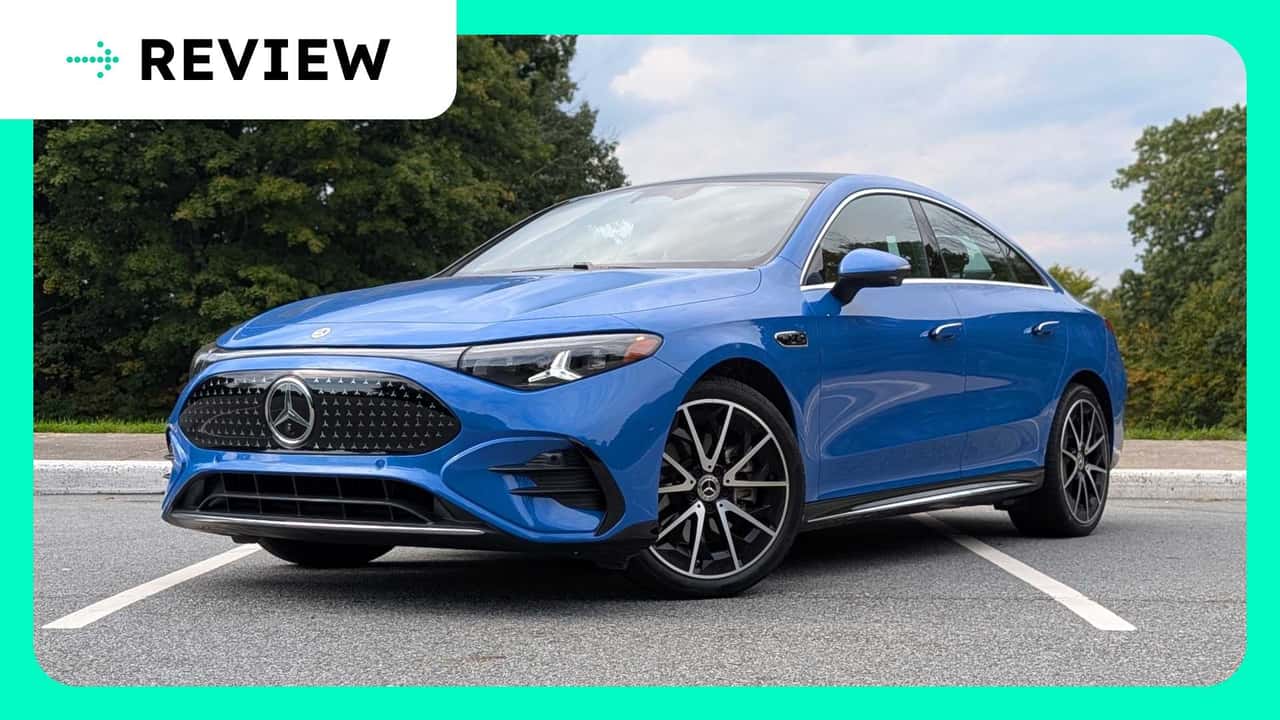
Mercedes-Benz’s latest electric vehicle makes a strong case that the company is finally learning from the shortcomings of its first-generation EQ models. The 2027 CLA 350 4Matic Electric combines impressive efficiency, rapid charging and genuinely engaging performance in a compact luxury sedan. It is not without faults, particularly in its interior design, software polish and ride comfort, but its electric-car fundamentals are remarkably strong.
The new CLA represents the first major product built on Mercedes-Benz’s electric-focused Modular Architecture, or MMA platform. The platform is also designed to support hybrid powertrains, but the fully electric version tested here benefits from a large battery, a two-speed transmission and a new generation of battery cells. Together, those technologies help the CLA deliver more range and faster charging than its compact dimensions might suggest.
The test vehicle was a CLA 350 4Matic Electric with all-wheel drive, a starting price of $50,750 and an as-tested price of $67,155, including destination and approximately $16,000 in options. Its 85-kilowatt-hour usable battery is rated by the EPA for 312 miles of range in all-wheel-drive form. The rear-wheel-drive CLA 250 is rated even higher, at 374 miles.
In real-world driving, the all-wheel-drive model exceeded expectations. During mostly highway driving in fall weather and with the car in Sport mode, the test vehicle averaged 4.2 miles per kilowatt-hour. That figure translates to approximately 357 miles of theoretical range from the usable battery, or around 45 miles more than its official EPA estimate. While this was not a formal, controlled range test, the result suggests that the CLA could be one of the more efficient luxury EVs available in its size class.
Mercedes attributes much of the car’s efficiency and charging performance to its new battery chemistry. The cells use a silicon-oxide and graphite blend in the anode, replacing some of the conventional graphite material. According to Mercedes, the design increases energy density by about 20 percent while reducing the amount of cobalt used. Silicon is also being adopted across the industry because it can help improve charging speed and reduce dependence on graphite processing, which is heavily concentrated in China.
The CLA’s fast-charging capability is equally impressive. At a Mercedes-Benz High Power Charging station capable of delivering up to 400 kilowatts, the car briefly reached 280 kW. It added approximately 100 miles of indicated range in five minutes and gained 200 miles after 14 minutes. Reaching an 80 percent state of charge took exactly 20 minutes from a 16 percent starting point, while a 90 percent charge was completed in 26 minutes. The session added nearly 300 miles of indicated range.
Those numbers mean charging stops can be extremely brief. Drivers could potentially add enough range for several hours of travel before finishing a coffee or snack. The car’s factory-installed NACS port and Plug & Charge capability also make the process simpler at compatible stations.
The CLA 350 is powered by a 349-horsepower electric drivetrain producing 380 pound-feet of torque. It can accelerate from zero to 60 mph in 4.8 seconds, and its response is immediate and forceful. The throttle is sharp without being difficult to control, while the car’s compact footprint makes it easy to maneuver through crowded streets and tight parking spaces.
Unlike most EVs, the CLA uses a two-speed transmission. The first gear is intended to provide strong acceleration at low speeds, while second gear improves efficiency and power delivery during faster highway driving. In everyday use, the shifts are nearly imperceptible. The transmission reportedly changes into second gear at roughly 60 to 65 mph, meaning many drivers may rarely notice it working.
The sedan is also more enjoyable on winding roads than its comfort-oriented character might suggest. Steering is light but precise, and the chassis remains stable through quick changes in direction. However, the car’s substantial weight is noticeable in corners, and the suspension can feel busy over rough, broken pavement. The CLA is comfortable enough for daily use, but it does not provide the plush, isolated ride traditionally associated with a Mercedes-Benz luxury sedan.
Four regenerative-braking modes give drivers a wide range of options. Coasting provides a more conventional driving feel, while Normal, Intelligent and Strong progressively increase regeneration. Intelligent mode adjusts braking based on traffic conditions, and Strong mode enables true one-pedal driving. The strongest setting can feel abrupt at first, though it becomes easier to modulate with practice.
The interior is dominated by the optional MBUX Superscreen. The system combines a 14-inch central infotainment display, a second 14-inch screen for the front passenger and a separate 10.25-inch digital instrument panel. The displays are sharp and generally responsive, although occasional frame-rate drops were noticeable.
The central screen provides EV route planning, charging-stop integration, navigation, streaming services, a web browser, a calendar, Microsoft Teams and games. Mercedes has also expanded its voice assistant with ChatGPT and Microsoft Bing integration. Still, the interface does not always feel as polished or intuitive as expected from a vehicle positioned as a technology showcase.
Some of the most irritating issues are surprisingly basic. The steering wheel lacks dedicated buttons for media toggling or skipping tracks, forcing drivers to use the touchscreen or voice commands. The window controls are also unnecessarily complicated: only two physical switches are provided, with a separate selector used to switch between the front and rear windows.
The Superscreen itself is part of a nearly $6,000 Pinnacle package that also includes features such as a powered trunk, head-up display and adaptive headlights. Without the package, the passenger display is replaced by a glossy black panel decorated with Mercedes stars. The illuminated star-filled grille is equally divisive, though the styling can become less distracting over time.
Interior space is another compromise. Rear-seat passengers, particularly taller adults, will find the bench tight. The CLA is better suited to couples or families with two children than to carrying five adults. Cargo capacity is limited to 10.3 cubic feet in the trunk, although the front trunk provides useful additional storage for a carry-on suitcase and smaller items.
The standard driver-assistance system includes adaptive cruise control, lane centering and automatic lane changes. The automatic lane-change feature was less reassuring, initiating maneuvers while nearby vehicles were uncomfortably close. Manual activation through the turn signal proved preferable. Mercedes’ more advanced MB.Drive Assist Pro system was not enabled on the test vehicle.
Despite these flaws, the CLA 350 Electric leaves a highly positive impression. Its range, charging speed, performance and compact dimensions make it an excellent everyday EV. It also undercuts or closely matches several competitors while offering a more distinctive luxury experience than a Tesla Model 3. The larger Lexus ES offers more rear-seat room, but it cannot match the CLA’s charging performance or software capabilities.
The new CLA may not be a perfect Mercedes-Benz, but it is a very convincing electric car. It demonstrates that Mercedes can build an EV with strong efficiency, useful technology and genuinely enjoyable driving dynamics. After a disappointing first wave of EQ models, the CLA provides a welcome reason for optimism about the brand’s electric future.