
Porsche Taycan 4 Proves Electric Performance Is About More Than Horsepower
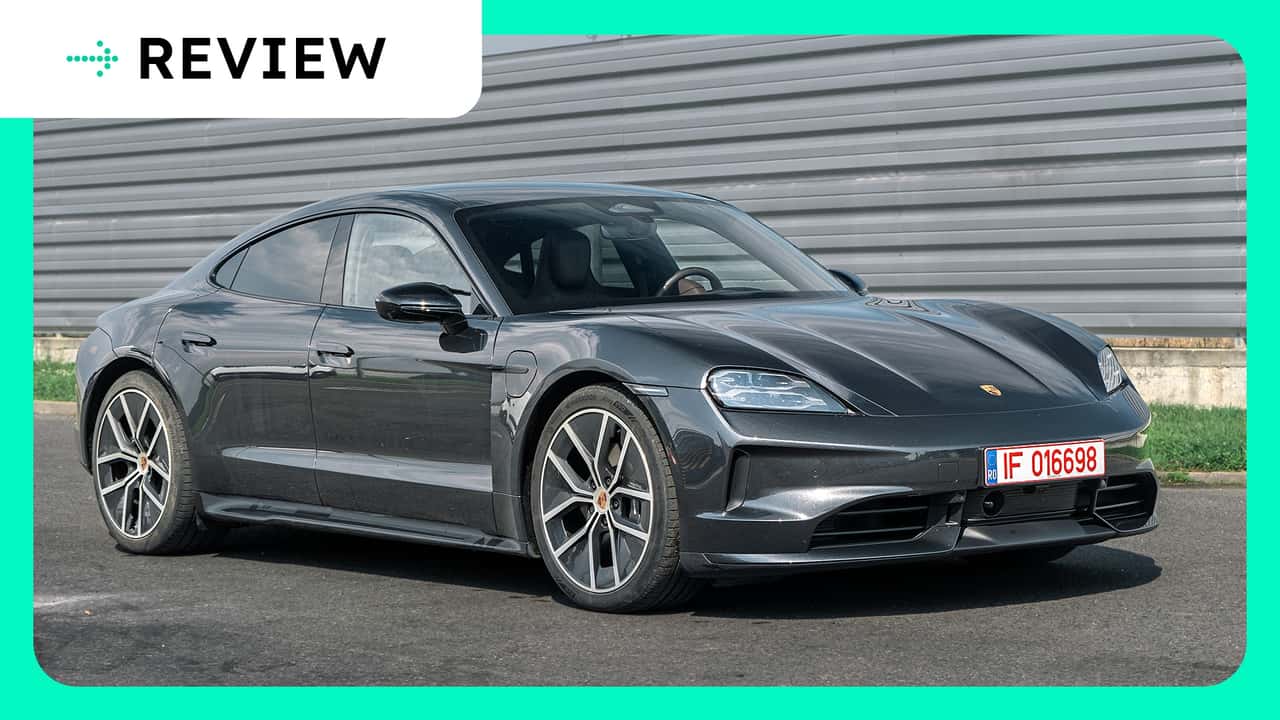
Porsche Taycan 4 Proves Electric Performance Is About More Than Horsepower
The Porsche Taycan has built a reputation as one of the most capable performance electric vehicles on the market. While the range-topping versions attract attention with supercar-level acceleration and four-digit power outputs, a recent drive of the comparatively modest Taycan 4 suggests that the model’s greatest strength is not its straight-line speed. Instead, it is the way the car combines handling, comfort, refinement, and long-distance usability.
The Taycan 4 is one of the least powerful all-wheel-drive versions in the lineup. Its dual-motor powertrain produces roughly 429 horsepower, or 435 hp depending on the specification being quoted, along with 449 pound-feet of torque. With launch control engaged, Porsche claims a 0-to-60-mph time of 4.4 seconds and a top speed of 143 mph. Those figures are impressive, although they appear relatively restrained beside the sub-three-second acceleration times available from more expensive Taycan models.
Yet after a drive covering about 200 miles, including highway travel, wet conditions, and an enthusiastic run through a familiar mountain route, the Taycan 4 never felt underpowered. Its acceleration was strong enough to make overtaking effortless, while its delivery remained predictable and easy to use on challenging roads. The experience highlighted how little the car’s appeal depends on having the biggest possible motor output.
A long-distance electric sports sedan
The test vehicle was a Taycan 4 Black Edition equipped with Porsche’s larger battery pack. The 105-kilowatt-hour battery has approximately 97 kWh of usable capacity and supports an official WLTP range of up to about 395 miles in the relevant configuration. Depending on equipment and market specification, Porsche also lists Taycan variants with lower range figures, but the larger battery clearly improves the car’s touring credentials.
The Taycan uses an 800-volt electrical architecture and can accept up to 320 kW of DC charging power. Under suitable conditions, Porsche says the battery can charge from 10% to 80% in as little as 18 minutes. Real-world results depend on the charger, battery temperature, and the vehicle’s state of charge, but the system remains one of the car’s major advantages.
During the test, the Taycan was connected to a 200-kW charger when its battery was at 54%. It reached 90% in just under 19 minutes, adding 44.75 kWh at an average charging rate of 138 kW. That was enough energy to prepare the car for a demanding mountain-road drive without requiring a lengthy stop.
Despite the spirited driving, overall consumption for the day remained reasonable at approximately 2.45 miles per kWh, equivalent to 25.4 kWh per 100 kilometers. After the mountain route, the car still showed 48% charge, leaving ample energy for a 70-mile highway journey home. The final efficiency figure improved to roughly 2.73 miles per kWh, or 22.8 kWh per 100 kilometers.
Steering and chassis make the difference
The Taycan’s most memorable quality is its response from behind the wheel. The steering wheel itself is relatively thin and sensibly proportioned, while the driving position is low for an electric vehicle. The seat and steering-column adjustment ranges make it easy to establish a comfortable, focused position, with the driver’s legs stretched forward in traditional sports-sedan fashion.
On the road, the steering feels precise without being artificially aggressive. Some performance cars are tuned to react sharply around the center position, creating the impression of agility but requiring frequent corrections. The Taycan avoids that behavior. Its responses are progressive and closely connected to the driver’s inputs, making it easier to place the car accurately through a corner.
That precision becomes particularly valuable on a winding road. Even in the rain, the Taycan remained stable and confidence-inspiring. It stayed impressively flat through bends, and the accelerator could be used to influence the car’s balance while cornering. Adding power did not feel like an action reserved only for the exit of a turn; it became part of the process of shaping the car’s line.
The car’s mass is impossible to ignore on paper. The Taycan weighs well over two tons, as do many modern electric vehicles. However, the weight rarely overwhelmed the driving experience. The low-mounted battery helps keep the center of gravity down, while the suspension and electronic systems work together to make the car feel composed and responsive near the limits of available grip.
Natural braking and a comfortable ride
The Taycan’s regenerative-braking strategy may surprise drivers accustomed to aggressive one-pedal systems. Its automatic setting favors coasting rather than constantly applying strong regeneration when the accelerator is released. More deceleration is requested through the brake pedal, but that does not mean energy is immediately being lost through the friction brakes.
The car can use its electric motors to recover energy before bringing in the conventional brakes. The transition between regenerative and friction braking is so smooth that the handoff is effectively undetectable. This gives the Taycan a natural pedal feel while preserving the benefits of energy recovery.
Ride comfort is another area where the Taycan defies expectations. The test car wore large 21-inch wheels and was driven in Sport and Sport Plus modes, settings that often make performance cars uncomfortable on imperfect roads. Instead, the Porsche absorbed bumps effectively while maintaining strong control over body movement. It delivered both impressive cornering ability and the comfort required for a long trip.
The cabin reinforced that dual-purpose character. A truffle-brown leather interior covered the dashboard, doors, and steering wheel, while surrounding materials were carefully matched in color and texture. The result was a cabin that felt cohesive and luxurious rather than assembled from unrelated surfaces.
A strong case for the less powerful version
The Taycan 4 Black Edition tested in Romania cost close to €150,000 as equipped, placing it firmly in luxury and dream-car territory. That price makes it inaccessible to many buyers, even though it represents one of the more rational versions of the Taycan range.
What the money buys is not simply acceleration. The car’s steering, suspension, brakes, power delivery, charging performance, and interior quality work together as a complete package. It can attack a wet mountain road with confidence and then cover the highway journey home in quiet comfort.
The experience also offers a broader lesson about electric performance cars. As battery technology makes extreme horsepower increasingly easy to deliver, acceleration figures are becoming less meaningful on their own. The Taycan 4 is not the quickest electric vehicle available, but it demonstrates that a performance car can still distinguish itself through balance, communication, and cohesion.
For drivers who value the road between the straights as much as the acceleration runs, the Taycan 4 may be the version that makes the strongest argument for Porsche’s electric future. Its power is sufficient, its range and charging ability are useful, and its chassis provides the kind of involvement that cannot be measured by a 0-to-60-mph time. The result is an electric sedan that leaves a lasting impression not because it overwhelms the driver, but because it makes every part of the drive feel carefully considered.