
The EV Industry’s Next Phase: Cheaper Cars, Smarter Software, Bigger Ambitions and Tougher Competition
The EV Industry’s Next Phase: Cheaper Cars, Smarter Software, Bigger Ambitions and Tougher Competition
The latest electric-vehicle news points to an industry moving beyond the early race for battery range and headline acceleration. Automakers, technology companies, cities and charging providers are now competing across a much wider field that includes affordability, autonomous driving, connected services, software subscriptions, artificial intelligence, public infrastructure and manufacturing efficiency.
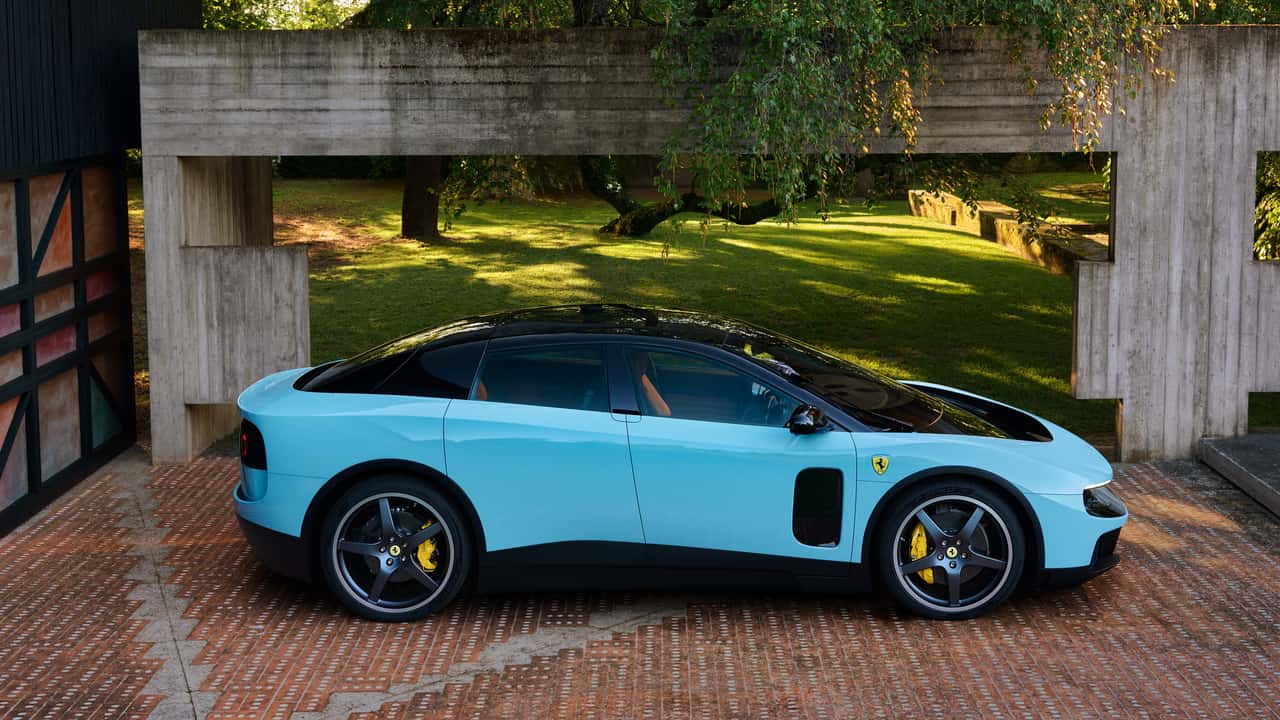
One of the clearest themes is that electric vehicles are becoming more varied. The market is no longer limited to small urban cars or premium sedans. New products and updates span luxury vehicles, rugged utility models, crossovers, pickup-oriented platforms and lower-cost options. At the top of the market, the first fully electric Ferrari is expected to occupy an exceptionally expensive niche, with a price positioning that makes even a Rolls-Royce Cullinan appear comparatively accessible. Its significance, however, extends beyond its price. Ferrari’s entry shows that electrification is reaching brands whose identities have traditionally been built around combustion engines, sound and mechanical drama.
At the other end of the market, consumers are being offered a growing list of affordable electric cars. Expert buying guides are increasingly focused on value rather than novelty, reflecting a shift in customer expectations. Buyers want reasonable pricing, practical range, useful technology and manageable ownership costs. Automakers are responding with new trims, revised equipment packages and broader battery choices. One model now includes an extended-range battery across its lineup at no additional cost, while a new Trail trim adds lifted suspension for customers seeking more ground clearance and a more rugged appearance.
The competition is also becoming more sophisticated. A comparison involving the BMW iX3, Tesla and Rivian illustrates how difficult it is to define the best electric crossover. Range, charging speed, software quality, interior design, ride comfort, driver assistance and price all matter. Horsepower alone is no longer enough to win over skeptical drivers. Automakers must create vehicles that feel intuitive, dependable and convincing in everyday use, particularly for customers who remain uncertain about switching from gasoline power.
Software is emerging as one of the industry’s most important battlegrounds. General Motors is introducing new connected-camera capabilities through OnStar, signaling how vehicles are increasingly being treated as technology platforms rather than standalone machines. These systems can expand security and monitoring features while creating new opportunities for subscription services. Tesla’s reported autonomy-software subscription figures highlight the same trend: drivers may be willing to pay recurring fees for advanced assistance features if they believe the technology delivers meaningful value.
Artificial intelligence is becoming part of that software strategy. A digital assistant in newer vehicles will be able to control selected functions and answer specific questions through voice commands. Drivers using iPhones will also be able to ask natural-language questions and receive responses from Google’s Gemini. The broader ambition is to make the car feel more conversational and personalized, although the usefulness of these systems will depend on accuracy, privacy, response speed and how well they work when connectivity is limited.
Automakers are also trying to escape the constraints of traditional technology partnerships. A new app designed without Google’s restrictions is planned for the Audi A6 e-tron and Q6 e-tron in markets around the world. This suggests that manufacturers want greater control over the digital experience, from navigation and entertainment to data management and vehicle settings. The result could be more distinctive software, but it may also produce a fragmented ecosystem in which each brand offers a different approach.
Autonomous mobility remains another major area of investment. Tesla says the vast majority of its planned Cybercabs will be owned by the company rather than individual customers, pointing toward a fleet-based business model. Meanwhile, Waymo reportedly plans to expand its driverless fleet five-fold by the end of next year. These developments show that autonomous vehicles are being pursued not only as consumer products but also as transportation services. The challenge will be proving that the technology can operate safely, consistently and economically at scale.
Charging infrastructure is expanding alongside the vehicles. In one city, residents will help determine where Level 2 chargers are installed, with priority given to neighborhoods containing apartment buildings. That approach recognizes a central problem in the transition to electric vehicles: homeowners with private garages can often install chargers, while renters and residents of multifamily buildings may depend almost entirely on public infrastructure. New charging stations are also opening in major markets, including a recently completed facility in Orlando, Florida. The placement, reliability and convenience of these chargers may influence adoption as much as vehicle prices do.
Battery and manufacturing technology are advancing as well. General Motors has revealed details of a fourth-generation EV platform that will use lithium manganese-rich cells. The company says the architecture is intended to improve flexibility and efficiency across future models. Chinese EV manufacturers are meanwhile drawing attention from consultants who argue that their production structures and cost systems operate on a fundamentally different level. Their advantages in supply chains, manufacturing scale and speed of development are creating pressure for established automakers in North America and Europe.
Even logistics are changing. Shipping containers reportedly fit into a new electric-vehicle-related operation “like a glove,” an anecdote that underscores the importance of packaging, transport and factory planning in an industry dependent on large batteries and complex components.
Taken together, these stories describe an EV market entering a more demanding phase. The first stage proved that electric vehicles could be fast, desirable and technologically impressive. The next stage will be judged by affordability, reliability, charging access, software usefulness, manufacturing discipline and the ability to serve different kinds of drivers. Competition is intensifying across every category, and the companies that succeed will likely be those that combine strong vehicles with practical ownership experiences rather than relying on a single flashy feature.