
Range Rover Electric Proves Its Off-Road Credentials in the Scottish Highlands
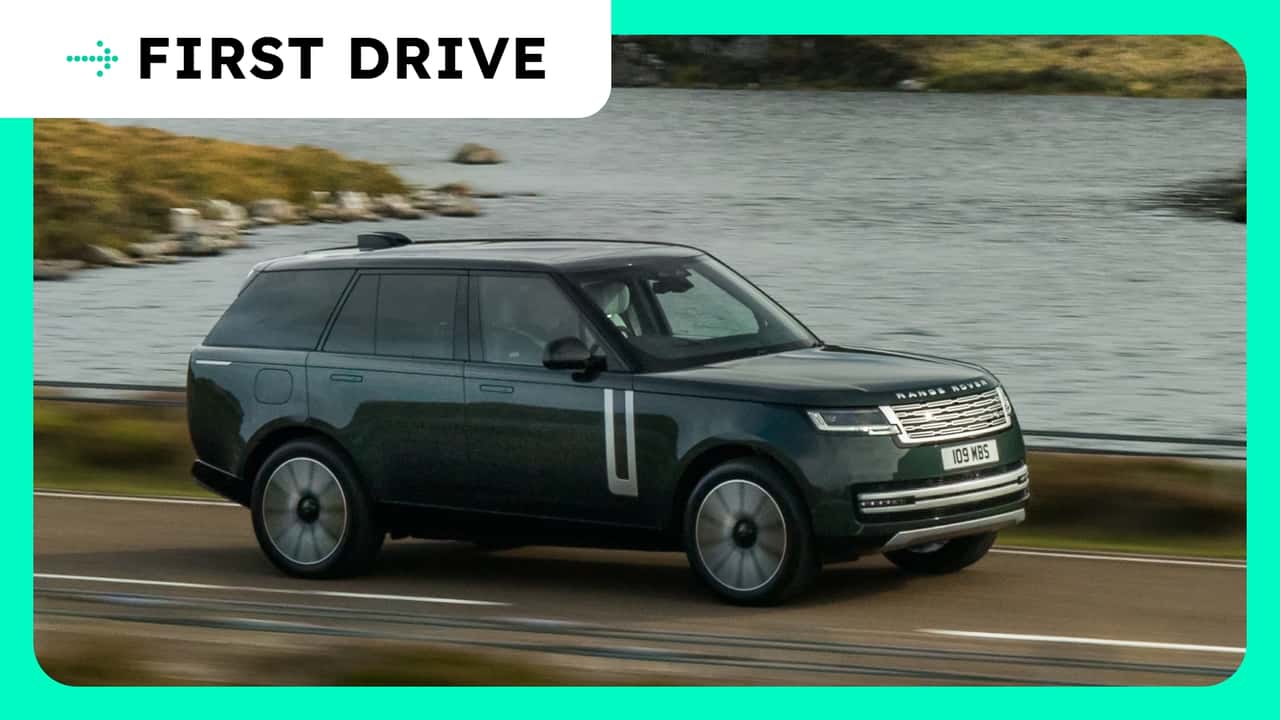
The new Range Rover Electric has taken on one of the most demanding environments imaginable for a luxury battery-powered SUV: the remote, wet and rugged landscape of northern Scotland.
During an extended drive covering roughly 450 miles over 36 hours, the electric Range Rover faced muddy tracks, rocky shorelines, steep hills, heavy rain and a deep stream crossing. Despite its three-ton-plus weight and a fully electric powertrain, the SUV completed the route without the mechanical drama traditionally associated with difficult off-road driving.
The vehicle tested was the $140,000 Range Rover Electric, which uses an 800-volt electrical architecture and a 118.5-kilowatt-hour battery pack. Its dual-motor setup produces a combined 542 horsepower and 627 pound-feet of torque, allowing it to accelerate from zero to 60 mph in 4.3 seconds. That figure matches the performance of the entry-level V8-powered Range Rover.
What makes the electric model particularly notable, however, is not its straight-line speed. Its biggest advantage appears to be the precision and speed with which it can manage traction in difficult conditions.
At one point, the SUV crossed a stream that reached approximately three feet deep. The water temporarily obscured the front-facing off-road camera, but the vehicle continued moving steadily through the crossing. Unlike a conventional four-wheel-drive Range Rover, the driver did not need to select low range, lock the differentials or make a series of drivetrain adjustments. A simple turn of the vehicle’s drive-mode controller to the Wade setting was enough.
The electric Range Rover’s ability to simplify this process comes from the way its motors are controlled. Software can adjust power delivery to the front and rear electric drive units almost instantaneously, without the need to route power through a traditional transmission, transfer case or other mechanical components. Land Rover says the electric model’s integrated traction management system can respond up to 100 times faster than the system used in its internal-combustion counterpart.
That responsiveness was evident throughout the Scottish route. On slippery hills and loose surfaces, the vehicle continually managed its available torque without requiring constant intervention from the driver. The result was an off-road experience that felt less like wrestling with a heavy SUV and more like guiding a machine that was already anticipating the terrain.
The Range Rover Electric is visually restrained. It does not receive dramatic badges or extensive styling changes to announce its power source. Instead, the differences are subtle, including aerodynamic revisions at the front and rear and the absence of exhaust outlets. Inside, the distinction is immediately clearer: the electric drivetrain is exceptionally quiet.
Land Rover claims the electric model reduces cabin noise by seven decibels during hard acceleration compared with the gasoline-powered version. Because decibels are measured logarithmically, that represents a meaningful reduction in perceived sound. The difference is even more pronounced outside the vehicle, where the electric motor produces little more than a subdued hum.
That quietness proved especially valuable in the Highlands. Birds and livestock appeared less disturbed by the approaching SUV, while the absence of engine noise made it possible to hear the wind, rain and movement of the surrounding landscape. The Range Rover Electric also avoids the artificial futuristic soundtracks used by some premium electric vehicles. A synthetic sound is available during hard acceleration in Dynamic mode, but normal driving remains largely silent.
The battery pack also contributes to the vehicle’s road manners. Mounted low in the chassis, it lowers the center of gravity and increases torsional rigidity. The SUV uses twin-chamber air suspension, and Land Rover says its dampers respond 60 percent faster than those fitted to the internal-combustion model.
On rough, undulating roads, the suspension delivered the familiar “magic carpet” effect associated with the Range Rover name. However, the Comfort setting could feel overly soft on some of Scotland’s narrow, damaged roads. Switching to Dynamic mode tightened the body’s movements and made the vehicle feel more controlled.
The electric powertrain offers another useful feature for off-road travel: single-pedal driving. Selecting the S mode activates regenerative braking rather than a conventional sport setting. This allowed the driver to regulate speed on steep descents with limited use of the brake pedal. The system can bring the vehicle to a smooth stop when given enough space, and drivers can choose among several levels of regeneration, including a setting that turns it off.
Range remains the most obvious limitation. The Range Rover Electric is expected to receive an EPA rating of approximately 333 miles, which is competitive for a large luxury SUV but does not offer the same flexibility as a gasoline model carrying extra fuel. In a remote area, drivers will need to plan charging stops carefully.
The 800-volt system is designed to reduce that inconvenience. Land Rover says the battery can charge from 10 to 80 percent in about 22 minutes using suitable high-speed charging equipment. The company also estimates that the vehicle can add as much as 125 miles of range in 10 minutes under ideal conditions.
The electric Range Rover does not eliminate every compromise associated with a large battery-powered SUV. It remains heavy, expensive and dependent on charging infrastructure. Yet the Scottish test suggests that electrification may improve rather than diminish the qualities that have defined the Range Rover for decades.
The vehicle retains the brand’s focus on comfort, isolation and all-terrain ability while adding quicker traction responses, smoother torque delivery and a remarkably quiet cabin. For drivers who want the most capable and technologically advanced version of the modern Range Rover, the electric model may be the most convincing option yet.