
Electric Momentum: Highlights from the Latest in EV and Clean Transport News
Electric Momentum: Highlights from the Latest in EV and Clean Transport News
The electric vehicle (EV) landscape continues to evolve at a pace that feels almost futuristic. From the rise of budget-friendly models to ambitious experiments in hydrogen and aviation, new developments are challenging what we expect from transport. This week’s latest stories from The Driven highlight a spectrum of progress — and sometimes controversy — in the world of electrified mobility.
Tesla Tops Speeding Charts
It seems that Tesla’s performance may be proving too tempting for some drivers. According to newly revealed police data, one in six Tesla drivers was caught speeding over the last year. That’s more than any other car brand, placing Tesla ahead of Audi and Ram in this unwanted ranking. While Teslas are built with safety technology and driver-assistance features like Autopilot, this data suggests that performance and acceleration remain irresistible to many behind the wheel. It’s a reminder that technology alone doesn’t change driving habits — driver education and enforcement remain critical parts of road safety.
BYD’s Atto 1 Aims to Become Australia’s Most Affordable EV
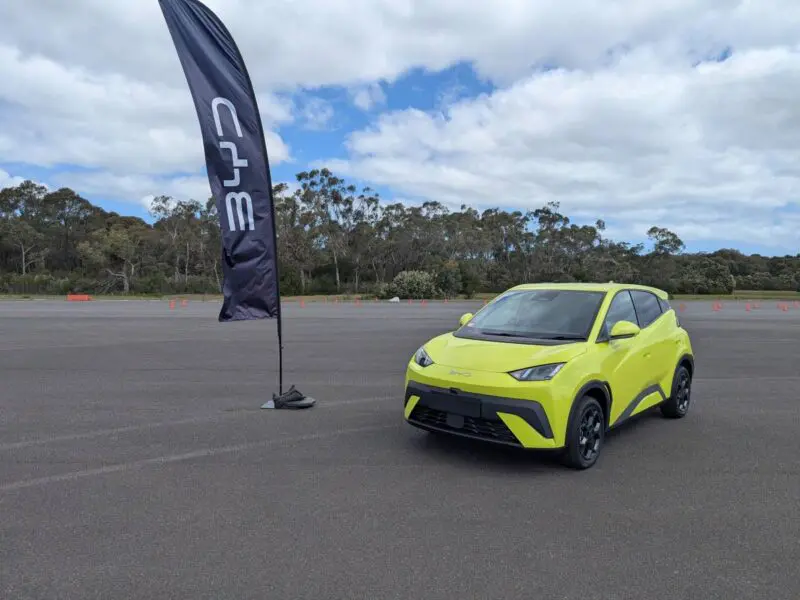
On the opposite end of the market spectrum, BYD unveiled fresh details on its upcoming Atto 1, touted as Australia’s lowest-cost EV once it goes on sale. Early drives suggest the compact model offers practical range, accessible pricing, and build quality that could make it the country’s new entry point to EV ownership. The car has already been spotted testing on Australian roads ahead of launch, signaling BYD’s growing confidence in the local market. If priced right, the Atto 1 could democratize electric mobility in the same way the Nissan Leaf did a decade ago — but with more modern range and tech.
Hydrogen on the Highway: First Aussie Tilt Tray Truck Up for Auction
Electric power isn’t the only zero-emission game in town. In an Australian first, auction house Pickles will soon sell a hydrogen-powered tilt tray truck, built by Hyzon Motors. The company described the sale as unprecedented, given how few hydrogen vehicles have entered the secondary market. While hydrogen transport still faces infrastructure and cost hurdles, this auction represents a real-world signal that hydrogen trucks are starting to mature beyond the prototype phase — and eventually could become a viable sector of clean logistics.
Jolt Launches Frictionless EV Charging
Australian charging network Jolt just rolled out a new automatic plug-in system, allowing drivers to simply connect their EV and begin charging instantly, skipping authentication apps and cards. This small but significant step simplifies public charging — one of the biggest barriers to broader EV adoption. By automating identification and payment, Jolt’s solution mirrors the convenience of Tesla’s Supercharger experience and hints at a more unified, user-friendly charging future.
“The Limits of Physics”: New Tesla Roadster Coming Before Christmas
Tesla once again made waves, confirming that its long-delayed Roadster update will finally debut before Christmas 2025. Claiming to “test the limits of physics,” the automaker suggests performance that would outclass most hypercars — likely combining innovations in cooling, aerodynamics, and battery density. While details remain scarce, the mere promise of the model’s return has reignited interest among fans waiting since its first reveal back in 2017. If the production version lives up to even part of its hype, it will reinforce Tesla’s dominance in the premium performance EV segment.
Air New Zealand Takes Flight with Electric Aviation
EVs aren’t just for the road anymore. Air New Zealand has officially flown its first electric aircraft, marking a milestone for the Southern Hemisphere’s aviation industry. The test flight, using a Beta Alia CX300, represents the national carrier’s first tangible step toward decarbonizing domestic air travel. While this prototype can’t replace full-sized airliners yet, it offers a glimpse of sustainable regional transport — one that may soon connect short-hop routes between cities in a carbon-neutral way.
The Plug-In Hybrid Debate Heats Up
A controversial new report has reignited criticism of plug-in hybrid vehicles (PHEVs), calling them “one of the biggest cons in automotive history.” The study found real-world pollution levels up to eight times higher than official claims, with emissions close to traditional petrol cars. The findings highlight a growing concern: many PHEV drivers rarely charge their vehicles, instead relying heavily on their combustion engines. This underscores the need for clearer regulation and consumer education as governments push toward emissions reduction targets.
Conversations and Culture: The Driven Podcast Highlights
The Driven Podcast featured two engaging episodes this week. The first explored BYD’s growing presence in the EV market, Kia’s new PV5 van, and Volkswagen’s ID. Buzz GTX. The second episode featured Dan Caesar, CEO of Everything Electric, discussing how the event series evolved from YouTube origins into a global movement advancing EV adoption and electrified living. These conversations emphasize how the EV revolution is not only technological, but cultural — reshaping how people think about energy, transport, and their own environmental footprint.
Tesla Cybercab Spotted Testing
Closing out the week is a sighting of Tesla’s futuristic Cybercab, a fully autonomous two-door vehicle with no steering wheel or pedals. Filmed during real-world testing, the prototype hints at the company’s long-term vision for driverless mobility. Planned for a 2026 release, the Cybercab would serve as part of Tesla’s envisioned robotaxi network. While regulatory approval remains a question mark, the technology’s progress appears to be accelerating.
Conclusion: A Broader Electric Horizon
Across all these stories, one pattern is clear: electrification is no longer confined to private passenger cars. It now spans aviation, trucking, and public infrastructure, with even the low-cost segment finding its footing. Simultaneously, challenges like user behavior, greenwashing in hybrids, and infrastructure gaps persist. But innovation — whether found in a Jolt charger, a BYD hatchback, or a Tesla prototype — is steadily redefining what clean transport means. The global shift is no longer hypothetical. It’s here, built into the asphalt, the air, and increasingly, the sky.