

Automakers Hit Reverse: Ford’s 2025 Mach-E Shows Shift Back Toward Usable Controls
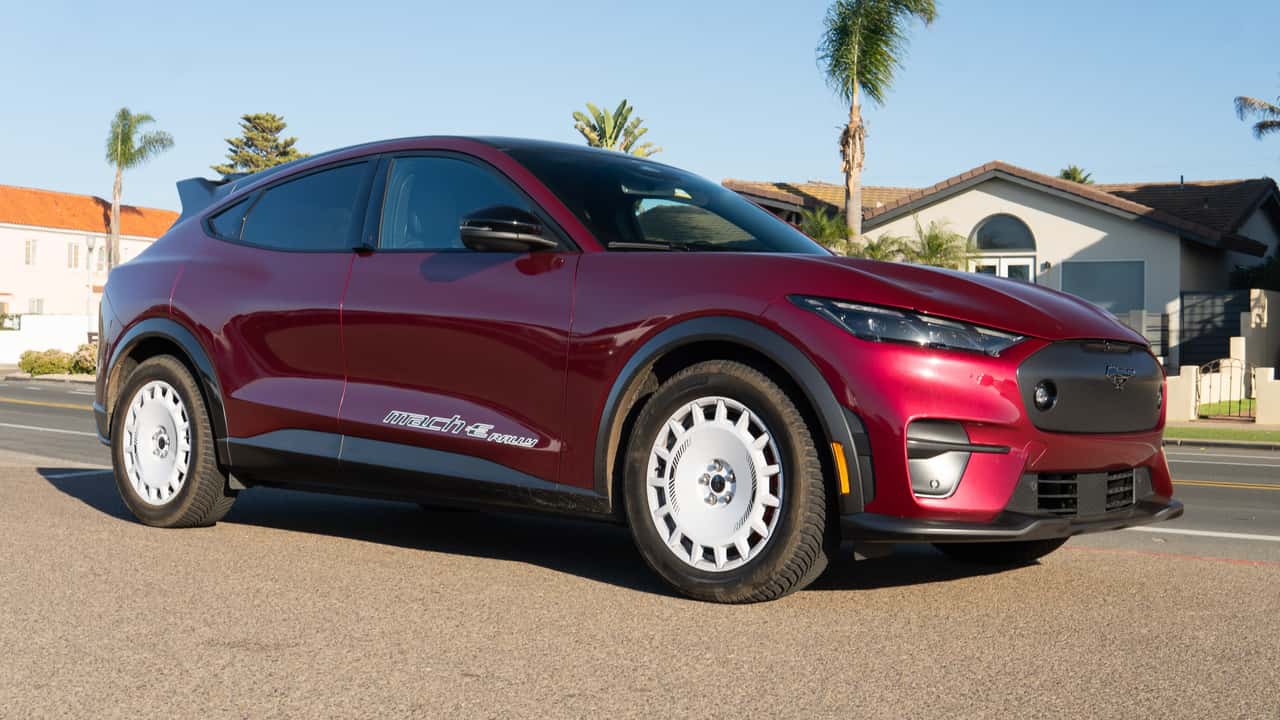
For years, the car industry seemed determined to reinvent how drivers interact with their vehicles—often for the worse. Touch panels replaced buttons, gear selectors turned into rotary dials, and even simple door handles got reimagined into confusing new shapes. But a quiet revolution appears to be underway. After a decade of tech-forward but user-unfriendly experimentation, carmakers are rediscovering the value of simplicity, and Ford’s latest update to the Mustang Mach-E is a clear sign of that change.
Ford’s Big Shift – Literally
The 2025 Ford Mustang Mach-E now trades its much-maligned rotary gear shifter for a traditional column-mounted selector. For drivers, that’s not just a nostalgic callback—it’s a major improvement in usability. The old knob was easy to misjudge both by hand and by eye; shifting gears often required glancing down, breaking focus from the road. The new column shifter restores an intuitive motion that drivers can activate by feel alone.
This adjustment may seem subtle, but it addresses one of the biggest complaints about Ford’s electric lineup. Column-mounted shifters are functional and familiar, freeing up space in the center console for storage or cupholders. Competitors like General Motors, Hyundai, Mercedes-Benz, and Rivian have embraced this approach already, and Ford’s late but welcome adoption suggests the company is paying attention to what customers actually want.
Living With the Mach-E, Version 2025
Over a week of everyday driving, the latest Mach-E reveals both improvement and ongoing frustration. The new shifter makes low-speed maneuvers smoother and more confidence-inspiring, particularly in parking or tight spaces. Nonetheless, the vehicle’s interface still traps users in a maze of unnecessarily slow menus and delayed screen transitions.
The infotainment setup, in particular, remains a sore spot. While the graphics are sharp and logically arranged, the system’s responsiveness leaves much to be desired. Selecting different menu sections often results in multi-second delays, making even simple interactions—like opening the frunk or adjusting climate controls—feel sluggish. For a car marketed as futuristic, the experience feels distinctly dated, as though the software is running on underpowered hardware.
The Buttonless Backlash
The Mach-E’s interface flaws are not unique to Ford. Across the auto industry, the push toward minimalist, touchscreen-heavy design has begun to wear thin. Many brands took inspiration from consumer electronics, aiming to create vehicles that looked and felt like smartphones on wheels. The result: sleek dashboards but clumsy everyday usability.
Mercedes-Benz, Volkswagen, Hyundai, Kia, and others have all dabbled in touch-sensitive panels and capacitive buttons—features that look elegant in press photos but frustrate drivers in motion. Poor haptic feedback, lack of tactile reference points, and the need to look down to make adjustments have combined to make these systems unpopular with many customers.
The backlash has been forceful enough that manufacturers are now moving to fix things. Volkswagen, for instance, recently announced a return to physical switches and dials after years of criticism. One executive even quipped, “It’s a car, not a phone,” summarizing what many drivers had already concluded. Several newer electric vehicle startups, including Scout and Slate, have also made physical controls part of their design identity from the start. Hyundai, responding to similar user feedback, has begun to reintroduce physical interfaces for essential functions like climate and audio.
Lessons in Minimalism and Function
The Mach-E’s evolution perfectly encapsulates this industry-wide course correction. When it first launched, the vehicle represented peak automotive minimalism: clean design, expansive touchscreens, and an interface that prioritized visual simplicity over tactile logic. But as EV makers gained more experience—and as consumers voiced their frustrations—these priorities began to shift.
Ford’s gradual improvements to the Mach-E reflect more than cosmetic adjustment. The company has added hardware and software upgrades over time while also cutting prices across the lineup. The result is a more polished, more affordable electric SUV that doesn’t sacrifice practicality for the sake of modernist aesthetics. The addition of the column shifter is a small step, but it’s emblematic of a larger realization within the auto industry: progress doesn’t always mean removing buttons.
Regulators in Europe are also encouraging this move, considering rules that would require physical interfaces for critical functions. These shifts suggest that the future of car interiors will balance high-tech displays with tactile, immediate controls instead of eliminating them.
Driving Toward a More Usable Future
Electric vehicles are becoming cheaper to produce thanks to scaling battery production and streamlined supply chains. This reduction in cost offers automakers room to spend more on usability and craftsmanship rather than cutting corners to meet price goals. The 2025 Mach-E is not a flawless machine—its infotainment lag and door mechanisms remain cumbersome—but it represents meaningful progress.
In a market where tech often overwhelms convenience, the Mach-E’s latest update signals a turn back toward human-centered design. The trend of adding unnecessary complexity may finally be ending. Ford’s new shifter doesn’t just change how you engage Drive; it may mark the point where automakers relearned how to make cars feel intuitive again.