

Owner Shares Real-World Pros and Cons of Upgrading to the 2025 Rivian R1T Electric Pickup
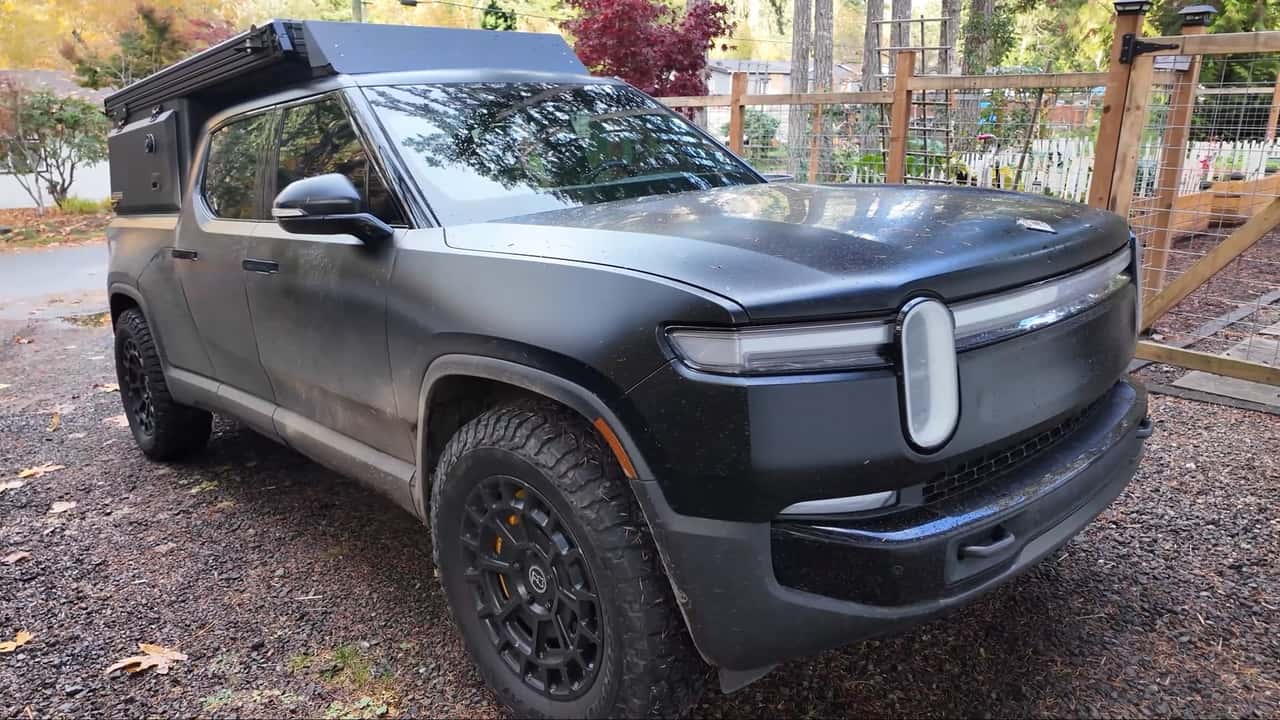
The second generation of Rivian’s R1T electric pickup may look nearly identical to the earlier model on the surface, but under the familiar exterior, the EV startup has reworked much of the truck’s hardware and software. From new electric motors to refined electronic architecture and improved efficiency, the 2025 R1T aims to offer a deeper evolution of Rivian’s flagship pickup rather than a simple refresh. Yet for those who already own a first-generation R1T, the question remains: is it really worth upgrading?
That’s a question tackled by real-world owner Dominic Wilkerson, who previously drove a first-generation R1T before trading it for the latest second-generation version. In his recent YouTube video, Wilkerson details his experience living with both models, offering an honest assessment of what Rivian has improved—and where it still needs work.
Wilkerson’s earlier R1T was equipped with Rivian’s original quad-motor system, a setup that delivered impressive off-road capability and performance but came with a noticeable hit to efficiency. For his new truck, he opted for the tri-motor version paired with Rivian’s large Max battery pack, which promises up to 371 miles of range on a full charge. The adaptive air suspension continues to lend the truck its signature smooth ride, something the owner appreciates given the long hours he spends behind the wheel.
As a professional real estate photographer, Wilkerson relies on his truck almost like a mobile office. He regularly drives between 200 and 300 miles per day, hauling gear and traveling to sites across long distances. In less than a year, the odometer on his new R1T already shows over 28,000 miles. Comfort and reliability aren’t luxuries for his line of work—they’re necessities. For the most part, the second-generation pickup has delivered a refined, composed driving experience. Yet, as is often the case with tech-heavy EVs, not everything has gone perfectly.
Compared to his first truck, which had a list of over a dozen small issues that were eventually fixed by Rivian’s service centers, the 2025 model has been better but not flawless. One of the most persistent problems has involved the tire pressure monitoring sensors. Shortly after purchase, the system malfunctioned, forcing the truck to spend about three weeks in a Rivian service bay. Technicians were eventually able to get it working again, but the problem occasionally reappears. According to Wilkerson, the issue may stem from radio frequency interference generated by the dual motors mounted on the rear axle. Rivian’s engineers are aware of the situation, but it remains an occasional annoyance.
Another early hiccup involved the truck’s alignment, which required correction almost immediately after delivery. While not an uncommon issue for newly assembled vehicles, it was nonetheless disappointing for a truck that had just rolled off the production line. Soon after, the electrical outlets mounted in the bed failed following a weekend of powering a compact refrigerator. After servicing, the failure was traced to an internal fault and repaired, but it raised questions for Wilkerson about durability under real-world use.
Perhaps more concerning was a replacement of the front subframe, which Rivian technicians reportedly performed after discovering it was too close to the pickup’s maximum weight limit. Although resolved under warranty, the event highlighted how the R1T—while rugged and capable—still has some weight and component durability issues to iron out. Beyond these complications, the owner has made his own modifications to suit his needs, including a bed cover and roof rack for extra versatility and equipment storage.
Despite these frustrations, Wilkerson acknowledges that the 2025 R1T represents a meaningful improvement over the first generation. The software interface runs smoother, and the tri-motor setup feels both powerful and more efficient. Cabin comfort remains a strong point, with supple seating and the refined suspension system delivering an impressively comfortable ride over long days on the road.
However, there is one area where the owner feels Rivian took a step back: the premium audio system. He describes it as underwhelming, particularly because of weak bass response. While sound quality is subjective, and other drivers may find it acceptable, Wilkerson believes it falls short of expectations in a six-figure vehicle.
When asked if he would buy the same truck again, his answer was mixed: “Yes, but no.” The statement sums up his perspective well. He appreciates nearly everything about the R1T—the performance, comfort, and overall design—but if he could redo the purchase, he might have chosen Rivian’s SUV, the R1S, or even waited for the upcoming R2 lineup, which promises to deliver similar performance in a smaller, more efficient format.
Still, he concedes that for those considering a Rivian for the first time, particularly if they can find a well-maintained first-generation R1T at a bargain, the earlier models remain compelling. With used prices dipping below $60,000, the first-gen variant offers much of the same capability and style at a significantly lower cost.
Ultimately, Wilkerson’s real-world take paints the 2025 Rivian R1T as a truck that continues to push the frontier of electric pickups, but one that is still evolving. It’s more refined, more capable, and more efficient than before, yet even this second-generation version reminds drivers that Rivian’s vision of adventure-ready EVs is still a work in progress.