
How a YouTuber Brought a Dead Fisker Ocean Back to Life After the Company’s Collapse
The Rise and Fall of Fisker’s Ambitious Electric SUV
When Fisker introduced the Ocean, it was hailed as one of the boldest new entries into the electric vehicle market. The SUV offered sleek design, strong environmental messaging, and the promise of taking on industry titans like Tesla and Rivian. Unfortunately, that promise didn’t last long. Just a few short years after its much-anticipated debut, Fisker Inc. officially filed for bankruptcy, leaving owners of the Ocean facing an uncertain future. With spare parts scarce and customer support now non-existent, many vehicles have been left effectively stranded — sophisticated, silent paperweights parked in driveways across the country.
Despite the company’s demise, the story of the Ocean isn’t completely over. Among the frustrated owners and abandoned inventory, a few enthusiasts and independent repairers are refusing to let the vehicle’s fate be sealed. And one of the most high-profile among them is none other than Rich Benoit, better known to millions of followers as Rich Rebuilds on YouTube.
A Broken EV and a Unique Challenge
Benoit earned his reputation by tackling the impossible — salvaging, repairing, and reviving electric vehicles that most mechanics won’t even touch. From Tesla rebuilds to wild custom EV conversions, his videos have become a showcase of creativity, persistence, and technical perseverance. So, when a subscriber reached out to offer him a damaged Fisker Ocean for free, Benoit couldn’t resist taking on the challenge. There was only one condition: he had to bring it back to life.
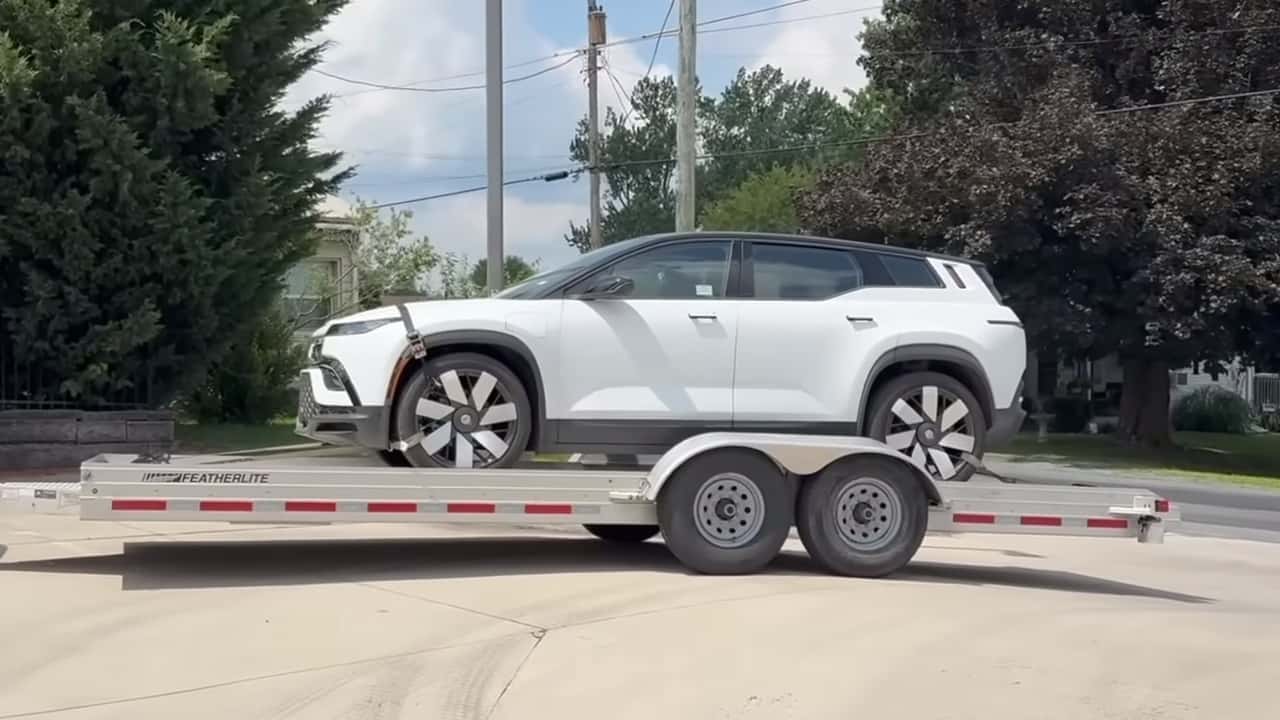
The white Fisker that arrived at Benoit’s Massachusetts garage wasn’t in great shape. The hood was crushed, one of the headlights was hanging loose, and—perhaps most crucially—the car refused to start. It wouldn’t charge either, rendering the 5,000-pound SUV completely lifeless. In the world of EVs, that’s a particularly grim diagnosis: a vehicle that can’t charge or power on is little more than an oversized brick.
Fixing the Unfixable
To most people, a repair bill on such a vehicle would sound intimidating, if not completely impractical. A replacement hood alone sells online for around $3,000. Benoit, however, took a more resourceful approach. Rather than purchasing a new panel, he painstakingly repaired the damaged original. After straightening out the twisted metal and using body filler to smooth out the dents, he applied a custom wrap to hide the imperfections. The total cost? Around $70 in materials — a far cry from the factory replacement cost.
The charging problem turned out to be another quirk of Fisker’s complex design. The Ocean’s charge port had a locking mechanism that was supposed to keep the charging door secured. Unfortunately, that same system was preventing the vehicle from accepting a charge. Benoit traced the issue to the small locking tabs inside the charge port — and rather than replacing expensive parts, he simply removed the defective pieces. That quick fix restored the car’s ability to charge, saving the vehicle from total shutdown.
As for the headlight, the damage seemed terminal. The mounting tabs had snapped off completely, leaving the light unit unsupported. But with a little ingenuity, Benoit used a two-part epoxy to rebuild and reattach the broken mounts. The result was a perfectly functioning headlight assembly once again, without spending thousands on hard-to-find OEM components.
Bringing the Ocean Back to Life
Even after these triumphs, the biggest challenge still loomed: the Ocean stubbornly refused to start. After diagnosing several electronic communication issues, Benoit discovered the root of the problem lay not in the powertrain but in the key fob. The original unit wasn’t being recognized by the vehicle’s computer. A newly programmed key later, the electric SUV roared back to digital life.
To increase reliability, Benoit also tackled one of the Fisker Ocean’s most publicized weak points — its door handles. The factory-installed handles were the subject of a recall after multiple owners reported they would stick or fail to unlatch the doors. Benoit replaced them with an upgraded version designed to prevent such failures. It was a smart precaution for a vehicle already living on borrowed time.
The Larger Picture for Fisker Owners
While this individual story ends on a hopeful note, it also underscores the broader uncertainty for Fisker Ocean owners. With the manufacturer shuttered and its support network gone, even routine repairs have become a daunting challenge. Parts are scarce, service centers have closed, and many vehicles are left half-functional due to software or hardware issues that only Fisker’s own systems can correct.
Still, creators like Rich Benoit are offering a sense of optimism in an otherwise bleak landscape. Through perseverance and problem-solving, they prove that innovation doesn’t stop when a company collapses — sometimes, it’s just starting. The Ocean may never fulfill its original promise as a major EV contender, but thanks to a small community of passionate tinkerers, its story doesn’t have to end in silence.
In the end, Benoit didn’t just fix a broken car; he revived a symbol of what could have been — and a reminder that in the right hands, even a corporate casualty can find a second life.