
 Buy & Sell
 All EV Sales
 Explore
 Account
 Back to News
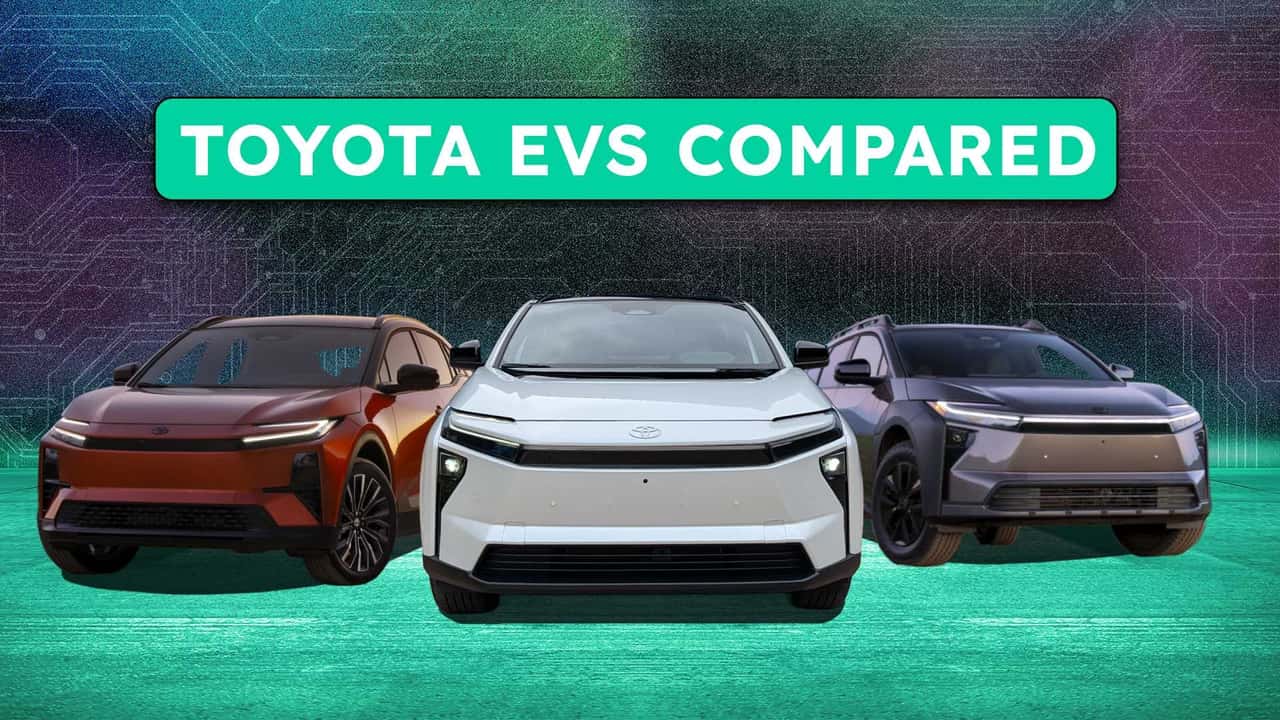
 Toyota’s electric-vehicle strategy has taken an unusual path. The automaker was slow to expand its EV range during the market’s early growth, relying largely on the underwhelming bZ4X while other manufacturers introduced multiple new models. Now, as federal incentives have disappeared and EV demand has cooled, Toyota has launched three significantly improved electric vehicles for American buyers.
The updated bZ, the smaller C-HR, and the larger bZ Woodland now give Toyota customers more choice than ever. The approach appears to be paying off. During the first quarter of the year, the bZ became the best-selling non-Tesla EV in the United States, helped by major improvements to its driving range, efficiency, and charging performance. Toyota’s U.S. EV sales then climbed 225% in the second quarter, supported by the broader lineup.
All three models use Toyota’s e-TNGA electric platform and are built in Japan. Although they share much of their underlying technology, each one targets a different type of buyer. The bZ is positioned as the value-focused crossover, competing with vehicles such as the Tesla Model Y and Hyundai Ioniq 5. The C-HR is smaller and more stylish, with a sportier driving character. The bZ Woodland is the largest and most outdoors-oriented model, offering more interior space, greater ground clearance, and all-terrain tires.
Including destination charges, starting prices are approximately $36,495 for the bZ, $38,695 for the C-HR, and $46,975 for the bZ Woodland. That makes the regular bZ the clear entry point into Toyota’s electric range, while the Woodland commands a substantial premium for its added capability and size.
The three vehicles use the same 74.7-kilowatt-hour nickel-manganese-cobalt battery pack. Depending on configuration, the bZ can travel as far as 314 miles on a full charge, while the C-HR is rated for up to 287 miles and the bZ Woodland reaches a maximum of 280 miles. The base bZ can also be ordered with a smaller 57.7-kWh battery, giving it an EPA-estimated range of 236 miles.
All-wheel drive is standard on the C-HR and bZ Woodland. Buyers who prioritize range and efficiency can choose front-wheel drive on the bZ, including with either battery option. The front-wheel-drive version with the larger battery provides the lineup’s longest range and is one of the strongest arguments in favor of the regular bZ.
Toyota has also addressed two of the biggest weaknesses of the old bZ4X: efficiency and charging speed. The 2026 and 2027 models receive revised batteries and electric motors, and real-world testing showed more than three miles per kilowatt-hour in mixed driving across all three vehicles. In favorable summer conditions, the C-HR and bZ Woodland briefly approached five miles per kilowatt-hour in city driving before settling closer to 3.5 to 4.0 miles per kilowatt-hour during longer trips.
Cold temperatures will reduce those figures. Winter testing of the bZ in the northeastern United States produced a maximum of 2.7 miles per kilowatt-hour, illustrating how strongly weather, driving style, road conditions, and heating demands can affect an EV’s range.
Fast-charging performance is now much more competitive. Toyota says each vehicle can charge from 10% to 80% in about 30 minutes, compared with nearly an hour for the original bZ4X. In one charging test, the C-HR went from 15% to 80% in 26 minutes and added nearly 200 miles of estimated range. The bZ Woodland required 28 minutes to move from 12% to 80%. A charge from roughly 12% to full took 46 minutes in the Woodland, while the C-HR needed 48 minutes in a similar test.
Driving behavior is where the models differ most noticeably. The C-HR is the sportiest of the three, with 338 horsepower, standard all-wheel drive, and a claimed zero-to-60-mph time of 4.9 seconds. It feels lively off the line and remains composed in corners, with limited body roll. The all-wheel-drive bZ also produces 338 horsepower and offers strong acceleration, while its 221-hp front-wheel-drive version is still quick enough for everyday driving.
The bZ Woodland is the most powerful, producing 375 horsepower. Its larger body and additional weight do result in more body movement through corners, but the extra size improves comfort and practicality. With 8.4 inches of ground clearance, longer suspension travel, and thick-sidewall all-terrain tires, it is better suited to rough roads and light off-road use than the other two models. Snow, Dirt, and Mud modes adjust traction and torque distribution for low-grip surfaces.
Ride quality varies across the lineup. The standard bZ has the softest suspension and delivers the most comfortable urban ride. The C-HR is firmer and can transmit sharp impacts into the cabin, although its stiffer setup helps it feel more controlled at higher speeds. Both the bZ and C-HR can produce loud impacts over expansion joints. The Woodland is the most polished over poor pavement, absorbing bumps with longer suspension travel and better damping.
Inside, the three vehicles are nearly identical. Each includes a 14-inch touchscreen, wireless Apple CarPlay and Android Auto, a digital instrument display, the same steering wheel, and a rotary gear selector. The infotainment system is functional but not especially responsive or sophisticated, and testing revealed occasional connectivity problems. One bZ Woodland even failed to play Bluetooth audio or connect to wireless Android Auto during several drives.
None of these vehicles uses Toyota’s newer Arene software platform, which appears in models such as the latest RAV4 and Lexus ES. Arene supports a more modern interface, customizable widgets, over-the-air updates for infotainment and driver-assistance systems, and additional features such as a built-in dashcam. Toyota says the current bZ, C-HR, and bZ Woodland lack the necessary hardware and software architecture, meaning they may need a significant future update before receiving the system.
The instrument cluster is another shared weakness. It sits far back near the windshield and can be partially blocked by the steering wheel, depending on the driver’s seating position. That makes important information such as speed and remaining range harder to see for some drivers.
For practicality, the bZ Woodland is the clear winner. It offers the most rear-seat room and 33.8 cubic feet of cargo space behind the second row. The bZ provides 27.7 cubic feet, while the C-HR has 25.3 cubic feet. The regular bZ remains roomy enough for most passengers, but the C-HR’s rear seat is noticeably tighter for taller adults.
The C-HR’s higher price and firmer ride make it the least appealing choice of the three for many buyers. The bZ Woodland is the most comfortable, capable, and spacious, but its nearly $10,000 premium over the bZ is difficult to overlook.
That leaves the bZ as the strongest overall value. The XLE front-wheel-drive model with the larger battery offers up to 314 miles of range at a price close to the base C-HR. Spending a little more for all-wheel drive brings substantially stronger performance and adds the same off-road driving modes offered by the Woodland.
Toyota’s latest EVs are not class leaders in every category, but they are considerably more competitive than the original bZ4X. For buyers who value Toyota’s reputation, want a practical electric crossover, and are willing to accept older infotainment technology, the updated bZ lineup provides a credible and increasingly attractive path into electric driving.
All EV Sales Research Team
9/10/2026