
 Buy & Sell
 All EV Sales
 Explore
 Account
 Back to News
 Mercedes GLC 400 Electric Review: A Major Step Forward for the Brand’s EV Lineup
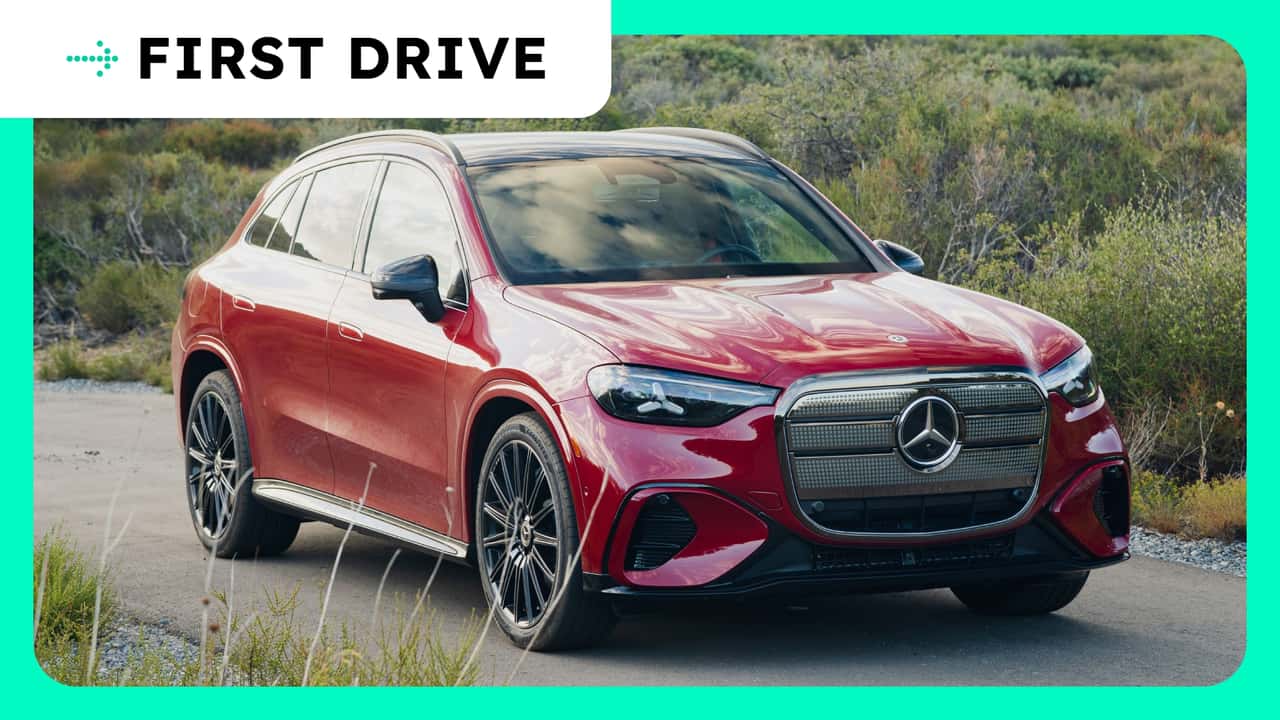
Mercedes-Benz has introduced several electric vehicles in recent years, but the new GLC Electric may be the most consequential of them all. While the company’s electric CLA demonstrates impressive efficiency and the upcoming C-Class EV will expand its range, the GLC enters one of the most important segments in the American luxury market: the premium crossover.
The 2027 Mercedes-Benz GLC 400 4Matic Electric combines a modern 800-volt electrical system, a large battery, strong performance, and a long list of luxury features. It is also based on Mercedes’ new MB.EA platform, which will serve as the foundation for additional electric models. After a week and roughly 300 miles of driving through mountain roads, traffic, dirt roads, and highways, the GLC emerged as Mercedes’ most complete electric vehicle to date.
A new generation of Mercedes EV technology
The GLC Electric represents a significant departure from the company’s earlier EQ models. Those vehicles were often criticized for conservative electric technology, excessive weight, and styling that did not always appeal to traditional Mercedes customers. The GLC takes a more convincing approach, pairing a software-focused architecture with an 800-volt system designed to improve both efficiency and charging performance.
The GLC 400 4Matic uses two electric motors to produce 483 horsepower and 590 pound-feet of torque. Mercedes estimates a 0-to-60-mph time of 4.2 seconds, and the vehicle feels every bit as quick in everyday driving. Acceleration is immediate at virtually any speed, yet the power delivery remains smooth and easy to control.
A two-speed transmission is fitted to the rear motor to improve efficiency during highway driving. The front motor can also disconnect from the wheels when it is not needed, reducing mechanical losses. These features help the GLC deliver impressive range without sacrificing all-wheel-drive traction or performance.
The tested vehicle was rated at 350 miles of EPA range on its large 21-inch wheels and performance tires. Smaller wheels can increase the official figure to as much as 380 miles. Rear-wheel-drive GLC 300 models are expected to arrive later with more than 400 miles of range, giving buyers an even more impressive long-distance option.
Rapid charging, with one major limitation
The GLC’s 800-volt electrical system is one of its strongest features. During testing, the vehicle charged from 15% to 80% in approximately 20 minutes and 30 seconds at a powerful DC fast charger. The car reached a peak of 350 kilowatts, although Mercedes says it can accept as much as 360 kilowatts under ideal conditions. Charging performance remained strong as the battery filled, and the thermal-management system appeared to prevent excessive heat buildup.
However, charging at Tesla Supercharger stations is a more complicated experience. The GLC comes with a native NACS port for DC charging, allowing it to connect directly to compatible Superchargers. The problem is that most of Tesla’s network operates at lower voltage than the GLC’s preferred 800-volt architecture. As a result, the Mercedes must use an onboard voltage booster.
At one Supercharger capable of delivering up to 325 kilowatts, the GLC reached only 83 kilowatts. The vehicle estimated that charging from 12% to 80% would take 47 minutes. That is a substantial disadvantage compared with the car’s performance at a modern high-voltage charging site.
The GLC also uses a separate J1772 connector for AC charging. Its NACS port is intended only for DC fast charging, meaning owners will need an adapter to use Tesla Destination Chargers or other AC charging equipment with a NACS plug. Mercedes made this choice partly to ease the transition for owners who already have home charging equipment, but it creates an unusual split between the vehicle’s two charging ports.
Excellent road manners
On the road, the GLC feels refined and exceptionally composed. The suspension absorbs rough pavement without becoming floaty, while the steering has a reassuring weight and accuracy. Optional rear-wheel steering makes the crossover feel smaller and more maneuverable on narrow forest roads and in tight parking areas.
The GLC is also remarkably stable when driven quickly. Its powerful electric drivetrain can deliver rapid acceleration without making the chassis feel nervous or overwhelmed. The quiet cabin further improves the experience, allowing passengers to enjoy the surroundings without the vibration and noise associated with a combustion engine.
Compared with conventional gasoline-powered luxury crossovers, the electric GLC offers a more polished driving experience. It is quieter, smoother, and more controlled, with the low center of gravity contributing to confident cornering. Newer electric competitors such as the Rivian R2, Volvo EX60, and BMW iX3 may provide strong alternatives, but the GLC is clearly capable of competing with them on comfort and refinement.
A technology-heavy interior
Mercedes has equipped the GLC with nearly every modern luxury feature imaginable. Depending on the selected options, buyers can get massaging and ventilated seats, rear-seat heating, a Burmester surround-sound system with Dolby Atmos, video streaming, games, multicolor ambient lighting, self-parking technology, and an AI-assisted voice system.
The optional 39.1-inch Hyperscreen spans nearly the entire dashboard. It provides sharp graphics, extensive customization, and access to a wide range of vehicle functions. The system also supports Dolby Atmos through Apple CarPlay, allowing the Burmester audio system to make particularly impressive use of compatible content.
The panoramic roof can be electronically dimmed in sections, allowing occupants to block sunlight over selected areas while leaving other portions transparent. Mercedes also places its three-pointed-star emblem throughout the vehicle, including in the lighting, grille, cabin trim, and roof glass. The result is unmistakably luxurious, although some buyers may find the styling and branding excessive.
The main weakness of the interior is the reliance on the touchscreen. Nearly every function is controlled digitally, including media controls and climate adjustments. There are no simple physical buttons for skipping tracks, and on-screen menus can obscure controls depending on what is currently displayed. The fan-speed adjustment was also slow at times, requiring repeated trips into the climate menu.
Driver assistance still needs work
The GLC introduces Mercedes’ latest MB.Drive driver-assistance system, supported by NVIDIA hardware. The company says the platform will eventually support supervised, point-to-point driving similar to Tesla’s Full Self-Driving system.
For now, the system is more limited. It can maintain speed and lane position, perform automatic lane changes around slower traffic, and handle stop-and-go conditions. However, it was less confident on high-speed freeway curves than expected, and its operation felt less polished than the previous Mercedes system available in models such as the EQE and EQS. It also remains behind Tesla’s FSD and General Motors’ Super Cruise in overall capability.
Mercedes promises significant improvements through future software updates, but the company has not provided a firm timeline for the more advanced functions.
Pricing and final assessment
The GLC 400 4Matic Electric starts at $64,950, while the heavily equipped test vehicle cost $89,270. A major portion of that increase came from the $6,800 Pinnacle Plus package, which adds the Hyperscreen, illuminated panoramic roof, advanced matrix headlights, cooled and massaging front seats, heated rear seats, and the Burmester audio system.
At its base price, the GLC offers impressive range, rapid charging, strong performance, and a well-finished cabin. With options, it approaches the price of larger luxury electric SUVs, including the Rivian R1S. That makes the equipment strategy an important consideration for buyers.
Even so, the GLC 400 4Matic Electric is Mercedes’ most successful EV so far. It delivers the comfort, composure, and prestige expected from the brand while adding genuinely competitive range, charging speed, and software. Its Supercharger limitations, touchscreen dependence, and unfinished driver-assistance technology prevent it from being perfect, but the GLC is a convincing sign that Mercedes is finally finding its footing in the modern electric-vehicle market.
All EV Sales Research Team
9/15/2026