

EVs Enter a More Powerful, More Connected and More Practical Phase
The Electric Vehicle Market Moves Beyond the Early-Adopter Era
The latest wave of electric-vehicle news shows an industry becoming broader, more capable and increasingly ambitious. The stories span high-performance hatchbacks, long-range batteries, electric trucks, charging infrastructure, autonomous driving and more affordable small vehicles. Taken together, they suggest that the EV market is no longer defined by a single promise of zero-emission transportation. Instead, manufacturers are competing across almost every category, from inexpensive urban runabouts to premium SUVs and heavy-duty commercial vehicles.
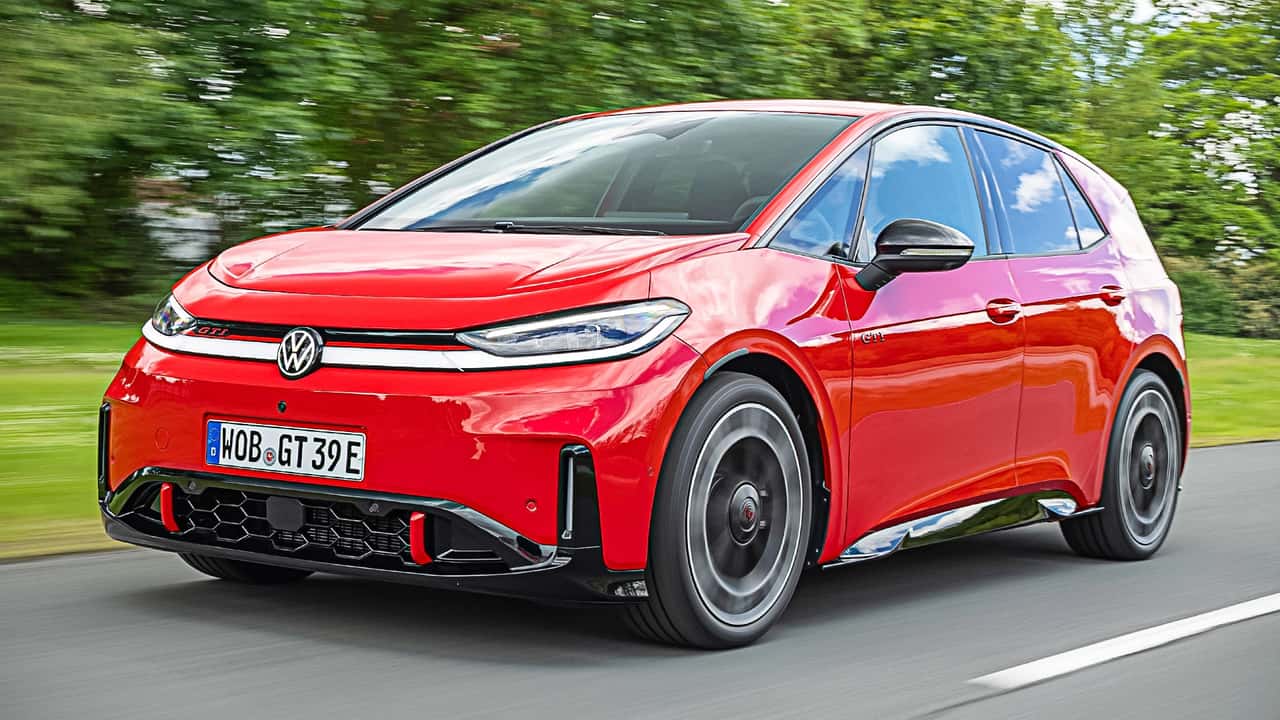
Performance is one of the clearest themes. Volkswagen’s newly revealed ID.3 Neo is being positioned as an electric hot hatch and reportedly becomes the most powerful GTI-badged model in the nameplate’s history. That is significant because the GTI identity has traditionally been linked to lightweight construction, quick acceleration and accessible driving fun. An electric version does not simply preserve that formula; instant torque gives it a new interpretation. The challenge will be maintaining the agility and affordability that made the original concept popular while adding the weight and cost associated with a large battery.
Luxury vehicles are following a different path, using electrification and software to make driving more effortless. One flagship SUV feature is described as eliminating a mundane task for buyers willing to pay extra, reflecting the growing use of automated convenience systems in high-end cars. Mercedes-Benz’s electric GLC is also highlighted for its refined driving experience and sophisticated technology, although its price places it firmly in the premium segment. These vehicles show how manufacturers are using EV platforms to create quieter cabins, smoother power delivery and more advanced digital experiences rather than simply replacing an engine with a motor.
Range remains central to the conversation. The market now includes 46 electric cars capable of traveling at least 300 miles on a charge, four more than in the previous comparison. That growing selection is important because long-distance usability remains one of the main concerns for potential buyers. Battery development is pushing the limits even further. One newly announced battery is said to offer as much as 620 miles of range while surviving more than 900,000 miles of use. Such claims will need to be tested in real-world conditions, but they point toward improvements in energy density, durability and total ownership value.
Plug-in hybrids are also receiving renewed attention. The 2028 Volvo XC60 and XC90 are expected to deliver more than twice the electric range of their predecessors. A larger electric driving envelope could allow owners to complete most daily trips without using gasoline while retaining an internal-combustion engine for longer journeys. This approach may appeal to drivers who are not ready to depend entirely on public charging, particularly in regions where charging networks remain inconsistent.
Charging infrastructure is expanding alongside vehicle capability. Tesla says its pre-assembled Supercharger units can reduce installation costs by 20 percent compared with traditional charging equipment. Lower deployment costs could help charging providers build stations more quickly and make coverage viable in locations that previously appeared uneconomical. New York has also selected Brooklyn-based It’s Electric to install 700 curbside chargers over the next three years. Curbside charging is especially important for apartment residents and other drivers without private parking, although the success of these projects will depend on permitting, maintenance and reliable access.
Commercial electrification is accelerating as well. The ETT 44 electric semi is set to arrive in Europe with a huge 651-kilowatt-hour battery and megawatt charging capability. Those specifications reflect the demands of long-haul freight, where charging time, payload and uptime are more important than headline acceleration. In Germany, Einride’s Level 4-capable truck has received a first-of-its-kind permit to operate on public roads. The approval is an important step for autonomous freight, though commercial deployment will still require extensive testing, operational oversight and clear rules governing responsibility when automated systems encounter unusual situations.
Driver assistance is moving forward in passenger vehicles, but progress remains measured. The 2027 Ford F-150 is expected to offer hands-free driving while towing a trailer, although limitations will apply. Towing changes a vehicle’s length, handling and braking behavior, making automated driving significantly more difficult than ordinary highway operation. Hyundai has taken a cautious position, saying it did not want to rush a merely adequate Level 2-plus system to market. Its in-house advanced driver-assistance technology is now scheduled for 2029, suggesting that some manufacturers are prioritizing validation over an early launch.
Software is becoming just as important as hardware. The latest infotainment update promises darker blacks, stronger contrast and a cleaner interface. BMW’s new iX3 is the first model to receive an updated system that combines navigation and driver-assistance information in one view. Better integration could reduce the amount of information drivers must process across separate screens, but it also raises expectations for responsiveness, clarity and over-the-air updates.
Not every story is about premium technology. One extremely affordable electric vehicle costs less than $15,000 with all its equipment included, while another small EV has drawn comparisons to a golf cart but is viewed as a potentially useful solution for short urban trips. These vehicles may not satisfy every driver, yet they could make electrification more accessible by focusing on simple transportation rather than excess range or performance.
The political and competitive landscape is changing too. Donald Trump has indicated that he could support electric vehicles if they were made domestically, though existing laws and supply-chain requirements make that difficult. Meanwhile, an autonomous-vehicle company expanding rapidly across the United States is heading to Las Vegas, where Zoox already operates. The arrival of another service in the city underscores how autonomous mobility is becoming a practical commercial competition rather than a purely experimental field.
Overall, the feed presents an EV industry in transition. Electric cars are becoming faster, cheaper to operate, longer-ranged and more digitally integrated, while trucks and buses are beginning to adopt technologies suited to demanding commercial work. The remaining obstacles—high prices, charging availability, regulatory uncertainty, battery durability and the limits of automated driving—have not disappeared. However, the variety of developments shows that electric mobility is advancing on many fronts at once, bringing the market closer to a point where drivers can choose an EV based on preference and purpose rather than compromise alone.