
 Buy & Sell
 All EV Sales
 Explore
 Account
 Back to News
 EV News Roundup: Longer Range, Smarter Driving and a New Wave of Electric Vehicles
The electric-vehicle market continues to expand in several directions at once. Recent developments range from faster and more capable passenger cars to electric trucks, autonomous delivery vehicles, improved charging infrastructure and plug-in hybrids with substantially greater electric range. Taken together, the latest news suggests that the EV industry is moving beyond a narrow focus on battery-powered cars and is instead developing a much broader ecosystem of electric transport.
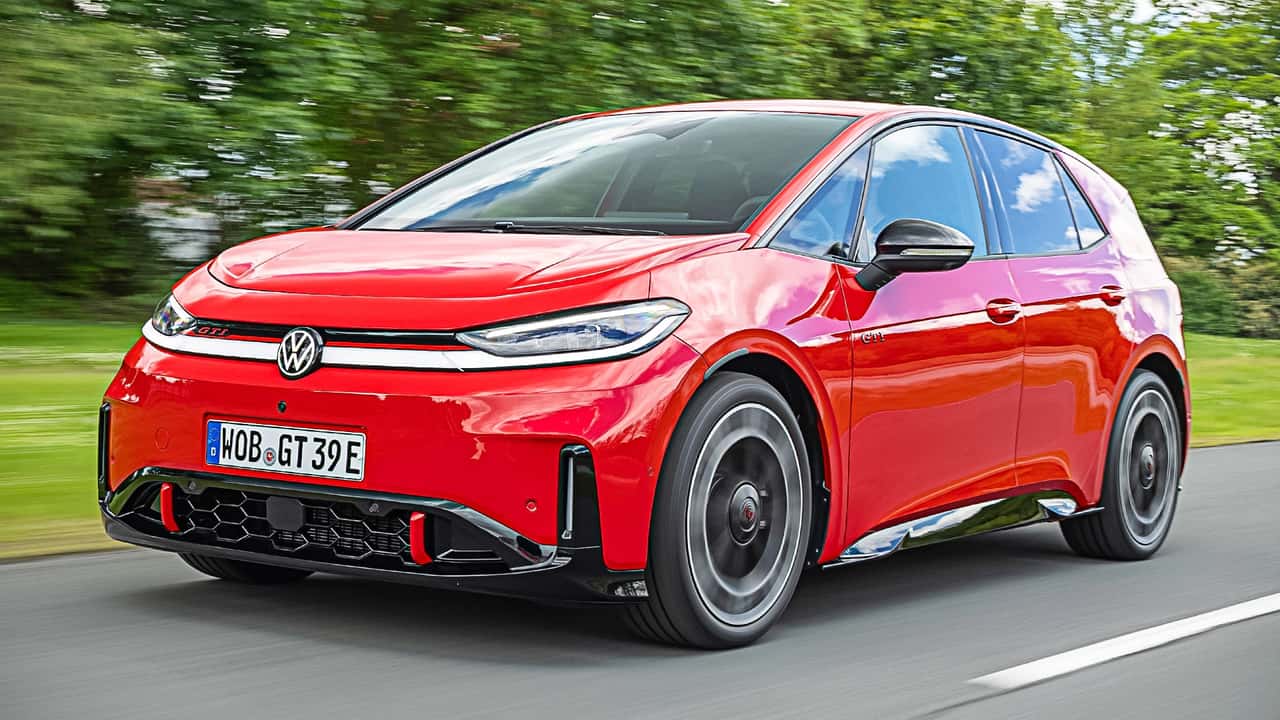
Performance remains an important part of that story. Volkswagen’s recently revealed ID.3 Neo is being positioned as an electric hot hatch with more power than any previous model carrying the GTI name. The car reflects an increasingly common strategy among automakers: using electrification not only to reduce emissions, but also to improve acceleration, responsiveness and everyday usability. Instant torque and sophisticated software allow electric performance models to deliver strong results without necessarily sacrificing practicality.
Luxury brands are also finding new ways to distinguish electric and electrified vehicles. Porsche’s flagship SUV reportedly includes features designed to make ordinary tasks more convenient, although buyers must be prepared to pay for that additional functionality. Mercedes-Benz’s GLC, meanwhile, is being praised for its driving refinement and sophisticated technology, though its pricing places it firmly in the premium segment. These vehicles show how manufacturers are using comfort, automation and high-end interfaces to justify the cost of more expensive electrified models.
Range is still one of the most closely watched measures of EV progress. At least 46 electric cars now offer 300 miles or more of range, four more than in the previous market update. That growing selection indicates that long-distance capability is no longer limited to a handful of flagship models. Battery technology is advancing as well. One newly announced battery is claimed to provide as much as 620 miles of range and to remain durable for more than 900,000 miles. While real-world results will depend on vehicle size, speed, weather and charging habits, such claims point toward a future in which battery longevity may become less of a concern than it is today.
Smaller EVs are contributing to that progress in a different way. A compact electric vehicle recently faced a demanding test involving both a mountain climb and motorway driving. Its energy consumption reportedly delivered an encouraging result, suggesting that efficient design can matter as much as battery capacity. At the opposite end of the affordability spectrum, another small electric vehicle is expected to cost less than $15,000 with its equipment included. Some observers may dismiss such vehicles as little more than glorified golf carts, but inexpensive and simple electric transport could play an important role in urban mobility, short commutes and last-mile travel.
Charging infrastructure is expanding alongside the vehicles themselves. New York has selected Brooklyn-based company It’s Electric to install 700 curbside chargers during the next three years. Projects like this address one of the most persistent obstacles to EV adoption: the lack of convenient charging for drivers who do not have access to private parking. Tesla is also promoting pre-assembled Supercharger units that it says are 20 percent cheaper to install than traditional chargers. Lower installation costs could help operators deploy more fast chargers while reducing the financial burden of expanding public networks.
Commercial transportation is seeing especially ambitious battery developments. The new ETT 44 electric semi is expected to use a huge 651-kilowatt-hour battery and support megawatt charging, with an arrival in Europe planned for the near future. These specifications highlight the difficult balance facing electric trucking: heavy vehicles need enormous amounts of energy, but operators also need charging stops to be as brief as possible. Faster charging and larger batteries could make electric trucks more practical on regional and eventually long-haul routes.
Autonomous driving is progressing in parallel, though the technology remains closely tied to regulation and operating limits. Einride’s Level 4-capable truck has received a first-of-its-kind permit to operate on Germany’s public roads, an important step for automated freight transport. In the United States, the 2027 Ford F-150 is expected to offer hands-free driving while towing a trailer, although the system will include limitations. Hyundai has taken a more cautious approach, saying it did not want to rush a merely “middling Level 2++” system to market. Its in-house advanced driver-assistance technology is now expected in 2029.
Vehicle software is becoming just as important as hardware. The next infotainment update promises darker blacks, stronger contrast and a more streamlined interface. BMW’s new iX3 will be the first vehicle to receive an updated system that combines navigation and driver-assistance information in a single view. Integrating these functions could make complex information easier to understand while reducing the need for drivers to look between separate displays.
Electrification is also reaching new vehicle categories and business models. Kia’s PV7 will be a larger, more technologically advanced sibling to the award-winning PV5, broadening the company’s electric commercial-vehicle lineup. Autonomous ride-hailing services are expanding geographically as well, with one company preparing to launch in Las Vegas after rapid growth across the United States, where Zoox already operates.
Plug-in hybrids remain part of the transition. The 2028 Volvo XC60 and XC90 PHEVs are expected to offer more than twice the electric range of their predecessors, potentially allowing many owners to complete daily driving without using gasoline while retaining an engine for longer journeys. Political debate continues too, with former President Donald Trump expressing conditional support for electric vehicles made domestically, even as current laws and supply-chain realities make that goal difficult.
Overall, the latest developments show an industry becoming more diverse and technically mature. Longer-range batteries, affordable city vehicles, electric trucks, public chargers, smarter interfaces and increasingly capable driver assistance are all advancing together. The result is not one single vision of the electric future, but a collection of solutions aimed at different drivers, businesses and travel patterns. The next phase of EV adoption will likely depend on how successfully these technologies become affordable, reliable and convenient in everyday life.
All EV Sales Research Team
9/16/2026