
 Buy & Sell
 All EV Sales
 Explore
 Account
 Back to News
 The EV Landscape Is Expanding From Electric Cars to Hydrogen Trucks, Smart Charging, and Autonomous Mobility
The latest wave of electric-vehicle news shows an industry moving well beyond the early question of whether battery-powered cars can replace gasoline models. Today’s developments span performance, affordability, charging, towing, software, autonomous driving, hydrogen power, electric bicycles, and the practical realities of using an EV every day. Taken together, the stories suggest that electrification is becoming less of a single technological trend and more of an entire transportation ecosystem.
One of the clearest signs of progress is the growing range of electric vehicles available to consumers. A current market overview counts 46 electric cars capable of traveling at least 300 miles on a charge, four more than in the previous update. That expansion is important because range remains one of the most visible concerns for potential buyers. It also demonstrates that long-distance capability is no longer limited to a small group of premium vehicles. Improvements in battery chemistry, aerodynamics, thermal management, and efficiency are steadily bringing extended range into more segments.
Efficiency, rather than battery size alone, is also becoming a central measure of EV progress. A small electric car recently underwent a demanding test involving a mountain climb and motorway driving, providing a useful look at how real-world conditions affect energy consumption. Meanwhile, the Mercedes CLA is being highlighted not only for its charging performance but also for its range and efficiency on long road trips. These examples reflect a maturing market in which drivers are beginning to evaluate electric vehicles by total usability, not simply by headline acceleration or maximum range.
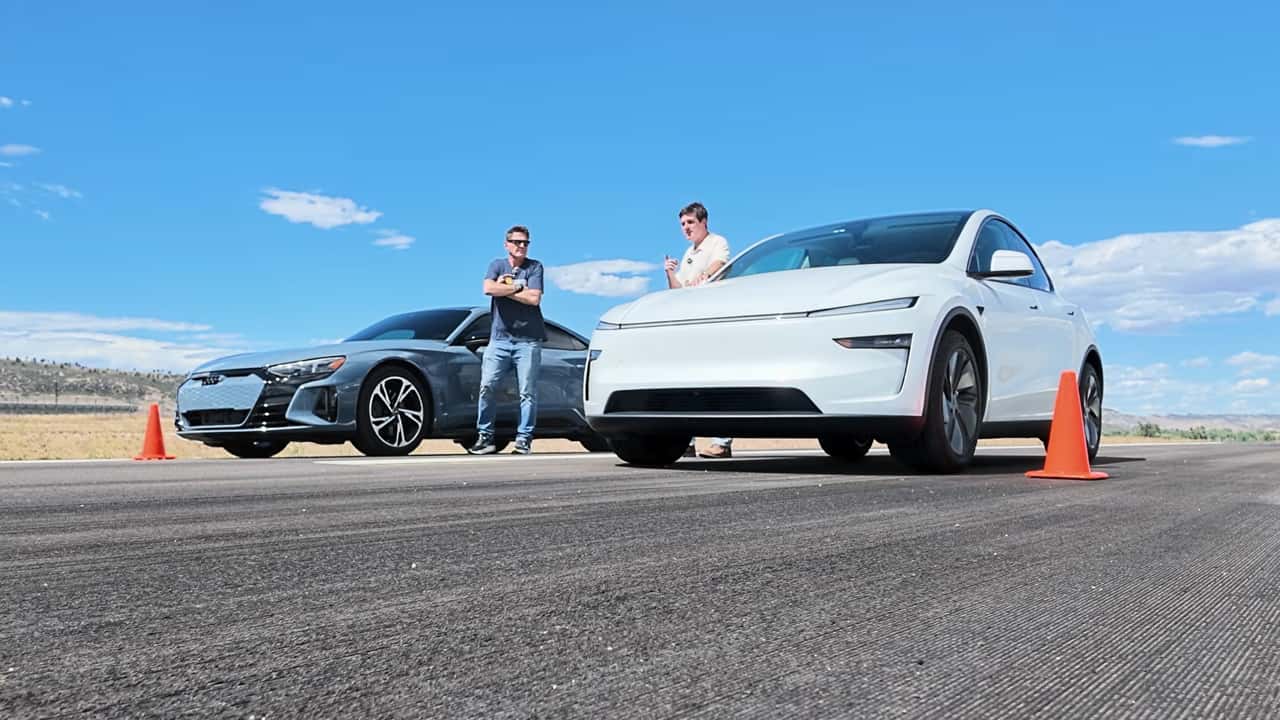
Performance remains a major part of the EV story. A drag race involving the BMW i8, Audi E-Tron, and Tesla Model Y offers a snapshot of how quickly electric propulsion has changed expectations. Vehicles that were once considered technologically exotic are now being compared with practical crossovers, and electric models can deliver both everyday utility and impressive performance. Volkswagen is also preparing a new electric hot hatch based on the recently revealed ID.3 Neo. The model is expected to become the most powerful GTI in the nameplate’s history, illustrating how electrification is reshaping traditional performance identities rather than eliminating them.
The product mix is broadening in other directions as well. Kia’s PV7 is positioned as a larger and more technologically advanced companion to the PV5, highlighting the growing interest in electric vans and multipurpose vehicles. Ford’s 2027 F-150 is expected to offer hands-free driving even while towing a trailer, although the feature will come with important limitations. Towing is one of the more difficult tasks for an electric vehicle because trailers increase weight and aerodynamic drag, reducing range significantly. The push to combine advanced driver assistance with towing shows that manufacturers are trying to make electric and electrified vehicles useful for demanding work, not only commuting.
Hydrogen is also retaining a place in the future-mobility conversation. Toyota is targeting a towing capacity of roughly 5,500 pounds for the Hilux hydrogen fuel-cell pickup. A hydrogen-powered truck could offer fast refueling and long-distance capability, though its success will depend heavily on the availability and cost of hydrogen stations. The technology may be especially relevant for commercial users or drivers who require substantial towing range and cannot easily accommodate lengthy battery-charging stops.
Charging infrastructure remains one of the industry’s most important challenges. The European launch of the Tesla Semi depends on the development of a reliable network capable of supporting heavy electric trucks. Charging equipment itself is also evolving. Pre-assembled Supercharger units are claimed to be 20 percent cheaper to install than traditional chargers, potentially helping expand networks while reducing construction complexity. Faster installation and lower costs could be crucial as demand increases and more drivers expect convenient access to charging away from home.
Battery technology continues to improve at both ends of the market. A newly discussed battery is claimed to provide as much as 620 miles of range and withstand more than 900,000 miles of use. Although such figures may depend on testing conditions and eventual production specifications, they illustrate the direction of research: longer life, greater energy density, and reduced degradation. Durable batteries could improve resale values, lower ownership costs, and make electric vehicles more attractive to high-mileage drivers and fleet operators.
Software and vehicle interfaces are becoming equally significant. An infotainment update promises darker blacks, higher contrast, and a streamlined interface, changes that may appear minor but can improve readability and day-to-day usability. In another example, a charging pad that previously existed only as built-in technology is now being sold separately in selected markets, showing how automakers are turning vehicle features into accessories and services.
Autonomous driving developments remain more complicated. Lucid’s upcoming midsize crossover is expected to use Nvidia’s Hyperion platform for a driverless experience, pointing to the growing role of centralized computing and advanced sensors. At the same time, the country’s leading road-safety agency has asked Tesla to answer questions about the Cybercab’s self-certification. The contrast highlights the gap between ambitious technology demonstrations and the regulatory scrutiny required before autonomous vehicles can operate widely on public roads.
The feed also includes products that make electrification more accessible and personal. A commuter e-bike from a well-known American brand is described as easy to recommend, reinforcing the idea that the transition away from fossil fuels is not limited to cars. At the other end of the style spectrum, a tiny vehicle compared with the Fiat Topolino is imagined as though it had arrived in 1960s America. Such models may appeal to urban drivers who value simplicity, low operating costs, and maneuverability over speed or long-distance range.
Even luxury vehicles are using technology to redefine convenience. A flagship Porsche SUV reportedly makes one mundane task unnecessary through an optional feature, echoing the way Rolls-Royce turns ordinary functions into premium experiences. This reflects a broader divide in the market: some EVs are being developed as affordable transportation, while others use electrification to deliver extreme performance, automation, comfort, and exclusivity.
Overall, these stories portray an EV industry becoming more diverse and more practical. Long-range cars, efficient road-trip vehicles, electric hot hatches, work-oriented pickups, hydrogen trucks, heavy-duty charging networks, autonomous systems, and e-bikes are all developing at once. The next stage of electrification will not be defined by one winning vehicle or one universal technology. Instead, it will be shaped by how well different solutions fit different drivers, journeys, climates, budgets, and transportation needs.
All EV Sales Research Team
9/17/2026