
 Buy & Sell
 All EV Sales
 Explore
 Account
 Back to News
 EV News Roundup: Charging, Batteries, New Models and the Road Ahead for Electric Mobility
The electric-vehicle industry is entering a phase defined less by a single breakthrough than by steady progress across many fronts. This week’s news spans charging access, battery research, road-trip efficiency, manufacturing, vehicle design, safety regulation and the expanding range of products surrounding electric transportation. Taken together, the stories show an industry becoming more practical and more diverse, while still working through infrastructure, technology and regulatory challenges.
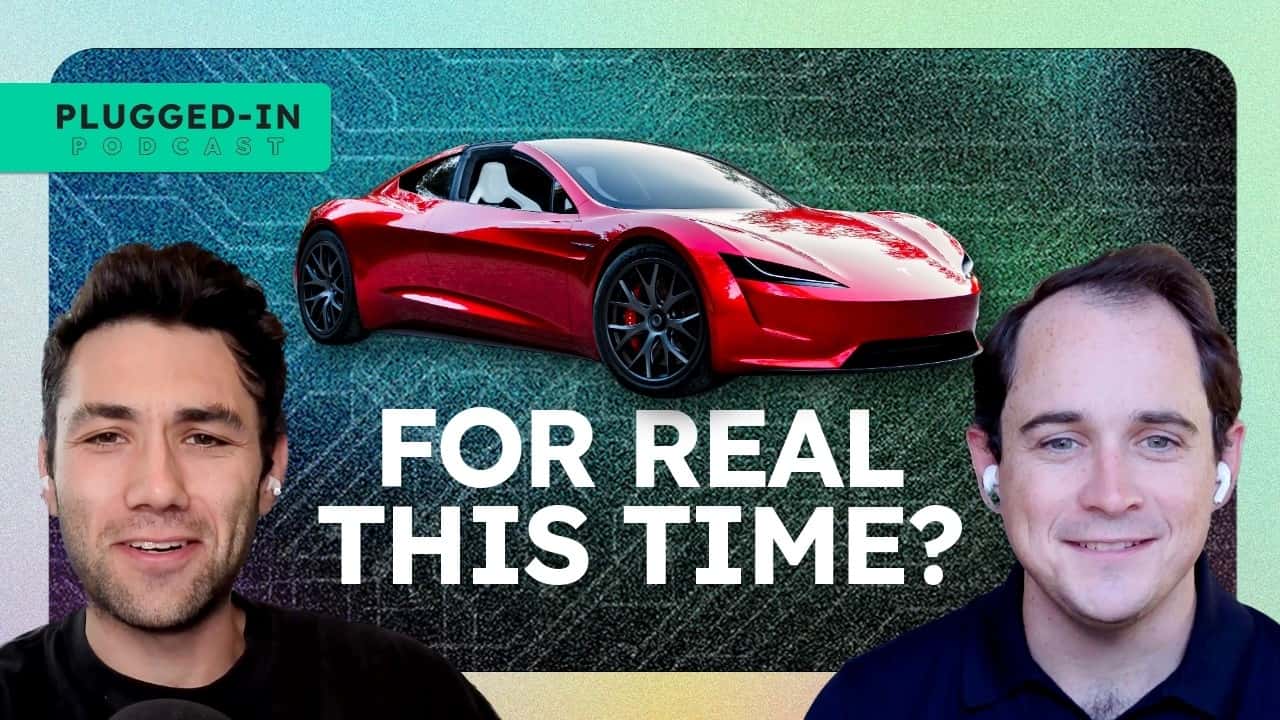
One of the clearest themes is the continuing effort to make charging easier. The Plugged-In Podcast examines curbside charging, a particularly important issue for drivers who live in apartments, row houses or neighborhoods without private driveways. Public chargers located along streets could help close one of the largest remaining gaps in EV ownership: access to reliable overnight or routine charging for people without a dedicated parking space. The discussion also covers the Tesla Roadster 2.0, the Mercedes GLC and Ford Fathom, illustrating how charging conversations now sit alongside performance cars, mainstream SUVs and emerging technologies.
Convenience is also improving at existing charging stations. Red E Charge customers can reportedly complete an initial setup and then use a charger without repeatedly opening a smartphone app or carrying a credit card. That kind of streamlined experience may seem minor, but reducing small sources of friction can make public charging feel more like refueling at a conventional gas station. The Tesla Semi’s anticipated European launch highlights the infrastructure challenge from another perspective. Electric trucks require powerful, strategically placed charging stations, and their success will depend heavily on whether those networks are ready for commercial schedules and long-distance routes.
Road-trip testing offers another encouraging sign. During a highway-heavy European journey, an electric Polo used less energy per mile and spent less time charging than expected. Although its calculated range was only 273 miles under demanding conditions, one lunch stop provided enough energy for the car to cover nearly 400 miles overall. The result underlines an important point about EV usability: advertised range is only one part of the ownership experience. Efficiency, charging speed, battery size and the ability to combine charging with meals or rest stops can matter just as much.
Battery development remains central to the industry’s long-term ambitions. Rather than working in isolation, Factorial is bringing battery companies together in an effort to accelerate solid-state battery commercialization. Solid-state technology is widely viewed as a possible route to higher energy density, improved safety and faster charging, though manufacturing at scale remains difficult. Collaboration could help address those obstacles by combining expertise in materials, cell design and production.
The circular economy is receiving attention as well. Porsche and its partners have created a closed-loop process that recycles end-of-life batteries into new cathode materials. Recovering valuable materials from used battery packs could reduce dependence on newly mined resources, lower the environmental impact of production and make battery supply chains more resilient. Recycling will not remove the need for raw-material extraction, but it can become an increasingly important part of a mature EV industry.
Manufacturing news points to continued investment in electric vehicles. One BMW facility is described as having achieved the fastest production ramp-up in the company’s history. Rapidly increasing output is a significant test for any factory because it requires coordinated suppliers, trained workers, dependable software and consistent quality control. The ability to scale production efficiently will be just as important as developing attractive vehicles, especially as automakers compete in a market where pricing and availability strongly influence buyers.
New electric models and updates are appearing across nearly every segment. A mid-size electric SUV is receiving two new exterior colors and a lighter interior, modest changes that can help keep an established model fresh. The Mercedes CLA is presented as more than a charging champion: its combination of range and efficiency makes it a strong road-trip vehicle. The major lineup revamp mentioned in the feed includes new EVs as well as the latest generation of hybrids, reflecting the reality that automakers are pursuing several powertrain strategies at once.
Other developments show how broad the electric-vehicle market has become. The Hilux hydrogen fuel-cell pickup is being targeted with a towing capacity of approximately 5,500 pounds, suggesting that hydrogen may continue to attract interest for demanding commercial or work-oriented applications. A compact vehicle described as resembling a Fiat Topolino from 1960s America points toward the appeal of small, simple urban transportation. Meanwhile, a commuter e-bike from a well-known American brand demonstrates that electrification is expanding beyond cars and trucks.
The feed also looks at the changing experience of vehicle ownership and repair. Working on an EV can be easier in some ways than replacing an internal-combustion engine because electric drivetrains contain fewer moving parts. In other respects, repairs are more complicated, particularly when high-voltage systems, specialized diagnostics and battery-pack safety are involved. As more EVs age, technicians, independent repair shops and manufacturers will need to develop the skills and procedures required to support them.
Performance remains part of the conversation. A drag race involving a BMW i8, Audi E-Tron and Tesla Model Y offers a snapshot of how quickly electric power has changed expectations. Even vehicles designed primarily for efficiency or utility can deliver immediate acceleration, while modern EVs increasingly combine speed with long-distance capability and everyday practicality.
Advanced driver assistance is another major area of development. Lucid’s upcoming mid-size crossover is expected to use Nvidia’s Hyperion platform for a driverless experience, signaling the growing importance of computing hardware and software in vehicle design. At the same time, regulators are scrutinizing automated vehicles. The United States’ leading road-safety agency has given Tesla until the end of the month to answer questions about the Cybercab’s self-certification. That inquiry reflects the need for clear accountability as automakers introduce vehicles capable of operating with less human involvement.
Even older technologies remain part of the transition debate. A bill passed by the House would require automakers to install AM radios in every vehicle sold in the United States, including EVs. The proposal highlights how new transportation systems must coexist with established communication infrastructure and public-safety concerns. Electric cars may represent the future of propulsion, but their design is still shaped by political, regulatory and cultural expectations.
Finally, specialized products are adapting to electric vehicles. The iON tire lineup is designed around the distinct demands of EVs, including greater weight, instant torque and the importance of reducing rolling resistance. Tires, software, charging networks, batteries and recycling systems may not receive the same attention as a new vehicle launch, but each is essential to making electric transportation work in everyday life.
Overall, this week’s news presents EV progress as a broad ecosystem rather than a single race between automakers. Better charging, more efficient vehicles, scalable factories, recyclable batteries, advanced software and practical options ranging from e-bikes to hydrogen pickups are all developing at once. The remaining challenges are substantial, but the direction is clear: electric mobility is moving from an emerging alternative toward a mature and increasingly varied part of transportation.
All EV Sales Research Team
9/18/2026