
 Buy & Sell
 All EV Sales
 Explore
 Account
 Back to News
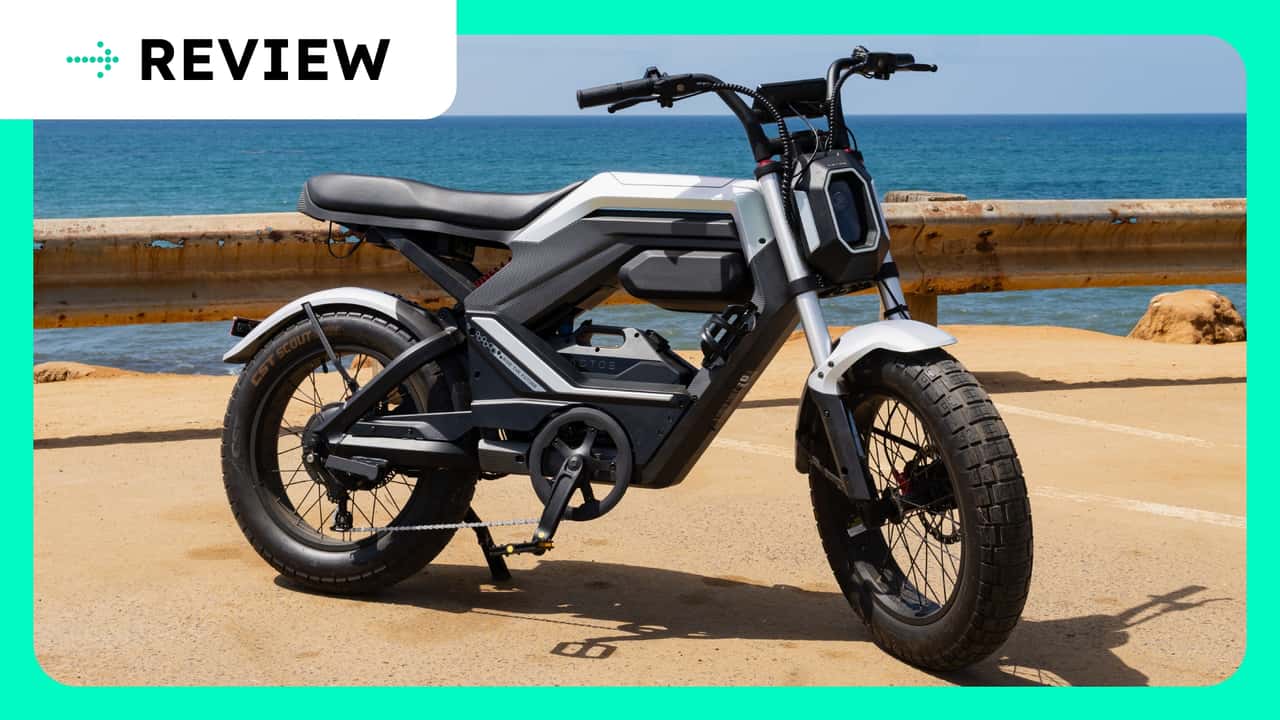
 The Aotos X26 Flux Pro arrives with the visual attitude of a small electric motorcycle and the performance figures to match. With a claimed 1,500 watts of nominal power, up to 2,000 watts in its unrestricted off-road setting, oversized tires, and a heavily styled frame, it is clearly aimed at riders who want more excitement than a conventional pedal-assist bicycle can provide.
That extra performance, however, also creates the biggest problem with the X26 Pro: it occupies an awkward space between an e-bike, an electric moped, and a lightweight motorcycle. It can be configured to comply with the basic limits of a Class 2 e-bike, but its most appealing features are available only when it moves beyond those limits. Once unrestricted mode is enabled, the bike is no longer legal to use on ordinary public roads in the same way as a compliant e-bike.
A powerful machine with a legal gray area
In the United States, e-bikes are generally divided into three classes. Class 2 models have a throttle and pedal assist but are normally limited to 20 mph. Class 3 bikes can provide pedal assistance up to 28 mph, although throttle availability is more restricted. Both categories are also subject to a 750-watt nominal power limit in jurisdictions that follow those definitions.
The X26 Pro leaves the factory configured for Class 2 operation, with an overboost function that can briefly increase speed and performance. It also includes an off-road mode that raises output dramatically, allowing the rear wheel to receive as much as 2,000 watts. The standard X26 Flux offers a less powerful version of the same concept, with up to 1,200 watts in its unrestricted setting.
That power makes the Pro considerably more exciting than a typical city e-bike. It can accelerate hard, reach highway-adjacent speeds quickly, and deliver the sensation of a small electric motorcycle. But the added capability is intended for private property or off-road use. Operating it in that configuration on public streets can put the rider outside the rules governing legal e-bikes, while the vehicle itself lacks the registration equipment and road certification associated with a moped or motorcycle.
The Flux X26 Pro costs approximately $2,299, compared with about $1,699 for the base model. The premium pays for the larger power output, connectivity features, and other upgrades, but those benefits matter most to buyers who actually have a legal and practical place to use them.
More motorcycle than bicycle
The design strongly influences the riding experience. Unlike a traditional electric bicycle, the Aotos uses a fixed seat, wide moped-style tires, a single-speed drivetrain, and a large aerodynamic fairing. The riding position and frame make it look distinctive, but they also reduce its usefulness as a pedal-powered machine.
The seat cannot be adjusted in the same way as a normal bicycle saddle, and the fixed gearing is poorly suited to sustained pedaling. Getting started from a stop can feel difficult because the gearing is relatively tall. At higher speeds, the rider's legs must spin rapidly to keep up with the motor. As a result, the pedals feel more like emergency equipment than an integral part of the vehicle.
The bike also uses a cadence sensor instead of a torque sensor. A torque sensor measures how hard the rider is pushing and adjusts motor assistance accordingly. A cadence sensor mainly detects whether the pedals are turning. That makes the power delivery less natural. Even a partial pedal rotation used simply to reposition the feet can trigger a noticeable burst of acceleration.
In practice, the throttle becomes the most appealing control. That may be exactly what some customers want, but it removes much of the physical connection that makes a traditional e-bike enjoyable. A conventional model with multiple gears, a familiar saddle, and a responsive torque sensor feels more like a fast bicycle. The Aotos feels closer to a slow, compact motorcycle.
Range and carrying capacity
Despite its large frame, the X26 Pro does not necessarily deliver better efficiency than a conventional e-bike. Aotos claims up to 75 miles of range, supported by a 48-volt, 21-amp-hour battery with slightly more than 1 kilowatt-hour of capacity. That is a substantial battery, but the bike's weight, broad tires, and bulky body require considerable energy to move.
A lighter, more conventional e-bike can potentially travel farther with a smaller battery because the rider contributes more through the pedals and the machine creates less rolling resistance. The comparison is not entirely direct, since real-world range depends on terrain, speed, rider weight, and assist level, but the X26 Pro's large battery is partly compensating for its inefficient format.
The vehicle also disappoints when used for practical transportation. The front fairing consumes much of the available space, and the lack of a rear cargo rack makes carrying everyday items difficult. Riders may need to use a backpack rather than panniers or a dedicated cargo bag. There is a small zippered compartment beneath the frame and another storage area for items such as a phone and keys, but the overall carrying capacity is limited for a machine of this size.
Battery removal is another weak point. The pack can be awkward to maneuver, and its connector does not feel especially convenient. That is a notable drawback for owners who need to charge the battery indoors or remove it regularly.
Ambitious technology that needs refinement
The Pro model includes several modern features, including phone-based proximity unlocking, remote starting, location tracking, motion alerts, and tire-pressure monitoring. These additions give the X26 Pro a more sophisticated feel, but they do not all work as smoothly as expected.
The proximity-unlock system can drain the battery aggressively and may not recognize the phone consistently. The motion alarm is sensitive, which can make it irritating rather than reassuring. The companion application can also be slow or cumbersome. These issues are understandable for a first-generation product developed through crowdfunding, but they are harder to overlook at a price above $2,000.
Who should buy the X26 Pro?
The Aotos X26 Flux Pro is not a strong choice for someone seeking a practical commuter. In legal Class 2 configuration, it is heavier, less efficient, less useful for carrying cargo, and more expensive than many conventional e-bikes. Its main on-road advantage is its unusual appearance, since its legal power and speed are limited to levels available from far more traditional designs.
Its appeal becomes clearer on private land. Riders with access to dirt roads, large properties, or other legal off-road areas may enjoy the powerful motor and motorcycle-inspired format. It could be an entertaining weekend toy, provided the owner has a way to transport its nearly 100-pound bulk to the riding location.
For everyday commuting, a conventional e-bike remains the better tool. For unrestricted off-road riding, a purpose-built electric dirt bike or electric mountain bike may offer more capability. The X26 Pro sits between those categories, offering genuine fun but also substantial compromises.
The result is a machine with a strong personality rather than universal usefulness. Used within legal limits, it is difficult to justify over a lighter and more practical e-bike. Used where its full power is allowed, it can be exciting—but only for riders who have the space, access, and transportation needed to make that experience worthwhile.
All EV Sales Research Team
9/19/2026