
Mazda CX-6e Review: Stylish, Plush and Fun to Drive, but Highway Efficiency Falls Short
Mazda’s Most Convincing Electric Car Yet Still Has Some Rough Edges
Mazda’s transition to electric vehicles has been cautious. The company’s earlier MX-30 offered distinctive styling and an appealing interior, but its limited range and unusual powertrain choices made it difficult to recommend as a practical everyday EV. The new CX-6e represents a much more serious attempt to compete in the electric crossover market.
With its sleek design, quiet cabin, rear-wheel-drive platform and premium materials, the CX-6e feels like a major step forward. It is comfortable, composed and surprisingly entertaining on winding roads. However, its strengths are balanced by disappointing highway efficiency, inconsistent regenerative braking and a real-world range that falls well short of its official rating.
The CX-6e is not entirely a Mazda-developed vehicle. Like the Mazda 6e sedan, it is based on technology supplied by Chinese automaker Changan and is built in China. That arrangement may sound unusual, but the underlying platform delivers a refined driving experience. The crossover combines a smooth ride with controlled body movements and a remarkably quiet interior.
A Striking Alternative to the Typical Electric SUV
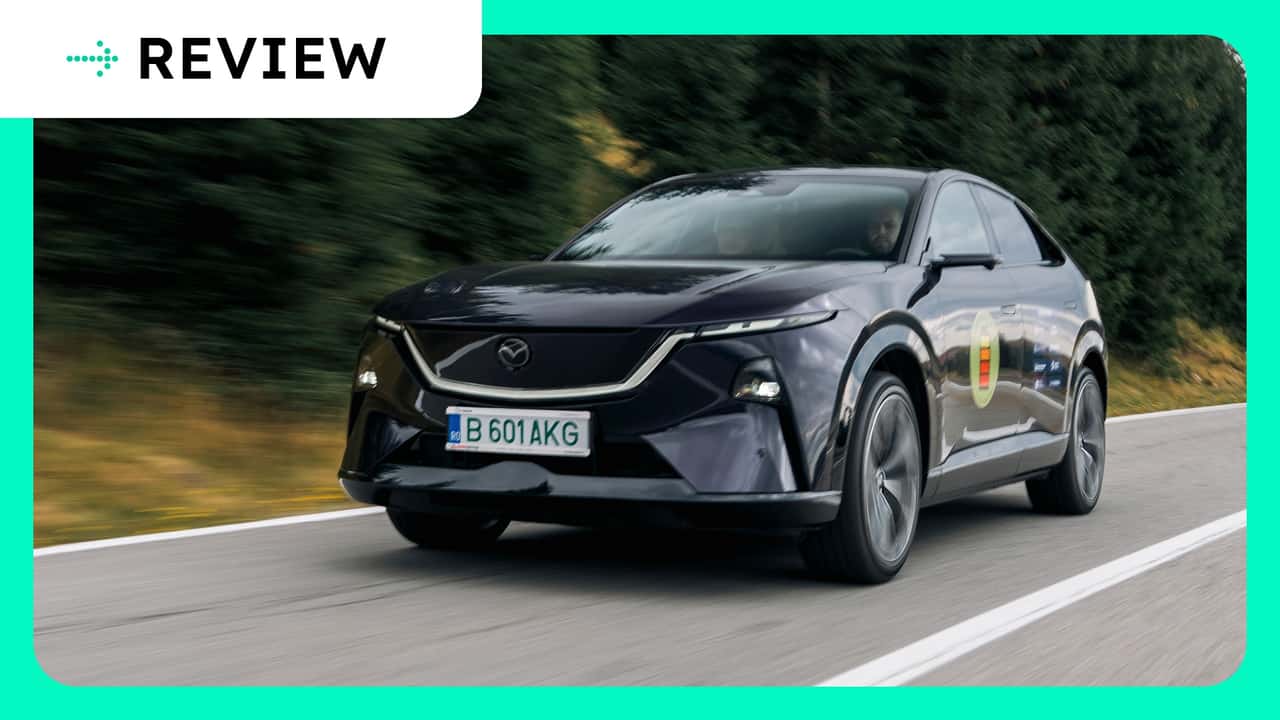
The CX-6e avoids the upright, boxy shape associated with many electric crossovers. Instead, Mazda has given it a raised hatchback profile, creating a low and planted appearance. The body looks athletic without becoming overly aggressive, while carefully integrated aerodynamic details help distinguish it from more conventional SUVs.
Among the most notable design features are the air channels around the hood and the flying-buttress treatment near the C-pillars. These elements allow air to pass through parts of the bodywork while giving the vehicle a more futuristic appearance. The result is one of the better-looking electric crossovers currently available in its class.
The impression continues inside. The test vehicle featured purple leather upholstery that matched its exterior paint, creating a distinctive and upscale atmosphere. The cabin is spacious enough for long-distance travel and feels substantially more expensive than many mainstream electric vehicles.
Optional digital side mirrors were fitted to the test car. They require some acclimatization, but they function effectively once the driver becomes familiar with the displays. They also contribute to the car’s futuristic character and may help reduce wind noise at higher speeds.
Confident Handling on Mountain Roads
The CX-6e uses a rear-wheel-drive layout and carries its battery low in the chassis. That gives it a stable, planted feel, particularly on winding roads. Its suspension is firm, but it is not harsh. Broken pavement is communicated to the occupants without making the ride unpleasant, and body roll is kept under control during cornering.
On a challenging mountain route in Romania, the CX-6e proved much more enjoyable than its crossover shape might suggest. The vehicle responded accurately to steering inputs and maintained its composure through tight bends. The steering itself is not especially communicative, offering little information about the front tires’ grip, but it is more precise than the steering systems found in many other Chinese-made EVs.
The single electric motor produces 255 horsepower and 214 pound-feet of torque. Mazda claims a 0-to-62-mph time of 7.9 seconds. That figure is respectable, although the CX-6e feels less urgent than some rivals. During a multi-car electric road trip, it even seemed slower than expected beside smaller vehicles, including a Renault 5 with considerably less power.
That lack of outright acceleration is not necessarily a major flaw. The CX-6e is better suited to smooth, composed progress than dramatic launches. Its strengths are its balance, quietness and stability rather than its ability to deliver neck-snapping acceleration.
Highway Consumption Is the Biggest Concern
The CX-6e’s most significant weakness becomes clear on fast roads. During a 715-kilometer journey that included national roads and highways, the vehicle averaged 19.9 kilowatt-hours per 100 kilometers. That works out to approximately 3.14 miles per kilowatt-hour, which is not especially impressive for a vehicle in this segment.
The car uses a battery with a usable capacity described at roughly 77 to 78 kilowatt-hours, depending on the specification. At steady highway speeds of around 130 km/h, consumption climbed to approximately 25 kWh per 100 km. That high-speed appetite required an additional, unplanned charging stop before the destination in Hungary.
The official WLTP range is 484 kilometers, or about 300 miles. Real-world observations suggest that figure is attainable only under favorable conditions, with gentle driving and limited highway use. Based on the recorded efficiency, the theoretical range was closer to 387 kilometers, or approximately 240 miles.
For drivers who spend most of their time on motorways, even reaching 300 kilometers on a full charge may be difficult. That puts the CX-6e behind several competitors that offer either greater efficiency, longer range or both.
Fast Charging Helps, but Not Enough
The CX-6e supports DC fast charging at a peak rate of 195 kilowatts. Mazda says the battery can charge from 10% to 80% in 24 minutes under ideal conditions. The vehicle briefly exceeded its advertised charging rate during testing, showing that the hardware is capable of strong charging performance.
However, the car still required three charging sessions during the journey, totaling 93 minutes. One of those stops was not planned and was caused by the vehicle’s high energy consumption at highway speeds. Fast charging is useful, but frequent stops can still undermine the convenience of long-distance travel when the battery is being depleted quickly.
Regenerative Braking Needs Improvement
Another irritation is the inconsistent regenerative braking system. At times, lifting off the accelerator produced substantial deceleration. At other times, the CX-6e simply coasted, with little energy recovery visible on the energy display.
Changing the regeneration setting requires navigating through the central touchscreen rather than using a simple physical control or steering-wheel paddle. That makes adjustments more distracting and unnecessarily complicated. More importantly, inconsistent deceleration makes it harder to judge corners and traffic situations accurately. Drivers should be able to predict how the vehicle will respond when they release the accelerator.
A Premium EV with Important Compromises
The Mazda CX-6e leaves a strong first impression. It looks distinctive, has a beautifully finished interior and offers a refined ride with unusually good road manners for an electric crossover. Its rear-wheel-drive platform gives it a level of balance and engagement that many competitors lack.
At the same time, the vehicle’s efficiency is disappointing, particularly during highway travel. Its real-world range can fall considerably below the official WLTP figure, and inconsistent regenerative braking adds another layer of frustration.
Priced at around €50,000 in Europe, the CX-6e competes with vehicles such as the Tesla Model Y, Hyundai Ioniq 5, BYD Sealion 7 and Xpeng G6. Its comfort, design and premium atmosphere help justify the price, but faster-charging and more efficient alternatives may be better choices for drivers who regularly cover long motorway distances.
The CX-6e is therefore an appealing but imperfect electric vehicle. It demonstrates that Mazda can build an EV with genuine character and a high-quality cabin, even when relying heavily on outside technology. Buyers who prioritize design, comfort and driving feel may find plenty to like. Those who value maximum range and effortless long-distance efficiency will likely wish Mazda had resolved more of the electric platform’s weaknesses before putting it on sale.