
Volkswagen ID. Polo Proves Small Electric Cars Can Handle Big Journeys
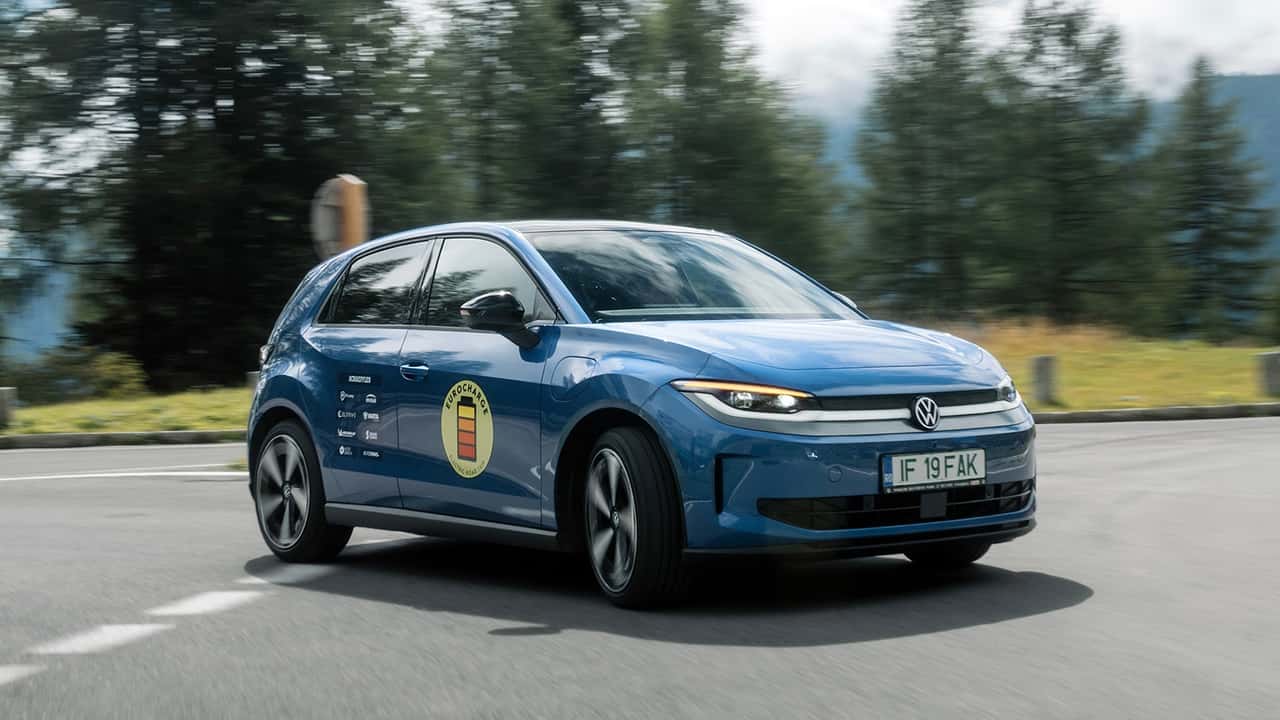
Volkswagen’s electric supermini makes a strong case for downsizing
Volkswagen’s upcoming ID. Polo may look like a conventional small hatchback, but its capabilities suggest it could be one of the more convincing alternatives to larger and more expensive electric cars. With a Romanian-market price of approximately €39,500, it is not an inexpensive vehicle. However, an extended drive across Europe showed that the compact Volkswagen combines comfort, efficiency, performance, and long-distance usability in a way that makes its price easier to understand.
The electric Polo was tested as part of the Eurocharge by Schaeffler EV grand tour, a cross-European road trip that began in Romania and traveled toward the source of the Danube before returning. Across the entire event, the car covered 4,468 kilometers, or roughly 2,776 miles. One particularly demanding day involved a 507-kilometer journey from Enzklösterle in Germany to Hohe Salve in Austria, combining mountain roads with extended motorway driving.
That kind of route provided a useful test of whether a small electric hatchback could operate as a genuine all-purpose car rather than merely an urban runabout. The answer was surprisingly positive. At motorway speeds of up to 130 km/h, the ID. Polo remained composed and relaxed. Its ride quality made long stretches of highway feel routine, while its body control and overall refinement created the impression of a vehicle from a larger class.
More mature than its size suggests
The Polo’s compact dimensions do not prevent it from feeling substantial on the road. Its suspension deals effectively with bumps and broken surfaces, avoiding the heavy thumps that can make smaller cars tiring over long distances. Wind noise is also better controlled than in the Renault 5 E-Tech, which joined the same tour and provided a useful point of comparison.
A slightly longer wheelbase appears to contribute to the Volkswagen’s stable, mature character. Despite using the less expensive front-wheel-drive version of Volkswagen’s MEB electric platform, the ID. Polo was described as more comfortable and polished than the larger ID.3. It may even be the most convincing Volkswagen ID model yet encountered, although the larger ID.7 remains a different benchmark for long-distance comfort.
The interior reinforces that impression. A high-specification Style model used during the trip included electrically adjustable front seats with memory functions. The driver’s seat was particularly supportive and comfortable, while the steering wheel offered enough adjustment to help create a natural driving position.
Materials are mixed, as expected in a small car. There are hard plastics throughout the cabin, but softer and more pleasant surfaces are positioned where occupants are most likely to touch them. The result does not make the ID. Polo a true luxury car, but it does give the interior a more premium atmosphere than its size might imply.
Volkswagen has also responded to criticism of the touch-sensitive controls found in earlier ID models. The electric Polo features physical climate controls, conventional steering-wheel buttons, and separate switches for each of the four windows. These details may appear basic, but they make the cabin easier to operate while driving and give it a more familiar feel.
Retro touches add character
The dashboard includes a retro-inspired display theme that recalls older Volkswagen models. The power gauge uses a needle-like graphic that moves with a slightly imperfect motion, imitating the character of a traditional analog instrument. The central infotainment display can also be switched to a vintage theme, complete with a cassette-player graphic and a visible tape animation as music plays.
Even the battery indicator adopts an analog appearance in this mode. When the vehicle is connected to a charger, a green light provides another small visual reference to Volkswagen’s past. These features are not essential, but they give the otherwise restrained design a sense of personality.
Compared with the Renault 5 E-Tech, the ID. Polo is more conservative. The Renault makes an immediate impression with its retro styling, while the Volkswagen uses familiar proportions and sharper modern details. The Polo’s design is less theatrical but arguably appears more premium and easier to understand at first glance.
Efficiency and performance
The comparison with the Renault 5 was particularly useful because both cars use batteries with 52 kWh of usable capacity. During the tour, the ID. Polo was more efficient on every day except one, when the two cars recorded the same result.
The Volkswagen’s final average consumption was 15.2 kWh per 100 kilometers, compared with 16.6 kWh per 100 kilometers for the Renault. That works out to approximately 4.1 miles per kWh for the Polo and 3.7 miles per kWh for the R5, giving the Volkswagen an efficiency advantage of around 8%.
The figures were not produced in a controlled laboratory test. Different drivers operated the cars during a real road trip, but the vehicles generally followed the same routes and speed limits on the same days. As a result, the numbers should not be treated as a definitive scientific comparison, although they provide a useful indication of how the cars perform in everyday conditions.
The ID. Polo also delivers considerably more power. Its electric motor produces 208 horsepower and 290 Nm of torque, while the Renault 5 used for the comparison develops 148 horsepower and 245 Nm. Volkswagen claims that the Polo can accelerate from zero to 100 km/h in 7.1 seconds, making it 0.9 seconds quicker than the Renault.
During the 507-kilometer drive, the Polo needed only one 17-minute charging stop. The battery was raised from 30% to 81%, after beginning the day at 99% and reaching the destination with 10% remaining. That result suggests the small battery is less restrictive than its capacity might initially imply, especially when the car is driven efficiently.
The vehicle’s 105-kW peak charging rate is not class-leading, but Volkswagen’s claimed 10% to 80% charging time of approximately 24 minutes is respectable. The charging curve also remained useful rather than dropping sharply too early.
Price remains the biggest challenge
The ID. Polo’s main weakness is likely to be its price. The tested Romanian-market car costs about €39,500, while the Renault 5 Roland-Garros is priced at approximately €34,200. The €5,300 difference is significant, and the Volkswagen’s lower energy consumption will not quickly offset that initial premium.
These figures apply to the well-equipped press vehicles used during the trip, rather than necessarily representing the best-value versions of either model. Even so, buyers will need to place a high value on the Polo’s strengths. The Renault offers more distinctive styling and greater appeal for enthusiasts, while also leaving more money in the buyer’s pocket.
The Volkswagen makes its argument in a different way. It is quieter, more comfortable, faster, and more efficient, while its practical controls and long-distance composure make it feel like more than a city car. Steering feedback is less impressive, however. On a winding Austrian mountain road, the front tires began to run wide through a corner without providing much warning through the steering wheel. The Renault 5 offers more grip and a more engaging driving experience on twisty roads.
A future ID. Polo GTI could potentially address that shortcoming and provide a stronger rival to performance-focused electric hatchbacks such as the Alpine A290. For now, the standard Polo is best understood as a refined and capable small electric car rather than a driver’s machine.
Its success will ultimately depend on whether customers are willing to pay extra for that combination. For buyers who prioritize style and fun, the Renault 5 may remain the more attractive choice. But for anyone looking for a compact EV that can handle motorway travel, mountain roads, and full-day journeys without feeling compromised, the ID. Polo presents a surprisingly persuasive alternative.