

2026 Lexus ES 350e Review: A Spacious, Comfortable EV With Room to Improve
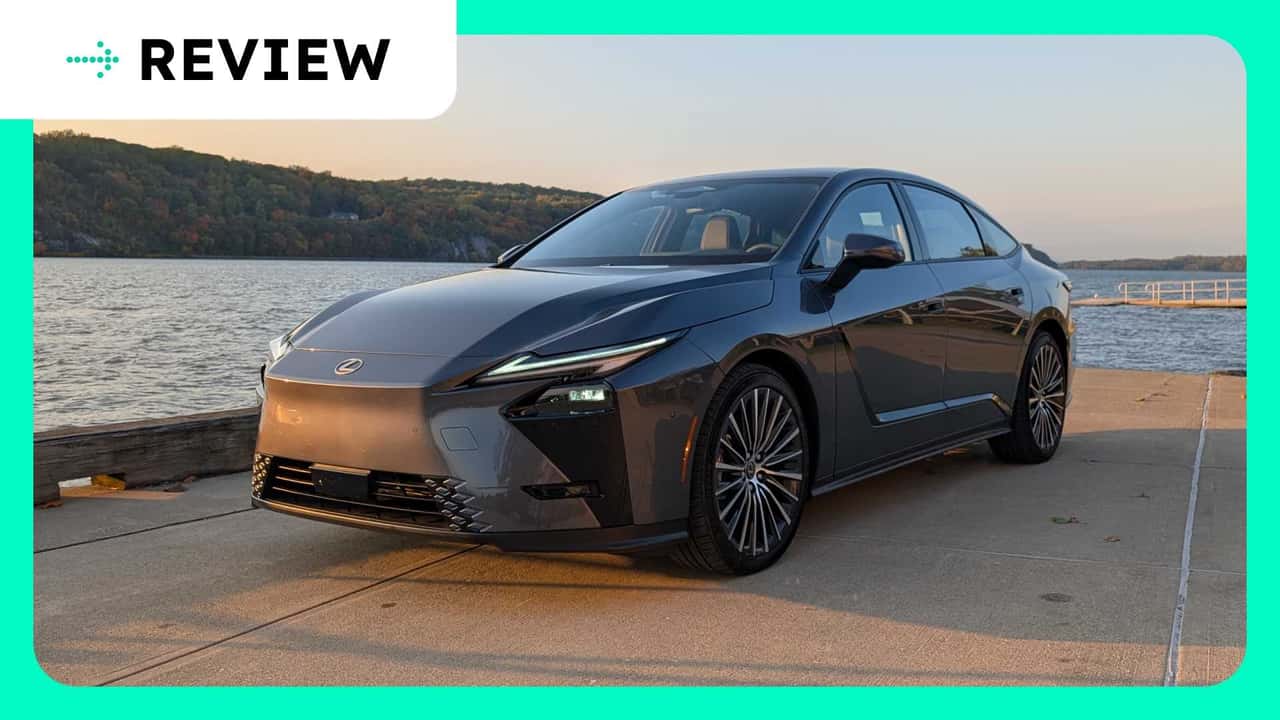
The Lexus ES has taken on a more important role in the brand’s U.S. lineup now that the flagship LS sedan is no longer sold here. For the 2026 model year, the midsize sedan grows in size, adds more luxury, and becomes electrified across the range. Buyers can choose between a hybrid and, for the first time in the ES’s 37-year history, a fully electric model.
The all-electric ES is also an important technology showcase for Toyota and Lexus. It is the second vehicle after the RAV4 to use Toyota’s newer Arene software platform, which brings a more modern interface, improved connectivity, and over-the-air update capability. Although the system still trails the best software experiences from companies such as Tesla and Rivian, it represents a major improvement over the dated and occasionally frustrating systems found in current Toyota and Lexus EVs.
Two electric versions are offered. The front-wheel-drive ES 350e produces 221 horsepower, while the all-wheel-drive ES 500e increases output to 338 horsepower. The 350e is the more affordable and efficiency-oriented option, while the 500e delivers significantly stronger acceleration. Neither version is designed to be a sports sedan, however. Lexus has clearly prioritized quietness, comfort, and passenger space over sharp handling or thrilling performance.
A more modern software experience
The new ES features a 12.3-inch digital instrument cluster and a 14-inch central touchscreen. Both displays share a more consistent visual design, making them feel like parts of the same system rather than separate interfaces. Graphics are clean, text is easy to read, and the infotainment screen responds more quickly than the system used in the Lexus RZ.
The software is also more useful in daily driving. Built-in navigation can automatically plan charging stops for longer trips, removing much of the guesswork from electric-vehicle travel. Android Auto can provide similar route planning through Google Maps, which is especially helpful for drivers who prefer Google’s charging and traffic data.
Another welcome feature is the integrated dashcam. It continuously records video in a loop, saves clips when it detects a possible collision, and allows recordings to be downloaded through a USB connection. That eliminates the need to install a separate aftermarket camera.
Lexus has also retained plenty of physical controls. Temperature and volume adjustments are handled by traditional switches, while climate functions are available through a control bar along the bottom of the display. The air vents can still be adjusted manually, a simple detail that is becoming increasingly rare in new vehicles. The front passenger seat can also be controlled from the touchscreen, allowing the driver to move it forward without reaching awkwardly across the cabin.
However, the system is not as advanced as the software in some newer European EVs. Video streaming is unavailable while the car is charging, and the voice assistant cannot yet process natural, conversational requests. Changing drive modes requires several taps through the touchscreen, especially when using phone mirroring. A dedicated physical button would be a more convenient solution.
Adequate range and average charging performance
The ES 350e uses a 74.7-kilowatt-hour gross battery pack. Depending on trim and wheel size, EPA range is rated between 276 and 307 miles. The Premium model with 19-inch wheels achieves the highest rating, while the Luxury version tested here uses larger 21-inch wheels and is rated for 292 miles.
That range is acceptable, but it is not class-leading. A Mercedes-Benz CLA electric sedan can exceed 370 miles, while the less expensive Tesla Model 3 reaches 363 miles in certain configurations. Those vehicles are smaller and offer less rear-seat space, so the comparison is not entirely direct. Larger competitors such as the BMW i5 and Audi A6 E-Tron offer similar range, but their prices are generally around $20,000 higher.
In real-world highway driving, the ES 350e returned approximately 3.8 miles per kilowatt-hour while operating in Sport mode. Charging performance is less impressive. Using a Tesla V4 Supercharger, the vehicle went from 10% to 80% in 28 minutes and added 188 miles of indicated range. All 2026 Lexus EVs also include a complimentary CCS adapter, allowing them to use older charging stations that do not yet feature NACS connectors.
One charging-related issue did appear during testing. The powered charging-port door occasionally refused to open even when the vehicle was unlocked, sometimes requiring multiple attempts and several seconds between presses. Turning the car off completely generally solved the problem. Because the test vehicle was a prototype, it is unclear whether production cars will experience the same issue.
A large, lounge-like interior
The 2026 ES is 202.3 inches long, which makes it 6.5 inches longer than its predecessor. Its wheelbase grows by three inches to 116.1 inches, creating substantially more room inside. The battery pack raises the body, giving the sedan an unusually tall stance. At 61.4 inches high, it is only slightly shorter than some small SUVs.
The unusual proportions may take time to appreciate, but the additional height and length deliver a major benefit: an exceptionally spacious cabin. Rear-seat room is the ES’s strongest feature. Passengers get generous legroom, large windows, and a relaxed seating position that makes the car feel closer to a luxury limousine than a conventional midsize sedan.
Luxury models can be fitted with a $3,635 Executive Package. It adds power-reclining rear seats, a passenger-side footrest, massage functions, heating and ventilation, a center armrest with climate and seat controls, a powered rear sunshade, and a hands-free power trunk. The front passenger seat can slide forward and fold away, allowing a rear passenger to stretch out with the footrest extended.
The package gives the ES a taste of the rear-seat experience normally associated with much more expensive vehicles. For buyers who regularly travel with passengers, it may be more valuable than additional performance or technology features.
The cabin is generally upscale, although some design choices are excessive. The 17-speaker Mark Levinson audio system sounds premium, but its clarity does not quite match the best systems available in this price range. Bamboo trim adds warmth during the day, yet the large illuminated sections of the doors can feel overly dramatic at night. The lighting also serves a safety function by flashing red when it detects approaching vehicles or cyclists, but the presentation is considerably more flamboyant than necessary.
Relaxed performance and a comfort-first character
The front-wheel-drive ES 350e weighs roughly 4,690 pounds, so its 221 horsepower does not produce especially rapid acceleration. Lexus estimates a 0-to-60-mph time of 7.4 seconds. The heavier and more powerful ES 500e AWD reduces that figure to 5.1 seconds.
The 350e makes up for its modest launch performance with smooth, linear power delivery. There is enough instant torque for highway merges and passing maneuvers, particularly at normal road speeds. It simply does not feel eager or athletic when leaving a stop.
Ride comfort is better than handling agility. The suspension absorbs potholes and larger road imperfections effectively, and the car settles into a quiet, effortless glide on the highway. It remains stable through corners, but the vehicle’s considerable weight becomes noticeable on ramps and tighter exits. The ES is most satisfying when driven calmly, allowing its quiet cabin and spacious rear compartment to take center stage.
Strong value among larger luxury EVs
The hybrid ES remains a sensible choice for drivers without reliable home charging or those who frequently travel through areas with limited charging infrastructure. However, Lexus reserves some of the most appealing features, including the Executive Package’s rear-seat equipment, for the electric model.
Pricing strengthens the ES 350e’s case. The base model starts at $48,895 including destination, while the tested Luxury version costs $63,670. That places the ES only about $4,000 above a Tesla Model 3, despite offering a substantially more spacious and luxurious interior. It also undercuts the BMW i5 and Audi A6 E-Tron by approximately $20,000.
The 2026 Lexus ES 350e is not the quickest, longest-range, or most technologically ambitious electric sedan available. Its charging speed is merely adequate, and its software still has some obvious limitations. Yet it succeeds at the fundamentals: it is quiet, comfortable, spacious, easy to drive, and comparatively affordable.
For buyers who value a relaxed driving experience and generous rear-seat room more than outright performance, the ES 350e is an appealing choice. It also signals that Toyota and Lexus are gradually making meaningful progress with electric vehicles. The company still has work to do, but the latest ES shows that its future EVs may be considerably more competitive than the models that came before.