

The EV Industry’s Next Phase: Smarter Cars, New Platforms, and a More Competitive Market
The EV Industry’s Next Phase: Smarter Cars, New Platforms, and a More Competitive Market
The electric-vehicle industry is entering a more complicated phase. The first wave of modern EVs was largely defined by battery range, acceleration, charging speed, and the race to establish credible electric alternatives to gasoline-powered vehicles. The latest developments suggest that the competition is shifting. Automakers are now trying to make EVs more affordable, more intelligent, easier to live with, and more profitable, while also navigating slowing demand in some markets and intense pressure from Chinese manufacturers.
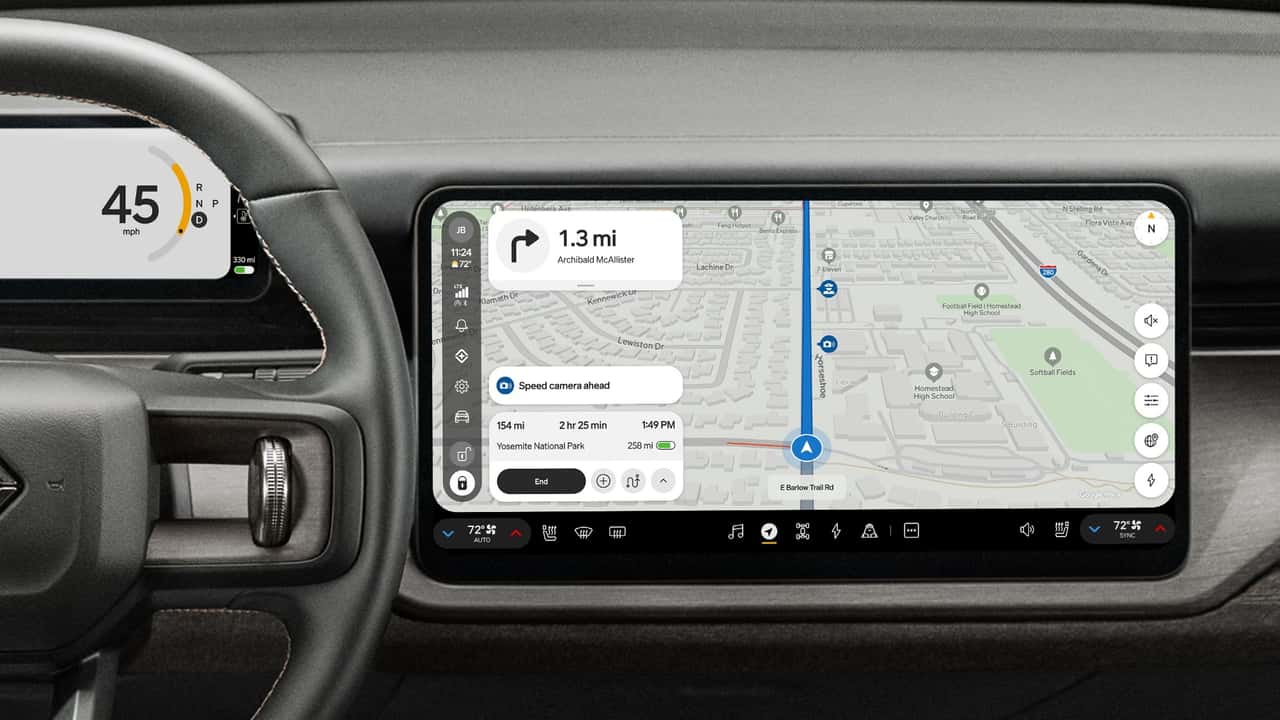
One of the clearest themes is the growing importance of software and artificial intelligence. Rivian is reportedly pursuing technology that could allow it to simulate unusual or dangerous driving situations before they occur in the real world. If developed successfully, such systems could help manufacturers test autonomous-driving features more efficiently and expose vehicles to edge cases that would be difficult, expensive, or unsafe to reproduce on public roads. The broader objective is to make advanced driver assistance more reliable by combining real-world data with increasingly sophisticated virtual environments.
General Motors is also putting technology at the center of its next phase. Its upcoming plans reportedly include LMR battery technology and a new AI assistant, suggesting that the company views future vehicles as connected computing platforms rather than simply electric replacements for conventional cars. GM’s broader strategy appears to include both next-generation EVs and continued investment in gasoline-powered SUVs. That dual approach reflects the reality of the current market: electric models are expanding, but many customers still want traditional powertrains, particularly for larger vehicles and long-distance use.
Battery technology remains a major focus across the industry. A fourth-generation EV platform using lithium manganese-rich, or LMR, cells is reportedly on the way. The chemistry could offer a useful balance between cost, energy density, durability, and performance, potentially helping automakers reduce their dependence on more expensive battery materials. The success of such platforms will depend not only on laboratory results but also on manufacturing scale, charging behavior, cold-weather performance, and long-term reliability.
Affordability is another major pressure point. One upcoming electric hatchback is expected to compete at a price below $40,000, a segment where Chinese brands have increasingly demonstrated that attractive design and modern technology do not necessarily require luxury-car pricing. Affordable EVs could be essential for expanding adoption beyond early buyers and affluent households. However, achieving a competitive price while maintaining acceptable range, charging capability, safety equipment, and build quality remains one of the industry’s toughest challenges.
The market is also exposing the risks of launching products that fail to match customer expectations. Volkswagen’s ID. Unyx 08 was intended to help revitalize the brand’s position in China, but reports indicate that sales have struggled to exceed roughly 250 units per month. The result illustrates how quickly the Chinese market can punish vehicles that are not sufficiently competitive in design, software, pricing, or perceived value. Established global manufacturers are no longer competing only with one another; they are also trying to catch up with domestic companies that move quickly and often integrate digital features more deeply into their products.
Several vehicles highlighted in the feed demonstrate how manufacturers are attempting to differentiate EVs through refinement and practicality rather than outright performance. A plug-in hybrid Lexus ES is described as comfortable and reassuring on long road trips, emphasizing the role of electrified vehicles that reduce fuel consumption without requiring drivers to depend entirely on public charging. Other models are being promoted as powerful, elegant, and capable while remaining priced close to their gasoline equivalents. This type of pricing could help persuade buyers who are interested in electric driving but remain cautious about paying a premium.
BMW is entering a particularly important moment with the first electric version of the X5. The X5 is one of the brand’s most recognizable and commercially important SUVs, so an electric variant must appeal to existing BMW customers rather than only to technology enthusiasts. A successful electric X5 will need to combine the expected premium interior, driving dynamics, practicality, and brand identity with competitive range and charging performance. The BMW iX5 test highlighted in the feed reflects the larger question facing many luxury automakers: can their EVs convince loyal gasoline buyers to make the transition?
At the opposite end of the luxury spectrum, Ferrari’s first fully electric model is generating attention because of its expected price and exclusivity. The comparison with a Rolls-Royce Cullinan underscores how far the market extends, from relatively affordable hatchbacks to ultra-luxury vehicles costing more than many homes. Electric power is no longer limited to compact commuter cars or performance sedans; it is being adapted for nearly every segment, including exotic and prestige vehicles.
Practical upgrades are also shaping the ownership experience. One model now includes an extended-range battery at no additional cost across its lineup, while a new Trail trim adds lifted suspension for buyers seeking more ground clearance and a more adventurous appearance. These changes show that automakers are trying to make EVs useful for a wider variety of lifestyles rather than positioning them solely as urban transportation. At the same time, convincing skeptical drivers requires more than horsepower. Ride comfort, predictable range, charging access, cabin quality, and ease of use can matter just as much as acceleration.
Charging infrastructure remains a local and political issue. In one city, residents will help decide where Level 2 chargers are installed, with priority given to neighborhoods containing apartment buildings. That approach recognizes a central equity problem: homeowners with garages can often install private chargers, while renters and residents of multifamily buildings may depend entirely on public infrastructure. Expanding access in those areas could be critical to making EV ownership practical for people who cannot charge at home.
Software ecosystems are evolving as well. Audi is preparing an application built without Google’s design restrictions for its A6 e-tron and Q6 e-tron models around the world. The move reflects a broader desire among automakers to control the digital experience inside their vehicles, from navigation and entertainment to account management and over-the-air updates. Yet developing a polished software platform is difficult, and customers increasingly expect smartphone-like reliability.
Autonomous driving and subscription services remain controversial but commercially important. Tesla’s latest figures reportedly indicate that 75 percent of buyers subscribe to its $99-per-month autonomy software, although the long-term stability of that rate remains uncertain. The company also says that most Cybercabs will be owned by Tesla, suggesting a robotaxi strategy centered on centralized fleet control rather than broad private ownership. Such plans could change the economics of vehicle use, but they depend on regulatory approval, dependable autonomous performance, and consumer trust.
Taken together, these developments show an EV sector that is maturing but not settling. Automakers are experimenting with new battery chemistries, lower-cost platforms, premium electric SUVs, plug-in hybrids, autonomous services, AI assistants, and community-driven charging plans. Some launches will succeed because they combine technology with value and usability; others may struggle if they arrive too late or fail to match rapidly changing expectations. The next stage of electric mobility will be defined less by novelty alone and more by execution: building vehicles that people can afford, trust, charge conveniently, and want to drive every day.