

Slate’s Bare-Bones Electric Truck Makes a Stronger First Impression Than Expected
Slate’s Bare-Bones Electric Truck Makes a Stronger First Impression Than Expected
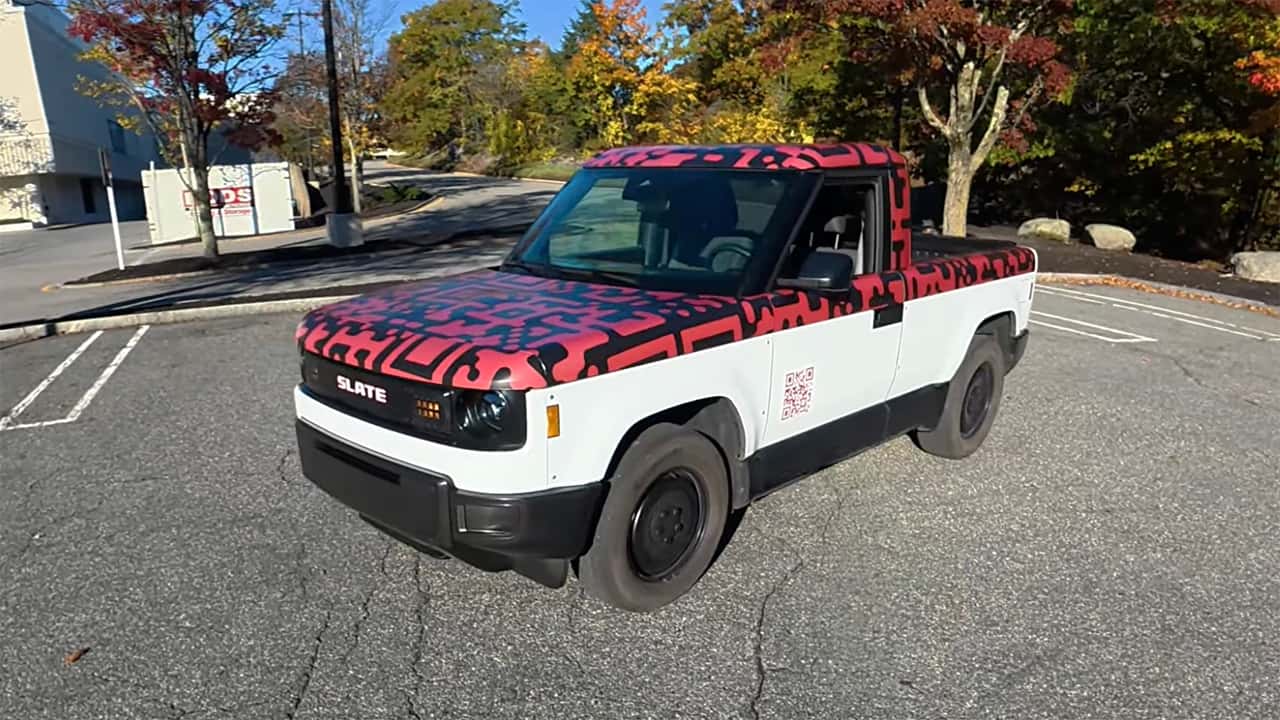
The Slate electric truck is designed around a simple idea: offer a useful, affordable vehicle by leaving out many of the features that have become common in modern cars. It has manual windows, steel wheels and a deliberately straightforward cabin. In the prototype recently driven in Massachusetts, that simplicity was taken even further, with unfinished interior panels still standing in for production components.
With expectations set accordingly low, the truck had an opportunity to surprise. After spending time behind the wheel, YouTuber Tedward found that the Slate delivered a more satisfying driving experience than its stripped-down presentation initially suggested. The vehicle is not finished, and several shortcomings remain obvious, but its performance, ride quality and sense of control helped make a case for the company’s minimalist approach.
More responsive than the numbers suggest
Slate estimates that the truck will accelerate from zero to 60 mph in roughly eight seconds. That figure is not especially quick by electric vehicle standards, but the truck reportedly feels lively in everyday traffic. Around town, the immediate response from the electric motor gives it enough urgency to feel more energetic than the specification sheet might imply.
Tedward was especially impressed by the Slate’s ability to gather speed at moderate velocities. When accelerating from about 40 mph, the truck had enough power for passing maneuvers without feeling strained. His assessment was simple: the vehicle has the performance it needs for normal driving, even if it is not intended to be a high-performance machine.
The Slate uses a single electric motor mounted to drive the rear wheels. That layout, combined with the truck’s relatively compact and uncomplicated design, gives it a character that may appeal to drivers who prefer a more traditional connection with a vehicle. Physical controls and the absence of excessive digital interfaces reinforce that impression.
A comfortable ride on rough roads
Ride comfort made an even bigger impact than acceleration. During the drive, the truck handled broken pavement and tram tracks without becoming harsh or unsettled. That ability could be particularly important for a vehicle marketed as an affordable daily runabout, since buyers in urban areas are likely to encounter rough roads regularly.
The driving position also received praise. Tedward, who was recovering from a back injury, found the seating position comfortable enough that the discomfort became much less noticeable during the drive. By the end of the outing, he said he had largely stopped thinking about the pain, suggesting that the truck’s seating arrangement could be one of its more successful elements.
The vehicle’s one-pedal driving system was described as generally well calibrated. As with many electric vehicles, lifting off the accelerator can produce regenerative braking, allowing the driver to slow the truck without using the brake pedal as frequently. The accelerator response may take some adjustment, however, because it can feel abrupt when a driver first begins using it.
Stable at highway speeds
The Slate also appeared more composed on the highway than its low-cost positioning might lead some people to expect. Tedward described the truck as stable and planted at higher speeds. Despite the large, exposed mirrors, he did not encounter the wind noise he had anticipated.
Cornering behavior was another positive. The truck exhibited little body roll and felt secure through turns. Its rear-wheel-drive configuration and apparent agility even prompted thoughts of using it for autocross events or winter driving activities. Those comments should not be interpreted as a claim that the Slate is a sports truck, but they do suggest that the underlying chassis may provide more driving enjoyment than the vehicle’s basic equipment would indicate.
A prototype with unfinished details
There are still clear reasons to remember that this was not a production-ready truck. Tedward noticed that steering effort changed while negotiating a turn, an issue that could reflect unfinished calibration or development work. He also wanted the switchgear to feel more substantial.
The interior itself could not be judged fairly. Placeholder panels remained around the cabin, and those pieces rattled when the truck traveled over bumps. Since the final interior materials and components have yet to be installed, the prototype’s cabin noise does not necessarily reflect what customers will experience. Nevertheless, it illustrates the compromises and uncertainty involved in evaluating a vehicle before production is complete.
Straightforward specifications and pricing
The truck is equipped with a 181-horsepower electric motor and a 65-kilowatt-hour lithium-iron-phosphate battery pack. Slate claims a driving range of 205 miles, although that figure is still a manufacturer estimate and has not yet been confirmed as an official Environmental Protection Agency rating.
The company says the battery can be charged from 20% to 80% in approximately 30 minutes using a suitable DC fast charger. That is a relatively ordinary charging target, but it should be adequate for occasional road trips or quick top-ups during longer days away from home.
Pricing is central to the Slate’s appeal. The truck starts at $24,950 before taxes, customization and accessories. Including the destination charge, the total rises to $26,400. Buyers can then add equipment and personalize the vehicle, an approach that allows the company to keep the base model relatively inexpensive while giving customers a way to tailor it to their needs.
One example is the available hitch receiver, which costs $99.99. The accessory attaches with four bolts and can reportedly be installed in as little as 30 minutes, reinforcing Slate’s emphasis on owner involvement and do-it-yourself upgrades.
A different kind of electric vehicle
The Slate is aimed at customers who may value usefulness and affordability more than luxury. Its physical controls, simple cabin and customization options stand apart from the increasingly screen-heavy and feature-rich interiors found in many new vehicles.
Potential buyers can now experience the truck at Slate’s first showroom in Chicago. Some preorder customers have also reportedly received delivery windows extending into December 2026, indicating that production and customer deliveries remain part of a longer rollout process.
The company, which has backing from Jeff Bezos, is asking drivers to accept fewer standard features in exchange for a lower entry price and a vehicle that can be personalized over time. The unfinished prototype suggests there is still development work to complete, particularly inside the cabin and in certain driving details. Even so, the initial driving impressions indicate that the Slate may deliver more comfort, stability and everyday usability than its bare-bones specification suggests.
The challenge will be ensuring that the final truck preserves those strengths while eliminating the prototype’s rattles, inconsistent steering feel and unfinished components. If Slate succeeds, it could offer a rare alternative in the electric vehicle market: an inexpensive, practical truck that treats simplicity not as a deficiency, but as the central part of its identity.