

A $13,000 Tesla Model S With 135,000 Miles Still Delivers Impressive Range and Speed
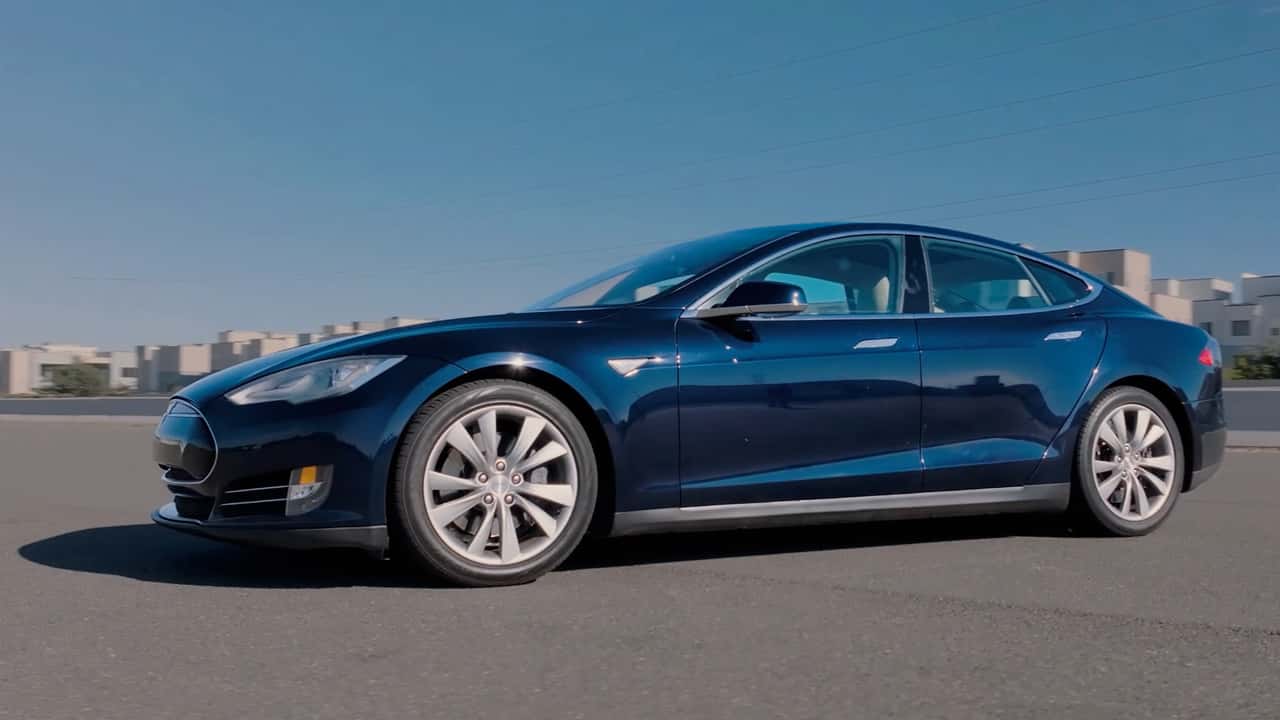
Buying an older Tesla Model S can look like an attractive shortcut to luxury electric-car ownership. Prices for early examples have fallen dramatically, with some now available for less than $13,000. However, the potential cost of replacing a battery or repairing an aging drive unit can make such a purchase a serious financial gamble.
Even so, high mileage does not necessarily mean an electric vehicle is worn out or unusable. A recent evaluation of an older Model S suggests that a well-used Tesla can still offer strong performance, respectable range, and much of the quiet, comfortable driving experience that made the car desirable when it was new.
The Tesla tested had accumulated approximately 135,000 miles. Despite that mileage, it managed 221 miles during an electric-vehicle range test. That figure is well below what the newest electric sedans can achieve, but it remains impressive for an older luxury car purchased at a bargain price. The result also indicates that the battery has retained a meaningful portion of its original capacity after years of use.
Performance was another strong point. The rear-wheel-drive Model S reached 60 mph in about five seconds and completed the quarter-mile in 13.3 seconds. Those figures remain competitive with many modern performance-oriented vehicles. The car was reportedly fitted with old and mismatched tires, which made it difficult to transfer all of the available power to the pavement. Better tires could potentially improve its launch and quarter-mile time.
There is some uncertainty about the exact version of the car. Its reported original price was $69,900, a figure associated with the entry-level Model S 60. That model used a 60-kilowatt-hour battery, had an official EPA range of 208 miles, and was advertised with a 0-to-60-mph time of 5.9 seconds.
However, the car’s real-world range and acceleration suggest it may actually be a Model S 85. That version originally cost about $79,900 and used an 85-kilowatt-hour battery. It produced approximately 362 horsepower and 325 pound-feet of torque through a single rear-mounted motor. When new, Tesla claimed a 5.4-second sprint to 60 mph, a top speed of 125 mph, and an EPA-rated range of 265 miles. Unlike the Model S 60, the 85 included Supercharging as standard equipment.
The vehicle’s condition appears to be better than its age and mileage might suggest. Its air suspension remains operational, and the cabin is still quiet on the road. There are reportedly no major creaks or rattles, and the Model S continues to feel substantial and refined when driven through corners. Even with its questionable tires, it retains the smoothness and stability expected from a large luxury sedan.
Naturally, several age-related problems are beginning to appear. The rear motor produces an audible whine, the driver information display is damaged, and the powered liftgate no longer operates with the confidence of a newer vehicle. None of these issues currently makes the car unusable, but each could eventually require attention. Repair costs for Tesla components can be significant, particularly when warranty coverage is no longer available.
The experience is consistent with other high-mileage Model S examples. A 2015 Model S P85D with roughly 160,000 miles reportedly remained on its original battery, with a battery-monitoring application estimating that it had retained about 86 percent of its initial capacity. That car was still capable of approximately 200 miles of real-world driving and continued to feel genuinely quick.
Another heavily used example demonstrates both the durability and the limitations of an older Tesla. A 2019 Model S purchased for about $9,000 after incentives had traveled approximately 250,000 miles. During a test at around 70 mph, it covered 206 miles, although it struggled to maintain that speed near the end of the run. The result showed that even an extremely high-mileage battery can remain useful, though its reduced capacity and performance become more obvious under demanding conditions.
Charging speed was a more noticeable weakness. That high-mileage Model S needed roughly 47 minutes to go from 10 percent to 80 percent. Charging completely from empty took approximately two hours and 41 minutes, with battery-management recalibration and cell balancing extending the final portion of the session. Newer electric vehicles can charge considerably faster, making older Teslas less convenient for long-distance travel.
Direct comparisons between these cars are difficult because battery sizes, software versions, temperatures, driving speeds, and testing procedures can all affect range and charging results. Still, the examples challenge the assumption that an EV with a six-figure odometer reading is automatically near the end of its useful life.
The biggest lesson for potential buyers is that mileage alone is not enough to judge a used electric vehicle. Battery health, charging behavior, service records, drive-unit condition, suspension operation, and the availability of replacement parts are all more important considerations. A high-mileage Model S may deliver years of useful transportation, but it can also produce an expensive repair bill without warning.
Further testing will reveal whether this inexpensive Model S can handle regular use without major failures. Its upcoming charging evaluations and continued road mileage should provide a clearer picture of how an aging Tesla performs as a daily driver. Unlike some earlier examples, this car no longer benefits from a factory warranty, meaning any battery or drive-unit failure will have to be paid for by its current owner.
For shoppers willing to accept that risk, an older Model S could offer exceptional value: long-distance capability, rapid acceleration, premium materials, and a quiet ride for a fraction of its original price. The trade-off is uncertainty. A cheap purchase price may be easy to justify, but one major component failure could quickly erase the savings. In the right condition, however, high mileage does not prevent an early Tesla from remaining a fast, comfortable, and surprisingly capable electric car.