

Ford’s Affordable EV Reset Takes Shape With the $29,945 Fathom Pickup
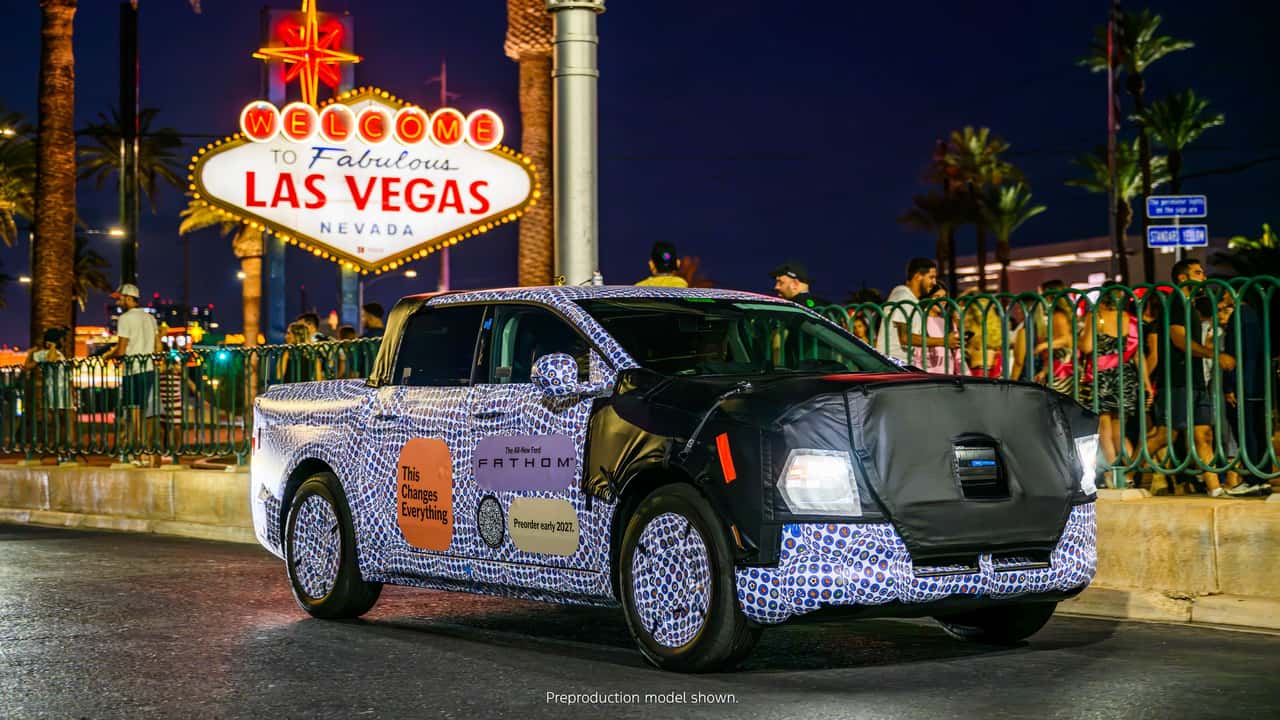
Ford is preparing a major reset of its electric-vehicle strategy as it looks to compete with Tesla, General Motors, and increasingly capable Chinese automakers. The company’s next generation of EVs will be built around a new architecture designed from the beginning to reduce costs, simplify production, and make electric vehicles more accessible to a wider range of American buyers.
The first product from that effort is the Ford Fathom, a compact-to-midsize electric pickup that will start at $29,945, including a $1,595 destination charge. Ford unveiled the name and initial pricing on August 6, 2026, offering the clearest look yet at the company’s plan to bring a relatively inexpensive electric truck to the U.S. market.
The Fathom is expected to launch in the fourth quarter of 2027. Ford plans to begin accepting preorders early next year, when it intends to reveal the truck in full. Production will take place at the Louisville Assembly Plant in Kentucky, which is receiving a $2 billion upgrade to support the new EV family.
Ford’s current electric lineup has not produced the results the automaker originally hoped for. The F-150 Lightning and Mustang Mach-E remain compelling vehicles, but both were adapted from existing gasoline-powered platforms. Their development and production costs have made it difficult for Ford to earn the kind of profit it wants from EVs. The F-150 Lightning, once the best-selling electric pickup in the country, has now been discontinued.
At the same time, General Motors has moved ahead of Ford to become America’s second-best-selling EV brand behind Tesla. Ford is also concerned about the possibility of lower-priced Chinese electric vehicles entering the U.S. market in greater numbers. CEO Jim Farley has repeatedly warned that Chinese automakers have significant advantages in cost, manufacturing efficiency, and battery technology.
The company’s response is a platform called the Universal EV Platform. It was developed by a relatively small “skunkworks” organization created around 2021. The team includes engineers and other specialists recruited from electric-vehicle companies such as Tesla, Rivian, and Lucid. Farley has described the group as intensely focused on efficiency and cost reduction, viewing Tesla and Chinese EV makers as the benchmark for competition.
Ford’s manufacturing strategy is one of the most important parts of the program. Instead of assembling an EV from numerous smaller components, the company plans to build vehicles using three large structural sections. Large castings will be produced on separate lines and brought together near the end of the assembly process. Ford believes this approach can reduce complexity, lower labor requirements, and shorten the time needed to build each vehicle.
The first vehicle based on the platform will be a rear-wheel-drive electric pickup. Ford says it will offer more interior room than a Toyota RAV4, even before accounting for the truck bed and front trunk. Although the Fathom is expected to be similar in size to the Ford Maverick, its design will reportedly feature a new silhouette that is less traditional than the full-size F-150. The result could be a vehicle that combines the practicality of a pickup with the driving characteristics and packaging of a crossover or passenger car.
A second model is expected to follow the pickup. Reports suggest that it could be a compact crossover, but Ford has not yet disclosed its final design. The company has said the architecture will support several different body styles, or “top hats,” allowing it to use the same underlying technology for vehicles aimed at different customers. Ford has also discussed an EV intended for rideshare operators, potentially giving the platform a commercial application beyond private buyers.
Affordability will be central to the project. Ford has decided not to equip these vehicles with extremely large battery packs, which can dramatically increase an EV’s price. The company is reportedly targeting a battery around 15% smaller than the usable 60.5-kilowatt-hour pack in the BYD Atto 3. That would put the new pickup’s usable capacity near 51 kWh.
A relatively small battery could limit maximum range, but Ford believes improved efficiency can compensate for some of that disadvantage. Farley has said the Fathom’s motors, gearbox, and inverters are approximately 30% more efficient than comparable systems from BYD. The company also expects to offer multiple battery options, along with both rear-wheel-drive and all-wheel-drive versions.
The rear axle will use a permanent-magnet motor developed and manufactured by Ford. All-wheel-drive models will add an induction motor to power the front wheels. This arrangement should allow Ford to offer different performance and range configurations without redesigning the entire vehicle.
Battery sourcing is another part of the cost strategy. Ford is preparing its $3 billion BlueOval Battery Park Michigan facility to produce lithium-iron-phosphate batteries beginning in 2026. The plant is licensing LFP technology from China’s CATL and is expected to create approximately 1,700 manufacturing jobs. Annual output is projected at around 20 gigawatt-hours, enough batteries for roughly 250,000 vehicles.
LFP chemistry is generally less energy-dense than some nickel-based alternatives, but it is typically less expensive and can offer strong durability. That makes it well suited to Ford’s goal of building practical, lower-priced EVs rather than expensive vehicles focused on maximum range and acceleration.
The Fathom will also include a substantial amount of standard technology. Every version is expected to feature a high-resolution touchscreen with native Apple Maps, built-in electric-vehicle route planning, live traffic data, and turn-by-turn navigation. Apple CarPlay and Android Auto will be supported on base models as well.
Ford will install the hardware required for its BlueCruise hands-free driver-assistance system in entry-level Fathom models. However, buyers may need to subscribe to activate the feature. Other standard equipment will include bidirectional charging, a digital key, and a front trunk.
The pickup will use a native NACS charging port and should be compatible with Tesla Superchargers from launch. Ford is also integrating a DC-to-AC inverter into the vehicle, allowing the Fathom to supply electricity to a home without requiring additional external hardware. That capability could make the truck especially attractive to customers interested in backup power and vehicle-to-home charging.
The project is already moving into the manufacturing phase. Ford has stopped Escape production at Louisville, installed megacasting equipment, and begun building prototypes. Farley says the company is testing its own zonal electrical architecture software and vehicle-control systems as development progresses.
The Fathom will enter a U.S. market where affordable electric pickups remain rare. The Tesla Cybertruck, Rivian R1T, and Chevrolet Silverado EV all begin above $60,000, while the discontinued F-150 Lightning started at about $55,000. New competitors such as the Slate Truck and Telo pickup have yet to establish large-scale production.
That gap gives Ford an opportunity. If the company can deliver the Fathom at or near its promised price while maintaining useful range, practical capability, and dependable manufacturing quality, it could become one of the first genuinely accessible electric trucks sold in America. Ford’s new EV strategy is ambitious, but the Fathom’s success will ultimately determine whether the automaker’s reset delivers the breakthrough it is seeking.