

The EV Market Moves Into Its Next Phase: Cheaper Models, Smarter Factories, and More Real-World Testing
Electric vehicles are entering a more complicated phase of growth
The latest developments across the electric-vehicle industry show a market moving beyond the early-adopter stage. Automakers are no longer focused solely on proving that electric cars can be fast, quiet, and technologically advanced. They are now trying to make them affordable, profitable, easy to manufacture, practical for everyday driving, and acceptable to regulators and the wider public.
That transition is creating a mixture of optimism and uncertainty. EV sales continue to rise across Europe, with electric vehicles gaining ground in nearly every European Union country and potentially overtaking hybrids in the near future. At the same time, manufacturers are discovering that selling more vehicles does not automatically produce better financial results. Low margins, expensive batteries, large development budgets, and the cost of expanding production can make rapid growth surprisingly difficult to manage.
Affordability is becoming the central battleground
Several of the developments in the feed point toward a new emphasis on lower-cost electric vehicles. Ford is preparing a family of more affordable EVs intended to compete with Chinese manufacturers and Tesla, while its Fathom model is expected to start below $29,000. That price places the vehicle in a part of the market that has been difficult for many electric-car makers to reach, particularly in North America.
Lower prices could significantly broaden EV adoption, but achieving them requires more than simply reducing equipment. Automakers are redesigning platforms, motors, inverters, gearboxes, and factories to reduce costs at every stage. Ford’s leadership says its next generation of electric propulsion components will improve efficiency while also lowering manufacturing expenses. Those gains could allow smaller batteries to deliver competitive range, reducing one of the most expensive parts of an EV.
Lucid is taking a different approach by bringing its efficiency-focused engineering into a more affordable model. The least expensive Lucid reportedly retains much of the refinement, technology, and driving character associated with the brand’s higher-priced vehicles. This illustrates an important trend: entry-level EVs do not necessarily have to feel basic if manufacturers can spread advanced engineering across multiple trims and models.
Manufacturing is being redesigned around efficiency
Tesla’s Cybercab offers one of the clearest examples of how production methods may change. The vehicle is designed to skip much of the traditional paint-shop process and reach final assembly in a more complete state. Tesla claims that the approach could require roughly half the factory space of a conventional production system.
If those claims translate into reliable, high-volume manufacturing, the implications could be considerable. Smaller factories may cost less to build, occupy less land, and allow companies to increase production more quickly. However, unconventional manufacturing methods also bring risks. New processes must meet demanding standards for quality, repairability, safety, and long-term durability. The pressure to reduce cost cannot come at the expense of vehicles that are difficult to service or inconsistent to build.
Toyota is also preparing to manufacture driverless crossovers on the same assembly line as their conventional counterparts. This approach suggests that autonomous technology may increasingly be treated as an integrated vehicle feature rather than as a completely separate product category. Shared production could make autonomous variants easier to scale, although the vehicles will still require specialized sensors, software, computing hardware, and safety validation.
Autonomous driving faces a public test beyond technology
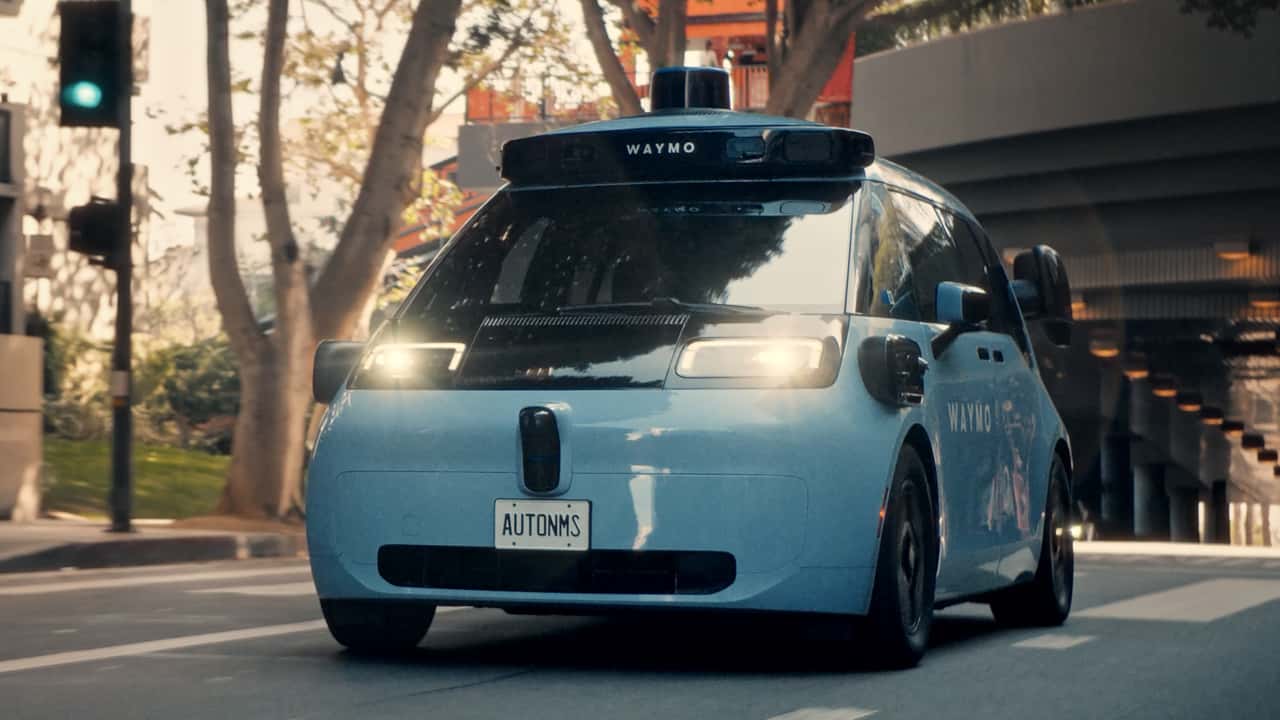
The feed highlights a challenge for robotaxi companies that is easy to overlook: driverless cars must not only be safe, they must also be less annoying to everyone around them. A vehicle that stops too cautiously, hesitates at intersections, blocks traffic, or behaves unpredictably can frustrate human drivers even if it avoids collisions.
Testing of Tesla’s Full Self-Driving system produced a similar mixture of promise and limitation. Steep hills and narrow spaces demonstrated how capable the system can be in difficult situations, while missed signs and driver interventions showed that it still requires active supervision. The gap between impressive demonstrations and dependable, unsupervised operation remains significant.
Public acceptance may depend as much on smooth interaction with ordinary traffic as on technical performance. Regulators and consumers will want evidence that autonomous vehicles can handle unusual road layouts, temporary construction, emergency vehicles, pedestrians, cyclists, and the subtle social cues that human drivers negotiate every day.
New models are broadening the definition of an EV
The latest product news ranges from practical family vehicles to tiny urban transportation. The next-generation Nissan Rogue is described as delivering the smooth acceleration and refinement associated with electric propulsion, showing how electrified powertrains are influencing even vehicles that may not be fully electric. An engine developed specifically for electrified systems also promises greater efficiency than earlier designs, reflecting the continued importance of hybrids and range-extending technologies during the transition.
At the other end of the scale, the Fiat Topolino has become street legal, offering a compact and approachable form of electric mobility designed for city use. Its arrival highlights the fact that electrification does not always mean large SUVs with long ranges. Small, lightweight vehicles can consume less energy, occupy less road space, and potentially cost less to operate.
Electric commercial vehicles are expanding as well. The electric delivery van mentioned in the feed now offers a longer-range battery and an all-wheel-drive version producing 710 horsepower. While that power figure is excessive for most delivery work, the broader development demonstrates how electric vans are becoming more versatile. Longer range and improved traction could make them useful for a wider range of businesses and weather conditions.
Consumer interest remains strong, but profitability is unresolved
Rivian’s electric SUV positioned against the Tesla Model Y appears to be attracting buyers, prompting the company to raise its annual delivery guidance again. Strong demand for an individual model is encouraging, especially for a newer manufacturer, but it does not eliminate the broader financial challenges facing the industry.
The economics of EV production remain difficult. Battery materials, software development, factory investment, warranty obligations, and price competition can compress margins. Discounts may stimulate demand while simultaneously making each sale less profitable. This is why scale, manufacturing efficiency, and component standardization are becoming just as important as headline range or acceleration figures.
Even media reviews reflect this changing market. An affordable electric pickup has been described as good-natured and vaguely practical, suggesting that buyers may increasingly value usability, character, and price over spectacular performance. The most successful EVs of the next phase may not be the most extreme vehicles, but those that fit naturally into daily life.
Regulation and raw materials remain major uncertainties
Industry leaders are also questioning whether new discussions and regulations are a consequence of EV success or a condition required to achieve it. That tension is likely to intensify as electric vehicles become more common. Rules concerning charging, battery safety, data collection, autonomous driving, emissions, and local manufacturing will shape which technologies reach the market and how quickly.
Battery supply is another area where innovation could have major consequences. A new technology still requiring further testing may eventually transform lithium extraction, potentially improving access to one of the industry’s most important raw materials. It is not yet clear whether the process can operate at commercial scale or reduce environmental impacts, but breakthroughs in sourcing could ease pressure on battery supply chains.
Overall, the feed presents an EV market that is growing while becoming more disciplined. The next stage will be defined by affordable vehicles, efficient factories, practical autonomy, improved supply chains, and products that work well in ordinary circumstances. Electric mobility is no longer judged only by whether it is innovative. It is increasingly being judged by whether it is convenient, profitable, durable, and easy for everyone else to live with.