

The EV Market Enters a More Practical Era of Growth, Competition, and Consolidation
The electric-vehicle market is changing shape
The latest electric-vehicle news points to a market that is no longer defined solely by headline-grabbing launches, ambitious promises, or debates over whether EV adoption will continue. Instead, the industry is moving into a more practical and competitive phase. Automakers are focusing on manufacturing efficiency, charging access, software, commercial vehicles, affordable models, and the long-term value of the products already on the road.
That shift is visible across nearly every part of the sector. Some companies are introducing high-performance vehicles and new consumer features, while others are concentrating on delivery vans, recycling, parts reuse, and cost reduction. At the same time, established automakers are adjusting product plans in response to slower-than-expected demand, regulatory uncertainty, and pressure from Chinese manufacturers and Tesla.
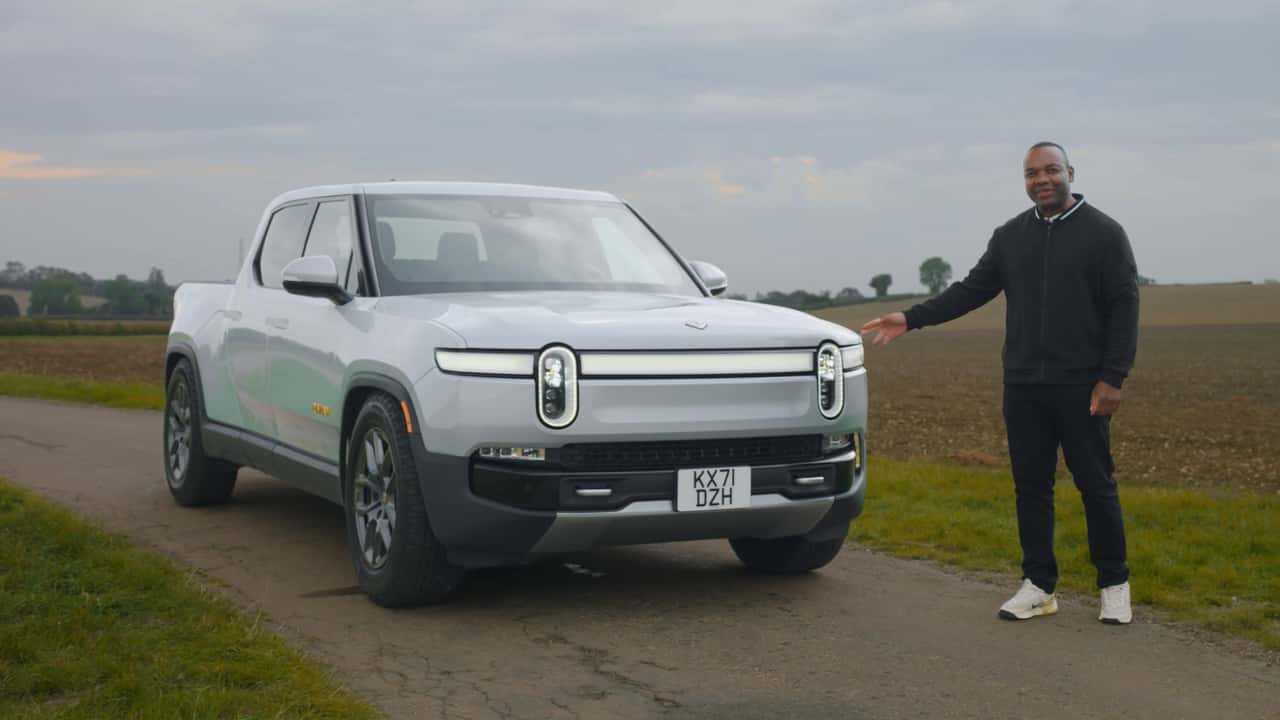
Rivian expands beyond the consumer spotlight
Rivian continues to attract attention with its R2 midsize electric SUV, which has impressed reviewers with its performance, technology, and clever design details. Its 835-horsepower capability and software-driven features demonstrate how electric vehicles can combine speed with flexible functionality. Yet real-world ownership also remains a central test. Even seemingly simple tasks, such as finding a suitable drive-through restaurant for a large vehicle, can expose the practical limitations of designing for a changing automotive landscape.
The R2 may be the company’s most visible new product, but Rivian’s commercial van operation is becoming increasingly important. The business is expected to generate significant revenue, and the company’s commercial vehicles are gaining strategic value as other manufacturers retreat from or reconsider electric delivery-van programs. New versions now offer a longer-range battery and an all-wheel-drive configuration with substantial power, making the van more useful for fleets that need to balance payload, range, weather capability, and operating costs.
Rivian is also increasing delivery expectations for its electric SUV lineup, indicating that its Model Y competitor is finding a receptive audience. The company is investing in its own fast-charging network even though its vehicles can access Tesla’s Supercharger network. That decision suggests that charging infrastructure remains a competitive advantage, particularly for commercial customers and drivers who want reliable coverage rather than dependence on a single external provider.
Software is another major part of Rivian’s strategy. The company’s chief software officer has described upcoming artificial-intelligence integrations that could help drivers order coffee, schedule vehicle service, and automate routine interactions. Such features could make EV ownership more convenient, although their success will depend on accuracy, privacy, and whether customers find them genuinely useful rather than distracting.
Manufacturing efficiency becomes a priority
Across the industry, automakers are looking for ways to reduce production costs and simplify factories. Tesla’s Cybercab is being designed to bypass conventional paint-shop processes and enter final assembly in a more complete state. The company says the approach could require roughly half the factory space of a traditional vehicle-production system. Whether those projections are achieved at scale remains to be seen, but the underlying idea is significant: future EV profitability may depend as much on manufacturing architecture as on battery chemistry.
Rivian is taking a different but related approach at its Normal, Illinois, factory by installing a row of 3D printers. Employees will be able to produce selected parts on demand, potentially reducing inventory, shortening repair times, and making it easier to support low-volume components. Additive manufacturing will not replace conventional mass production, but it can help factories respond more flexibly to changing needs.
Ford is also emphasizing efficiency through redesigned motors, inverters, and electric gearboxes. The goal is to extract more range and performance from each unit while lowering costs. These components are less visible to consumers than styling or infotainment systems, but they are crucial to making EVs affordable and profitable.
Affordability and hybrids shape the transition
The next stage of EV competition will likely be fought on price. Ford’s planned low-cost electric vehicles are intended to challenge both Tesla and lower-priced Chinese models, with the company attempting to bring advanced electric transportation to a broader audience. Its Fathom model, priced below $29,000 before options and incentives, illustrates how important accessible pricing has become. The final cost of a well-equipped version will be higher, but the starting price signals growing pressure to move EVs beyond the premium segment.
Hybrids remain an important part of that transition. Nissan’s upcoming Rogue e-Power uses an electric-drive approach that gives the vehicle the feel of an EV while retaining a gasoline engine as an energy source. Comparisons with Toyota’s RAV4 hybrid show that consumers are still evaluating electric driving against familiar fuel-saving technologies. Rather than a single technology winning immediately, the market is developing along several paths at once.
Product delays and industry consolidation
Not every program is moving forward as planned. Volkswagen is pausing development of a new electric Golf, delaying a model that would have carried considerable symbolic importance in Europe. The decision reflects the difficulty of balancing investment in new EVs with uncertain demand and increasingly intense price competition.
Polestar has retired the Polestar 2 after six years, ending an important chapter for the brand. The model helped establish Polestar as a recognizable electric-car manufacturer, and its influence will continue through the company’s future products and customer base. Meanwhile, Volkswagen is planning to dismantle thousands of vehicles annually at its Zwickau facility, recovering reusable components and creating a factory-backed used-parts business. This highlights the growing importance of circular manufacturing, repairability, and resource recovery.
Autonomous vehicles face a social test
Autonomous driving is advancing, but technical capability is only part of the challenge. Robotaxi companies must also ensure that driverless cars behave in ways that do not frustrate or confuse human road users. Vehicles that stop too cautiously, hesitate at intersections, or block traffic may be safe in a narrow technical sense but unpopular in everyday use.
Toyota plans to build driverless crossovers on the same assembly lines as conventional versions, a strategy that could make autonomous vehicles easier to scale if demand develops. Tesla’s Cybercab represents a more radical production and vehicle-use concept. Both approaches reflect the uncertainty surrounding autonomous transportation: companies are preparing for a future that may arrive gradually rather than all at once.
A market still growing, but more selectively
The end of federal incentives in some markets has not stopped EV sales. The industry is still expanding, although growth is uneven. Buyers are becoming more selective, automakers are prioritizing profitable segments, and companies are reassessing projects that lack a clear path to commercial success.
The broader message from this collection of developments is that electric vehicles are moving from experimentation toward execution. Success will depend on affordable prices, dependable charging, efficient production, useful software, practical range, and products that work for both consumers and businesses. High-performance SUVs and futuristic robotaxis will continue to generate attention, but commercial vans, compact cars, hybrids, recycling systems, and factory improvements may ultimately have a greater effect on how quickly electrification becomes mainstream.