

EV Industry Briefing: Charging Expansion, Software Shifts and a More Complicated Road Ahead
EV Industry Briefing: Charging Expansion, Software Shifts and a More Complicated Road Ahead
The electric-vehicle industry is entering a phase defined less by a single breakthrough than by a series of overlapping changes. Charging networks are expanding, automakers are revising their hardware and software strategies, battery projects are being reassessed, and consumers are showing strong interest in electric and electrified vehicles even as the market becomes more competitive. The latest EV news points to an industry moving simultaneously toward wider adoption and greater complexity.
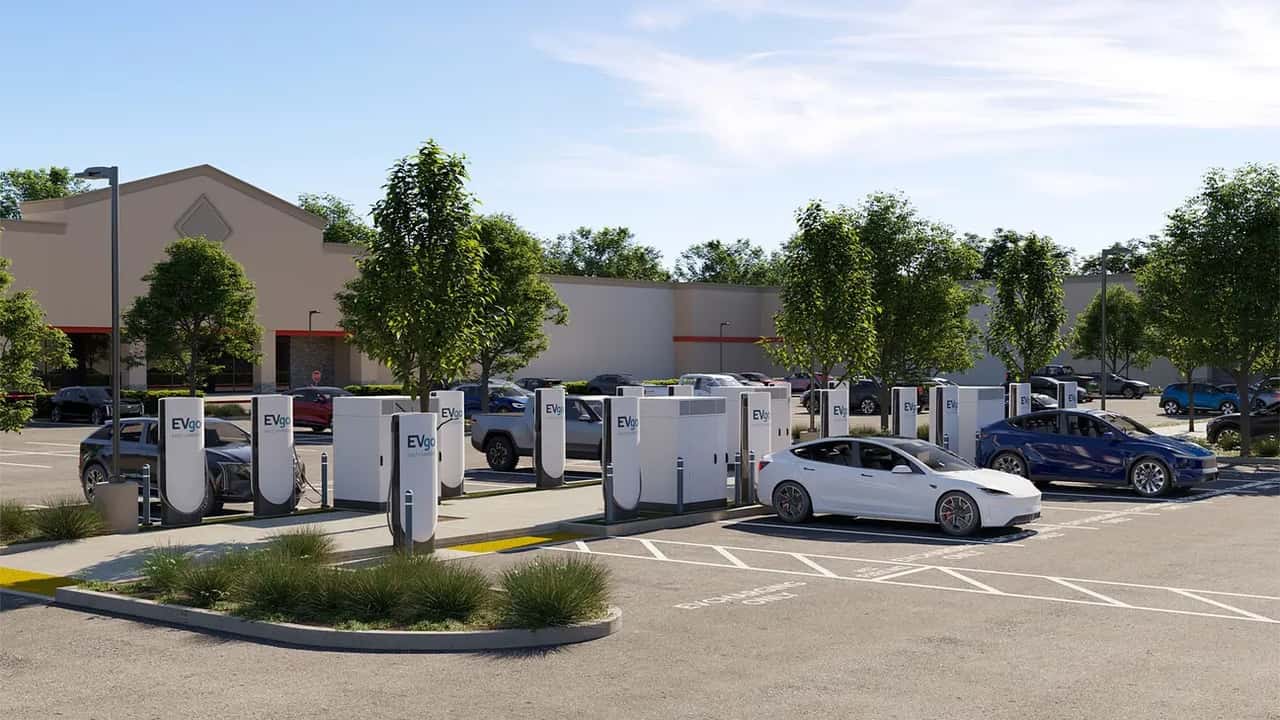
One of the clearest developments is the continued integration of charging networks. EVgo has opened its first station equipped with Tesla Superchargers, with hundreds of additional stalls expected to follow. The move reflects the growing importance of interoperability in the charging market. Tesla’s charging connector and network have become influential enough that competing infrastructure providers are increasingly adapting to them. General Motors is also moving in this direction, with all of its electric vehicles set to receive a Tesla-style charging port. The change should give GM drivers access to a broader selection of fast chargers while reducing one of the practical barriers that has slowed EV adoption.
Charging technology is also evolving inside the vehicle. Researchers and engineers are exploring micro-converters that can charge or discharge individual battery cells rather than treating the pack as one large unit. This approach could improve battery management, efficiency, flexibility, and potentially durability. At the same time, used e-bike and e-scooter batteries are being considered for second-life applications without necessarily requiring complete dismantling. Together, these developments show how the industry is looking beyond simply building larger batteries. Better utilization, easier reuse, and more intelligent power management may become just as important as increasing range.
The software experience is becoming another major dividing line. Volkswagen and Skoda are preparing an over-the-air update for some of the oldest Enyaq, ID.4, and ID.5 electric vehicles still on the road. Regular updates can extend the useful life of a vehicle and improve features without requiring a dealership visit, but software-based ownership also creates new frustrations. In South Korea, data indicates that 99% of Teslas imported during the previous year cannot activate Full Self-Driving, even when owners paid for the feature. The situation highlights the gap between purchasing a capability and being able to use it in a particular market, where regulatory approval, mapping, hardware compatibility, or local policy may impose limitations.
Autonomous driving remains a high-profile but uncertain area. Waymo plans to serve riders through its own app in Austin and Atlanta, signaling an effort to build a more direct relationship with passengers rather than relying only on third-party platforms. Uber, meanwhile, said during its quarterly earnings call that it is putting $10 billion into driverless cars. These moves suggest that robotaxi competition may increasingly involve not only vehicle technology but also control of the customer interface, data, booking platform, and operating network.
The product landscape itself is becoming more diverse. China’s Ministry of Industry and Information Technology has revealed the Lincoln Aviator EX8, a Changan-made plug-in hybrid designed for the Chinese market. Its presence reflects the growing role of local Chinese manufacturing and partnerships in global automotive development. Hyundai’s hybrid mix reached a record 29% last month, while Kia’s affordable EV3 made a strong U.S. debut. These results underline that electrification is not following one universal path. Battery-electric vehicles are expanding, but hybrids and plug-in hybrids remain important bridges for buyers who want lower fuel consumption without depending entirely on public charging.
In the United Kingdom, fully electric cars reportedly outsold gasoline and hybrid models in October as EV registrations climbed 54% year over year. That surge contrasts with ongoing uncertainty elsewhere, particularly in the supply chain. The United States wants a domestic battery ecosystem by 2030, yet tens of billions of dollars in announced battery projects have already been canceled. Rising costs, slower-than-expected demand, financing difficulties, policy changes, and shifting technology choices can all undermine large industrial investments. The result is a market that may be growing while still forcing manufacturers and suppliers to be more selective about where they spend capital.
Design and comfort also remain central to the EV conversation. The Gyesera retains the underlying architecture of the original Fisker Karma despite receiving a new appearance, raising questions about whether a refreshed design can overcome compromises inherited from an older platform. Ferrari’s electric model faced criticism from purists when its design was first shown, but wealthy buyers have reportedly already purchased the entire 2027 allocation. That reaction illustrates the continued power of brand identity and exclusivity, even as luxury manufacturers enter the electric era.
Other stories bring attention to the details that are easy to overlook. Rear-seat comfort depends not only on legroom but also on what passengers place their feet on, prompting renewed interest in floor height, seating position, and underfoot space. Rolls-Royce’s famously luxurious lambswool carpets are being challenged by an even more comfort-focused approach elsewhere. Meanwhile, the Hoffman Badger demonstrated its durability and personality by driving from Wisconsin to Las Vegas for the SEMA show, and a POV video captures the Roadster in its most natural role: delivering fast, dramatic performance.
Taken together, the feed presents an EV sector moving in several directions at once. Public charging is becoming more connected, vehicles are gaining longer software lives, autonomous services are attracting enormous investment, and battery technology is being reconsidered from production through recycling. At the same time, hybrids remain valuable, expensive projects are being canceled, and consumers continue to judge electric vehicles on familiar criteria such as comfort, design, performance, practicality, and brand appeal. The next stage of electrification will therefore not be defined by one winning technology. It will depend on how successfully the industry combines accessible charging, dependable software, flexible powertrains, responsible battery economics, and products that people genuinely want to own.