

Karma Gyesera Review: Striking Design Cannot Hide an Aging, Overpriced Plug-In Hybrid
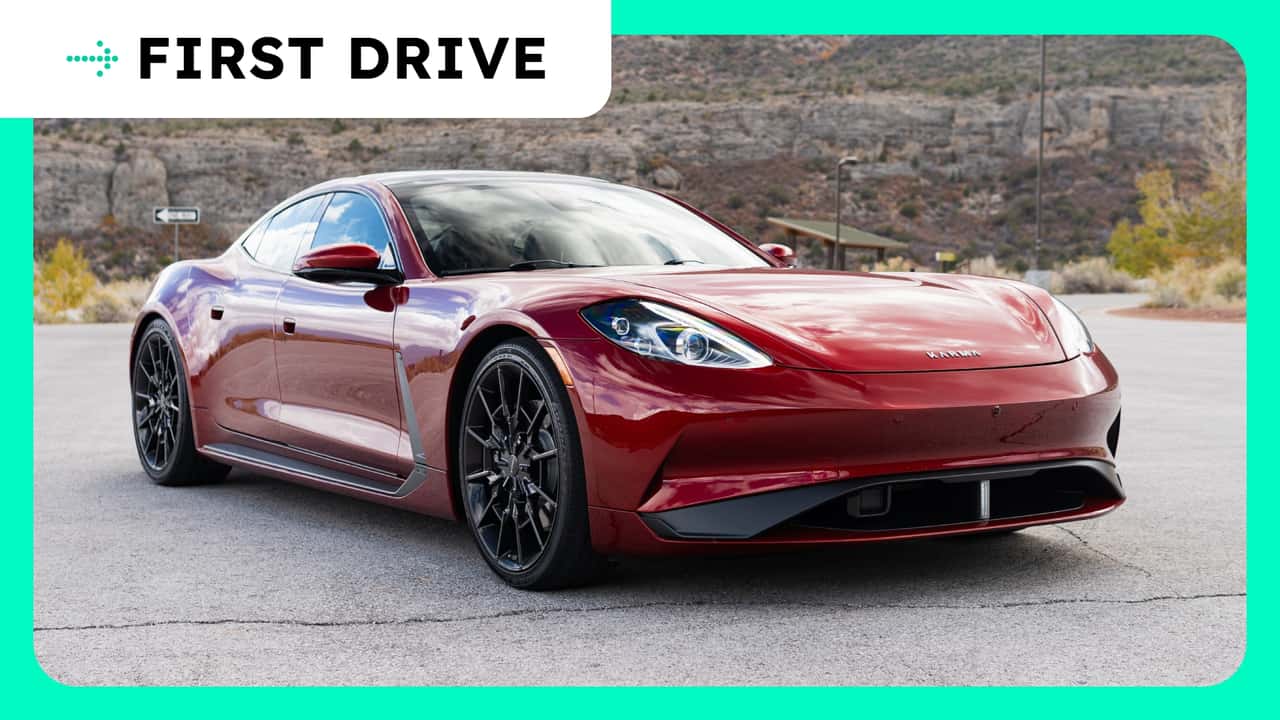
Karma Automotive’s Gyesera arrives with an ambitious mission: to transform a decade-old plug-in hybrid platform into a modern luxury performance sedan. The result is visually dramatic, technically more capable than the original Fisker Karma, and undeniably exclusive. However, after spending time behind the wheel, the Gyesera feels less like a fresh start and more like an extensively revised version of a car whose basic compromises have never truly been solved.
First, it is important to separate Karma Automotive from Fisker Inc. The two companies are not connected. Karma acquired the assets of the original Fisker Automotive, the company that produced the Fisker Karma before entering bankruptcy in 2014. Fisker Inc., the later company responsible for the Ocean electric SUV, was a separate business. Karma continued developing the original Karma concept, eventually evolving it into the Revero and now the Gyesera.
The Gyesera still wears much of the original car’s DNA. Its front and rear styling have been updated, but the long, elegant profile remains instantly recognizable. The shape is arguably one of the car’s strongest selling points. It looks expensive, unusual, and far more distinctive than most contemporary luxury sedans. At a glance, it can easily attract more attention than cars costing considerably more.
However, the age of the underlying architecture becomes obvious once you move beyond the exterior. The battery remains mounted in a central tunnel running through the cabin, a layout that contributes to the car’s unusual proportions and compromises rear-seat space. The roofline is low, the rear seating area feels more like a grand touring coupe than a conventional sedan, and taller passengers will quickly run into problems with legroom and headroom. Trunk access is also limited, with a small opening and visibly large panel gaps on the test vehicles.
The cabin presents a similar mixture of luxury ambitions and dated execution. Karma uses attractive materials, including leather, metal trim, carbon fiber, and other high-end finishes. Unfortunately, those materials are applied to an interior design that feels several generations old. Many frequently touched surfaces, including the center stack, gear selector, and steering-wheel controls, are made from black plastic. The result is a cabin that can look impressive in photographs but feels less special in person.
The infotainment system does little to modernize the experience. Its responses are slow, the software offering is limited, and the dark interface is not especially easy to read. During the drive event, Apple CarPlay became the preferred solution for navigation and entertainment, which is likely how many owners will use the system as well.
The Gyesera’s powertrain is more advanced than the one used by the original Karma. Instead of the former car’s General Motors-sourced 2.0-liter four-cylinder engine, the new model uses a BMW-sourced 1.5-liter three-cylinder engine. The engine does not drive the wheels directly. It acts as a generator, supplying electricity to the battery and motors. This makes the Gyesera an extended-range electric vehicle, or EREV, although it can also be described as a plug-in hybrid.
A 28-kilowatt-hour nickel-manganese-cobalt battery provides an estimated 80 miles of electric driving before the engine needs to run. That is a significant improvement over the original Karma’s roughly 32-mile electric range. The battery can also accept DC fast charging at up to 50 kilowatts, allowing a full recharge in approximately 30 minutes under suitable conditions.
Drivers can select among three operating modes using paddles mounted behind the steering wheel. Stealth mode keeps the car operating as an electric vehicle, while Sustain mode uses the engine to preserve the battery’s charge. Sport mode combines the available electric power with the generator system to produce a claimed 566 horsepower. Karma says the Gyesera can accelerate from zero to 60 mph in 3.7 seconds.
On paper, those figures suggest a fast and entertaining luxury sedan. On the road, the experience is less convincing. The three-cylinder engine produces a raspy, unpleasant soundtrack, and its behavior is not closely synchronized with the driver’s inputs. When the accelerator is pressed, the car moves first and the engine’s revs rise a moment later. When the throttle is released, the engine may continue running for several seconds. Rather than adding character, the sound often becomes distracting, particularly because the exhaust is positioned close to the cabin.
The engine can also remain active while the car is stationary, especially after demanding climbs that have depleted the battery. That behavior is a reminder that this is not a quiet electric luxury car in the conventional sense. The Gyesera offers electric driving capability, but its driving experience places unusual emphasis on the combustion engine.
Handling performance is similarly inconsistent. The Gyesera uses two electric motors mounted on the rear axle, with software-based torque vectoring intended to improve corner exits. In practice, the car can feel unsettled under braking, with noticeable movement from side to side. Acceleration out of corners does not always feel perfectly smooth, as if the two motors are not working together seamlessly.
The suspension provides a more positive impression. Its fixed spring setup delivers a reasonable compromise between ride comfort and body control. Optional manually adjustable Öhlins dampers are available, but they are firmer and were not fitted to the vehicles used for the drive. At highway speeds, the Gyesera settles into a comfortable rhythm, although wind noise from a poorly sealed driver’s door affected the test cars and may indicate a pre-production issue.
Long-distance comfort is weakened by the seats. They do not provide the support or cushioning expected from a vehicle priced in the ultra-luxury segment, and discomfort can arrive after only a short drive. That is particularly problematic for a car that Karma also wants customers to view as a grand tourer.
Price is perhaps the Gyesera’s greatest challenge. With a starting figure of approximately $139,995, it costs more than several highly accomplished alternatives, including the BMW M5, Porsche Taycan, and Lucid Air. Those vehicles offer stronger performance, more polished interiors, better technology, or a more cohesive driving experience. The Gyesera’s design and exclusivity may appeal to a small group of buyers who already own conventional luxury and performance cars, but its objective advantages are difficult to identify.
Karma’s executives point toward the upcoming Amaris coupe and the long-delayed all-electric Kaveya as evidence that the company intends to move beyond its inherited platform. Those models could represent a genuine new chapter. The Gyesera, however, does not feel like that breakthrough. It remains beautiful and rare, and its electric range is useful, but its dated packaging, mediocre cabin execution, noisy powertrain, and high price make it difficult to recommend.
For collectors seeking an uncommon, hand-built vehicle with a dramatic silhouette, the Gyesera may still have appeal. For nearly everyone else, it is an expensive reminder that updating an old foundation can only go so far. Karma’s next products will need to deliver more than striking design and exclusivity if the brand is going to establish itself as a serious modern luxury automaker.