

Lucid Expands Service Network as It Prepares for More Affordable EVs
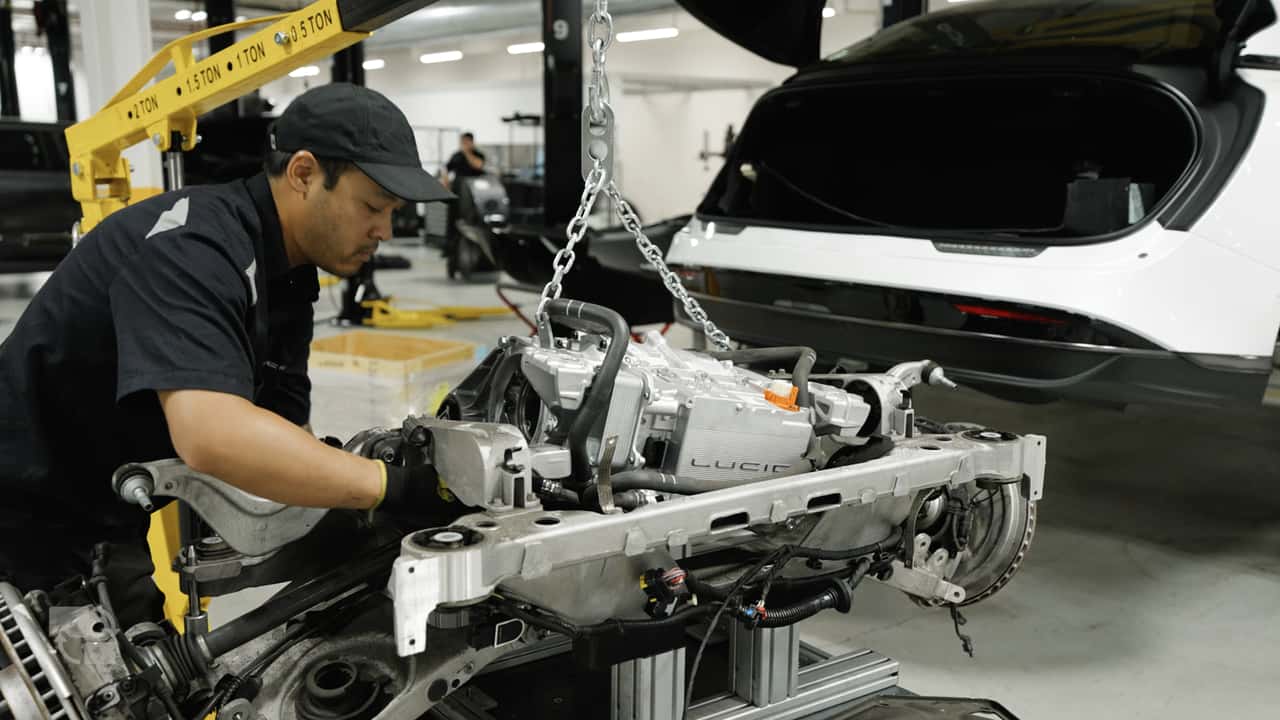
Lucid is expanding its service operation as the luxury electric vehicle maker works to improve ownership support and prepares for the arrival of a new generation of more affordable models.
The company says it has already reduced customer wait times by 20% in the third quarter compared with the previous quarter. The improvement comes as Lucid adds service locations, hires more technical and support employees, and increases the number of repairs that can be completed through its mobile service program.
The company’s broader goal is to create a service network that is easier for customers to access, whether they live near one of Lucid’s physical facilities or require assistance at home or at another convenient location. Lucid has historically relied on a relatively limited network of service centers, making mobile technicians particularly important for owners who are located far from a permanent facility.
Lucid currently operates approximately 40 service centers across the United States. Customers who do not live within reasonable driving distance of one of those locations generally depend on mobile service technicians for maintenance, diagnostics, and certain repairs.
The automaker is now adding more brick-and-mortar facilities across North America, Europe, and the Middle East. Some of the new sites will combine service operations with Lucid Studios, the company’s retail and display locations where prospective customers can view the vehicles and learn more about the brand.
The first combined studio and service facility recently opened in Mission Viejo, California. Lucid plans to open two additional locations before the end of the year, with sites scheduled for the Los Angeles area and Dallas. A similar facility is planned for Chicago in early 2027.
Physical expansion is only one part of the company’s plan. Lucid says its technical and customer-support workforce grew by more than 40% globally during the third quarter compared with the second quarter. The company is targeting a 50% increase by the end of the year and hopes to reach a 60% increase by early 2027.
Mobile service capacity is also being increased. Lucid says the program has grown by 15% since the second quarter, and it is aiming for a 40% increase by the end of the year. To support that expansion, the company has added 20 vehicles dedicated to helping Gravity technicians reach customers and perform work outside traditional service centers.
The focus on after-sales support arrives during an important period for Lucid. The company is preparing to introduce its first vehicles based on a midsize platform, with production expected to begin during the second half of 2027. These future vehicles are expected to be less expensive than the company’s current lineup and are intended to give Lucid a stronger opportunity to compete in the mainstream electric vehicle market.
Lucid has described the upcoming Earth and Cosmos models as important parts of that strategy. The vehicles are expected to offer substantially greater appeal to a broader group of buyers, including customers who may not be able or willing to pay for the company’s existing luxury products. If demand grows significantly after their launch, Lucid will need a much larger and more capable support network to handle the increased number of vehicles on the road.
The service expansion is part of a larger turnaround effort led by Lucid chief executive Silvio Napoli. Napoli took over as CEO during the summer and has been tasked with reducing costs, limiting losses, and improving the company’s ability to match production with demand.
Since taking the position, Napoli has reorganized Lucid’s executive leadership, reduced the company’s workforce, and cut production at its Arizona manufacturing facility. Those changes are designed to address the company’s difficulty growing sales of its current Air sedan and Gravity SUV. While both vehicles have received attention for their technology, efficiency, and performance, Lucid has struggled to build sales momentum at the level required of a young automaker with significant operating expenses.
The company is concentrating its resources on several strategic priorities, including partnerships related to robotaxis, the upcoming midsize vehicle family, and improvements to the customer ownership experience. During his first earnings call as CEO in August, Napoli acknowledged that Lucid had not invested enough in service operations.
Expanding service capacity could help the company address one of the challenges faced by emerging electric vehicle brands. Customers buying premium vehicles generally expect quick access to repairs, clear communication, and convenient maintenance options. Delays or a lack of nearby service facilities can make it more difficult for a relatively young brand to attract buyers, particularly those considering a switch from established luxury automakers.
By combining new service centers, integrated retail locations, expanded staffing, and mobile technicians, Lucid is attempting to make ownership more convenient while laying the groundwork for future growth. The success of that effort will become even more important if the company’s upcoming midsize vehicles bring a much larger customer base to the brand.