

Zeekr 7GT Review: A Luxury Electric Wagon That Nearly Outclasses Germany
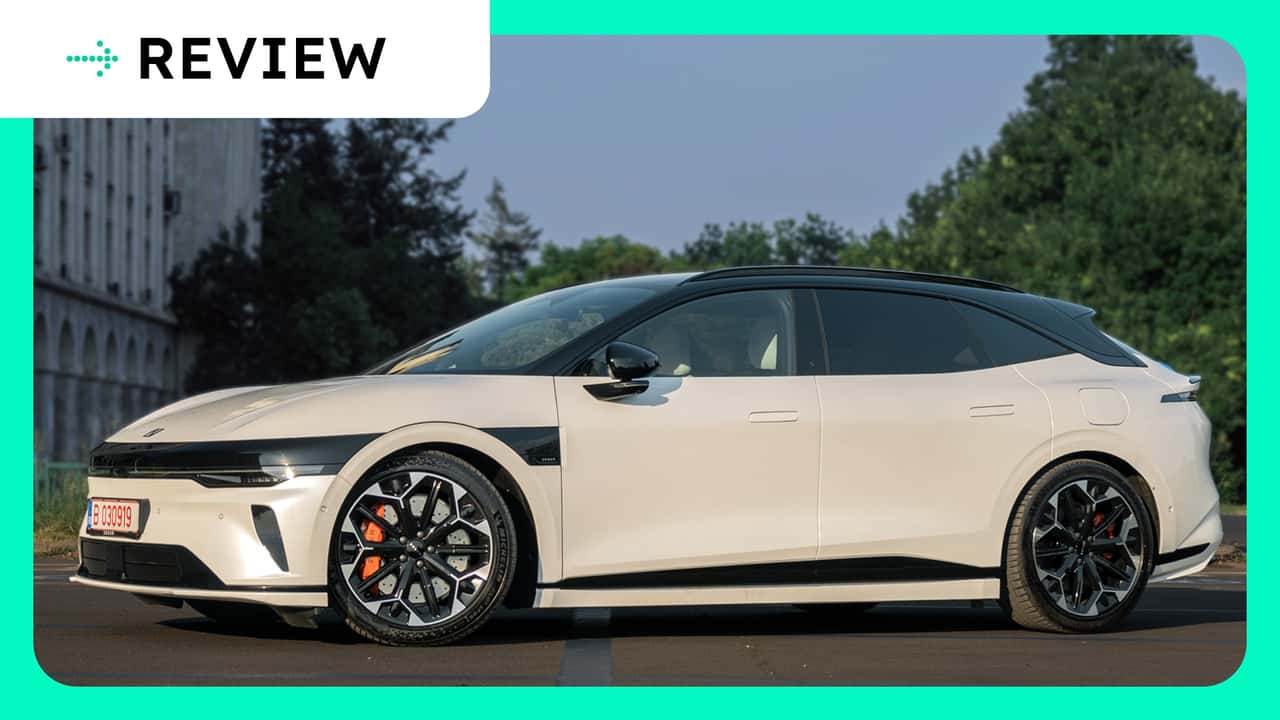
The Zeekr 7GT is an electric wagon with an unusual proposition: it offers the performance of a sports sedan, the comfort of a limousine and the practicality of a family car, yet its price undercuts many similarly equipped models from established German manufacturers.
After several days with the range-topping Privilege AWD version, the 7GT emerges as one of the most compelling luxury EVs to come from China. It delivers a beautifully finished cabin, a remarkably smooth ride, a long list of standard equipment and extraordinary acceleration. However, the car also reveals some unfinished edges, particularly in its software and driver-assistance systems.
Prices start at €46,490, while the tested vehicle carried a price of €61,890. That makes it substantially less expensive than comparable versions of the BMW i5 Touring, Audi A6 Avant e-tron and Volkswagen ID.7 Tourer once similar comfort and technology features are added.
At 189.6 inches, or 4,817 millimeters, long, the 7GT is roughly comparable in size to a BMW 3 Series Touring. Its 114.2-inch wheelbase provides generous rear-seat legroom. A six-foot passenger can stretch out comfortably, slide their feet beneath the front seats and recline the rear backrest. Unlike some luxury cars, the quality of the materials does not decline noticeably behind the B-pillars.
The interior is one of the 7GT’s strongest features. The Privilege version combines Nappa leather with synthetic materials so neatly that it can be difficult to tell where one ends and the other begins. Leather is used in places that many manufacturers would leave covered in plastic, including the trim surrounding the head-up display. Laser-cut patterns in the door panels serve as speaker grilles, creating a high-end appearance without relying on excessive chrome or decorative trim.
Equipment levels are generous. The test car featured powered and heated rear seats, ventilated and massaging front seats, a heated steering wheel, a large augmented-reality head-up display and a 23-speaker audio system. Speakers are even integrated into the driver’s headrest for navigation prompts and phone calls. There are two cooled wireless charging pads, a large center-console storage compartment and a 60-watt USB-C connection.
The optional powered doors cost €2,200, even on the top Privilege trim, but they proved more useful than expected. The doors can open automatically, and pressing the brake pedal closes the driver’s door. The feature could be convenient when carrying children or passengers, particularly in tight urban spaces.
Rear-seat comfort is impressive, although the 7GT does not quite match the more luxurious experience offered by the larger Zeekr 001 or the 7X crossover. Those models include rear touchscreens for controlling climate and media functions, while the 7GT requires passengers to ask someone in the front to activate the rear-seat heating. Headroom is also merely adequate, partly because the battery pack raises the floor and forces rear passengers to sit with their knees slightly elevated.
Up front, the seats provide extensive adjustment, including extendable thigh supports, while physical switches control the main seat functions. The steering wheel uses conventional buttons rather than touch-sensitive controls, making it easier to operate while driving. However, some everyday features are unnecessarily buried in the touchscreen. Adjusting the mirrors and powered steering column requires navigating menus, and the window switches take some time to learn because the length of the press determines how the glass moves.
The infotainment system uses a 15-inch OLED display, supported by a 13-inch driver information screen and the head-up display. Apple CarPlay and Android Auto are included. Despite the car’s powerful computing hardware, the navigation system became choppy when routing to a charging station, and similar hesitation appeared while using Waze through CarPlay. These issues seem more likely to be software-related than hardware limitations and could potentially be addressed through over-the-air updates.
Buyers can choose between two battery packs. Entry-level versions use a 75-kilowatt-hour LFP battery and offer a claimed WLTP range of 322 miles. The larger 100-kilowatt-hour NMC pack provides up to 407 miles in rear-wheel-drive form, while the dual-motor model is rated at 347 miles.
Charging performance is among the 7GT’s headline features. LFP versions can accept up to 480 kilowatts, while NMC models reach approximately 420 kW. The test car charged from 10% to 80% in about 14 minutes at a high-power charger, briefly reaching its claimed peak. The complete session took just over 36 minutes to reach 99%, with an average charging rate above 158 kW.
The Privilege AWD combines a 310-kilowatt rear motor with a 165-kilowatt front motor. Total output is 475 kW, equivalent to 637 horsepower, while torque reaches 524 pound-feet. Zeekr claims a 0-to-62-mph time of 3.3 seconds, and the acceleration feels every bit as forceful. The car’s 5,300-pound weight barely dulls the urgency of the power delivery.
However, the 7GT is not always as composed as its power suggests. Launching the car can make the front end feel light, while the rear axle may struggle to remain settled. The driver can find themselves correcting the steering to keep the car pointed straight, particularly when using the most aggressive drive mode with the softer suspension setting. The Michelin Pilot Sport EV tires can also be overwhelmed by the motors’ immediate output.
That behavior is surprising because the 7GT uses a sophisticated double-wishbone front suspension rather than the strut arrangement common among its rivals. In theory, the setup should help maintain a more consistent tire contact patch, but the steering still does not provide much confidence during hard launches.
In normal driving, the air suspension is far more impressive. Comfort mode gives the car a smooth, floating character, while Sport mode lowers and firms the body without making the ride harsh. Unfortunately, air suspension is exclusive to the Privilege model and cannot be added to the rear-wheel-drive versions. That makes the less expensive models more difficult to recommend, even though they offer better official range.
Practicality is acceptable rather than outstanding. The cargo area provides 16.1 cubic feet, or 456 liters, behind the rear seats. That is less than the larger BMW i5 Touring, which offers 20.1 cubic feet. The Zeekr does include a 60/40 split-folding rear seat, a ski hatch and underfloor storage. Rear-drive versions also have a 2.3-cubic-foot frunk, although the dual-motor car’s front storage area is reduced to 1.1 cubic feet.
The car’s regenerative braking system is less convincing. Although Zeekr describes the 7GT as offering one-pedal driving, even the strongest recuperation setting did not slow the vehicle as aggressively as expected when lifting off the accelerator. Some drivers may appreciate the more natural coasting behavior, but the difference between the available settings is too small for those who want precise speed control without using the brake pedal.
The driver-assistance systems also need refinement. Adaptive cruise control occasionally slowed the car for reasons that were not obvious, including when another vehicle passed on the highway. Lane-centering assistance sometimes disengaged and then returned with an abrupt steering movement. These systems still require attentive supervision, but their behavior should be smoother and more predictable in a luxury vehicle.
Despite those shortcomings, the Zeekr 7GT makes a powerful argument for reconsidering what buyers should expect from a premium electric car. Its cabin feels genuinely expensive, the ride is excellent in the right specification, rear passengers receive unusually generous treatment and its charging performance is among the fastest available.
The software and assistance systems prevent the 7GT from being flawless, while the cargo area and launch behavior reveal that the car’s priorities lean more toward luxury and performance than maximum practicality. Even so, the 7GT delivers an unusually complete experience for its price. It shows that a luxury badge is not the only way to obtain a high-quality interior, advanced technology and serious performance—and that established automakers may soon face much tougher competition.