

2027 BMW i3 50 xDrive Review: A Spacious-Battery Electric 3 Series That Still Loves Corners
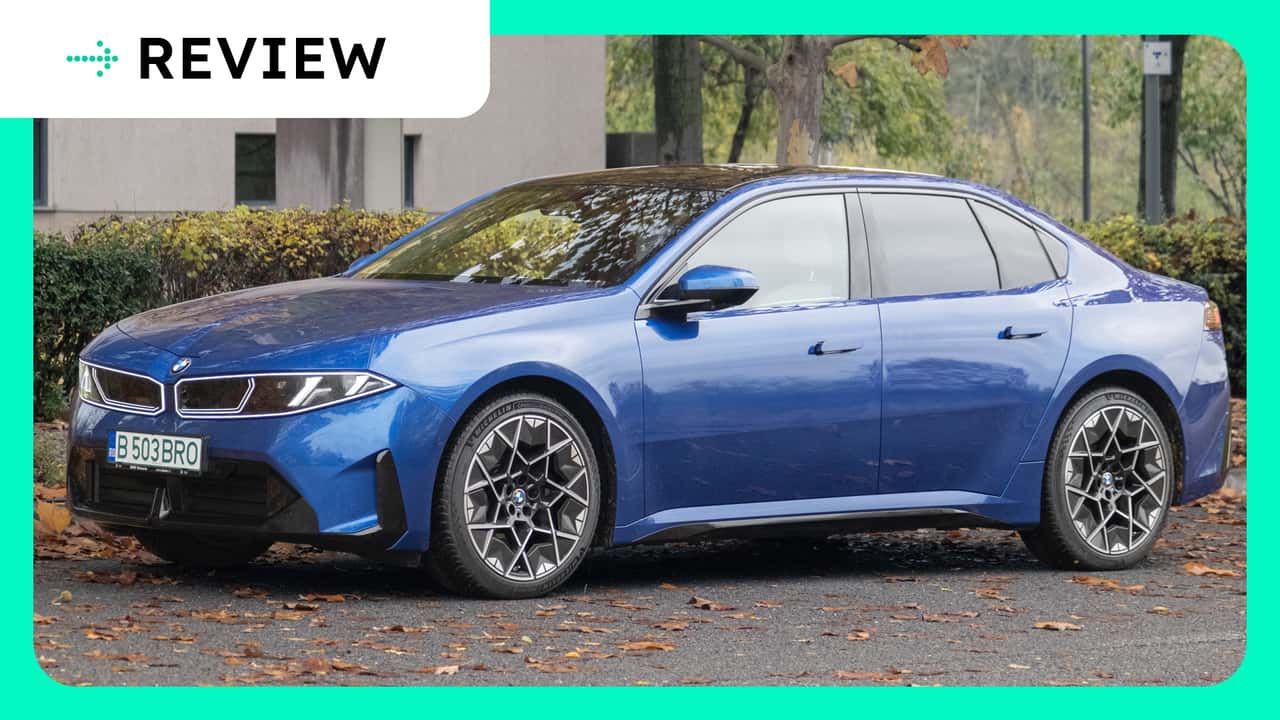
The 2027 BMW i3 50 xDrive makes a strong argument that an electric sedan does not have to sacrifice the driving character associated with the 3 Series. It is quiet and comfortable on the highway, remarkably efficient for its size, and far more entertaining on a winding road than its substantial battery pack might suggest.
The tested car carried an as-tested price of €80,451 and used a 108.7-kilowatt-hour battery. With all-wheel drive and approximately 462 horsepower, BMW quotes a 0-to-62-mph time of 4.7 seconds and a top speed of 124 mph. Its official European WLTP range is listed at roughly 566 to 567 miles, depending on the specification and published figure.
Those numbers are impressive, but the i3’s appeal goes beyond its range. After spending several days driving through the city, on highways and along a familiar mountain route, the electric BMW proved capable of combining long-distance comfort with the kind of adjustable handling that makes a conventional 3 Series enjoyable.
A different seating position
The first surprise comes before the car even starts moving. The i3 does not feel quite like the low-slung 3 Series models that preceded it. The driving position is higher, and the steering column angles upward more noticeably toward the driver. The result is closer to the seating position of a crossover than that of a traditional sports sedan.
The dashboard layout takes some acclimatization as well. BMW’s panoramic display stretches across the cabin and sits high at the base of the windshield. Because of the steering wheel’s position and shape, checking the speed can require looking over the rim rather than through it. The arrangement is modern, but it is not immediately as natural as the cockpit of an older 3 Series.
The steering wheel itself is unconventional, with a flattened and irregular design that initially looks more unusual than practical. In use, however, its hand positions work well. The small palm rests fit naturally at the nine- and three-o’clock positions, and the rim remains easy to locate during quick steering inputs.
The regular front seats were less impressive. Their cushions did not offer enough thigh support for a taller driver, making the optional M Sport seats with extendable supports an appealing upgrade. Rear-seat comfort is also compromised by the battery beneath the floor. The high floor raises passengers’ knees and leaves limited room to slide their feet beneath the front seats, even though the rear doors open wide for easy access.
More agile than expected
The i3 50 xDrive is not a lightweight car in absolute terms, but its handling makes a convincing effort to disguise the mass. Compared with the related iX3, the sedan sits lower and feels more eager to change direction. The front end responds quickly, and there is less of the sensation that the rest of the vehicle is slow to follow the front wheels.
The suspension in the test car used conventional steel springs and passive dampers. It was firm enough to keep body movements under control without becoming punishing. Mid-corner bumps were absorbed without pushing the car off its intended line, and the ride remained acceptable during extended highway driving.
Adaptive dampers are expected to become available for the i3 in the future, offering drivers the ability to alter the car’s firmness. The current setup, however, already provides a useful balance between comfort and control. Making the standard suspension significantly stiffer could undermine one of the car’s strongest qualities: its ability to cover long distances without becoming tiring.
The most enjoyable part of driving the i3 on a mountain road was not necessarily the acceleration between corners. Instead, the car came alive during the transition from braking to turning and then back onto the power. Its brakes offered precise speed control, while the chassis remained composed as the road became more demanding.
With the traction control loosened or switched off, the rear axle could be encouraged to move under power. The behavior was progressive rather than abrupt, allowing the driver to adjust the car with the accelerator and unwind the steering gradually. The electronics did not immediately shut down the fun by cutting power, giving the i3 a more communicative personality than many high-performance electric cars.
A Porsche Taycan remains a benchmark for control and composure on a road like this, but the comparison itself highlights how capable the BMW feels. The i3 is not merely a comfortable electric sedan with a large battery; it has enough balance and feedback to make a familiar mountain route genuinely entertaining.
Smooth braking and strong efficiency
BMW’s “Soft Stop” feature is one of the i3’s most polished details. In the strongest regenerative-braking mode, selecting B causes the car to slow firmly when the accelerator is released. As the vehicle approaches a complete stop, the deceleration eases progressively, producing a remarkably smooth finish.
The system imitates the way an experienced driver gently releases the brake pedal during the final few feet. Many electric vehicles can stop smoothly, but the i3’s transition is particularly consistent and natural.
The company’s “Heart of Joy” control system coordinates the electric motors, regenerative braking, friction brakes and traction control. That integration helps give the car fine control both when slowing down and when accelerating out of corners.
Energy consumption was also encouraging. After roughly 250 miles of mixed city, highway and mountain driving over four days, the car averaged approximately 21.8 kWh per 100 kilometers, or 2.85 miles per kWh. A more demanding mountain session used about 10% of the battery despite brisk driving, providing a level of range confidence that is unusual in an electric car.
At that consumption rate, the theoretical real-world range would be close to 310 miles, or 500 kilometers. While that is well below the WLTP rating, it remains a substantial distance. Even at a 20% state of charge, the large battery retains nearly 22 kWh, leaving considerable flexibility before a charging stop becomes urgent.
Fast charging and traditional styling
The i3 supports charging at up to 400 kW, and BMW claims a 10-to-80% charging session can take approximately 21 minutes under suitable conditions. During one charging stop using a 200-kW charger, the test car went from 53% to 87% in 20 minutes. It added 40.4 kWh, reached a peak of 151 kW and averaged 120 kW during the session, without preconditioning.
The exterior styling is more conventional than the name might imply. BMW describes the body as a “2.5-box” design, with a distinct hood, passenger cabin and short trunk. That arrangement helps the i3 look like a sports sedan rather than a tall hatchback, while the upright greenhouse gives it a familiar BMW profile.
The short distance between the front wheel and the base of the A-pillar is less traditional. Because the electric powertrain does not need the same engine-bay proportions as a combustion-powered six-cylinder model, BMW moved the windshield pillars forward. From certain angles, that makes the front of the car resemble a smaller front-wheel-drive hatchback.
The side surfacing is more successful. Creases beneath the mirrors and around the rear doors give the car additional visual width, particularly near the rear haunches. The proportions may take time to appreciate, but the design becomes more appealing the longer it is studied.
Overall, the 2027 BMW i3 50 xDrive succeeds because it preserves the most important part of the 3 Series formula: the driver can feel what the chassis is doing and make meaningful adjustments with the controls. The seating position and rear-seat packaging are weaker than expected, but the car’s comfort, range, charging capability and engaging handling make it a compelling electric alternative to the gasoline-powered sedan.