

2020 Audi E-Tron Sportback Requires Nearly a Weeklong Battery Replacement After Pack Failure
A costly and complicated electric-car repair
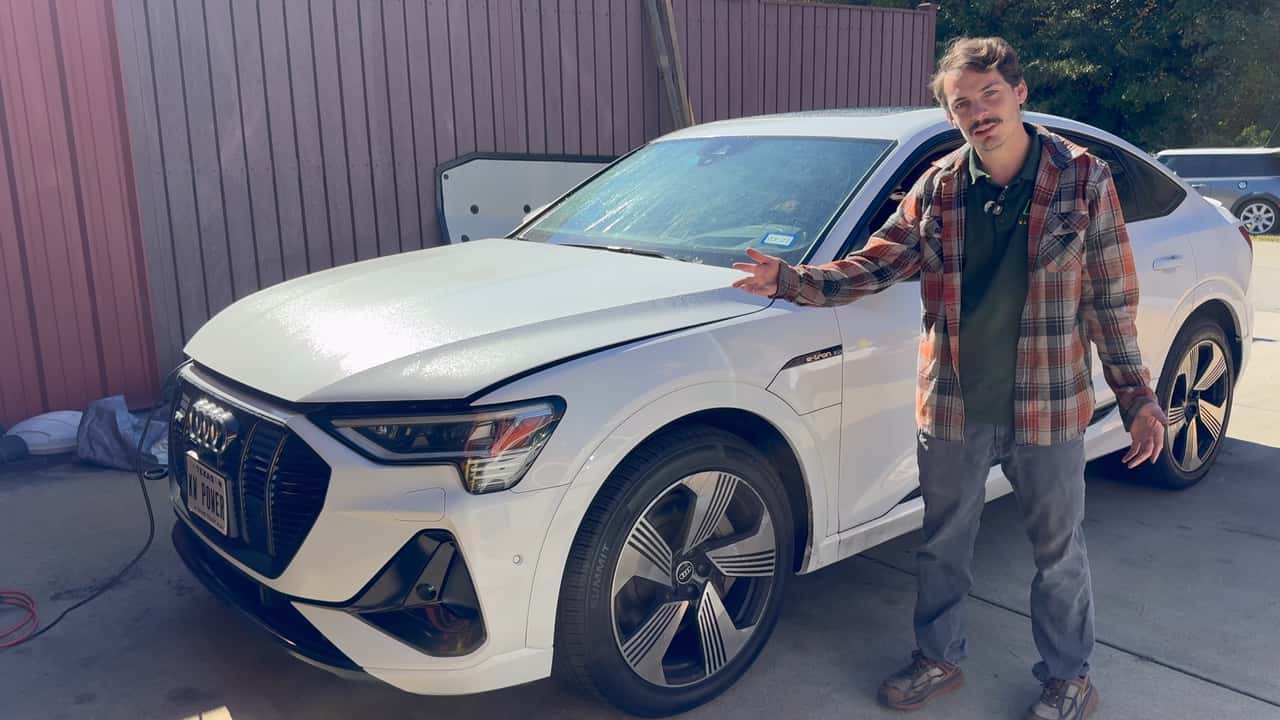
Electric vehicle batteries are generally proving to be more durable than many early critics expected. Modern battery packs are designed to survive years of charging cycles and hundreds of thousands of miles, and data from the broader EV market suggests that complete battery failure remains relatively uncommon. However, individual vehicles can still experience serious problems, as demonstrated by a 2020 Audi E-Tron Sportback whose traction battery stopped working after approximately 125,000 miles.
The Audi itself was reportedly in very good condition. Its exterior, interior, and other major systems did not appear to have suffered from the same level of wear as the battery. Unfortunately, the failed pack left the electric SUV unable to drive, turning what might have been a valuable used vehicle into a major repair project.
The first challenge was determining exactly what had gone wrong inside the original battery. Diagnostic equipment revealed unusual and contradictory readings from one of the pack’s modules. The system identified the module as having a state of charge of zero percent, while its voltage reading was simultaneously shown at the maximum level. That combination suggested a serious communication or monitoring failure rather than a simple case of a fully discharged battery.
The problem was not limited to a single questionable reading. Roughly a dozen additional modules also reported voltage inconsistencies. With so many irregularities recorded by the battery-management system, repairing the original pack was no longer considered a practical option. The entire unit was effectively treated as failed.
A used replacement pack is selected
Rather than install a brand-new battery, the repair team sourced a used replacement pack from an Audi E-Tron that had been involved in a crash. The donor vehicle’s battery had accumulated only about 30,000 miles, making it a potentially attractive alternative to the high cost of a new unit. Reusing a battery from a damaged EV can reduce expenses and keep otherwise serviceable components in circulation, although the process comes with its own risks and compatibility challenges.
Removing the failed battery from the 2020 E-Tron Sportback was relatively routine. As with many electric vehicles, the high-voltage pack is mounted beneath the passenger compartment and must be disconnected and lowered from the underside of the vehicle. Once the original unit was out, however, the installation of the replacement battery revealed several complications.
The donor pack had sustained damage near one of its corners. Although the battery appeared usable internally, the damage affected the sealing surfaces and meant that it could not simply be installed as delivered. Maintaining a watertight seal is critical because the battery enclosure protects high-voltage components from moisture, dirt, and road debris. Any weakness in that enclosure could create long-term reliability and safety problems.
To address the issue, the upper covers from the failed original battery had to be moved onto the replacement pack. That procedure added substantial work to a repair that initially looked relatively straightforward. Several other damaged pieces also needed to be exchanged, including a coolant fitting and the battery’s pyrotechnic fuse, commonly known as a pyro fuse. This component is designed to disconnect the high-voltage circuit during a severe crash or other dangerous event.
Software creates another obstacle
Even after the physical work was complete, the Audi still refused to start. The replacement parts came from a vehicle that had been dismantled after a collision, and the battery and related control components retained crash-related fault codes. The vehicle’s electronic control systems therefore did not recognize the replacement components as legitimate parts for the repaired car.
This illustrates one of the less visible difficulties associated with modern EV repairs. Replacing a battery is not always a matter of removing one large component and installing another. The battery pack communicates with numerous vehicle systems, including the battery-management system, safety controllers, charging hardware, and the main vehicle computer. Those systems must agree that the replacement battery is correctly installed and safe to operate.
Initial efforts to resolve the electronic lockout were unsuccessful. Outside technical assistance was eventually required to reprogram the replacement components, clear the stored crash information, and configure the battery so that the Audi would accept it as part of the vehicle. Only after that programming work was completed could the E-Tron be returned to normal operation.
The overall repair was expected to take roughly one or two days. Instead, the damaged replacement pack, the need to transfer multiple components, and the software complications stretched the project to almost a full week. The additional labor and specialist programming also created unexpected costs, demonstrating why used EV battery replacements can be considerably more complicated than their parts prices might suggest.
Despite the setbacks, the repair was ultimately successful. Once the replacement battery was installed, sealed, and electronically matched to the vehicle, the Audi E-Tron Sportback operated normally. With a pack that had covered only around 30,000 miles before being removed from its donor vehicle, the repaired Audi may now have many more years and miles of service ahead of it.
The case serves as both a positive example of EV repairability and a warning about the complexity of high-voltage battery work. A used battery can give a damaged electric vehicle a second life, but the process may require specialized equipment, mechanical skill, safety procedures, and access to manufacturer-level software. For owners facing a major battery failure, those factors can be just as important as the cost of the replacement pack itself.