

EVs Move Into the Mainstream as Range, Charging, Software, and Ownership Costs Take Center Stage
Electric vehicles are entering a more competitive phase
The latest EV news points to an industry moving beyond its early-adopter stage. Electric vehicles are no longer being judged only by acceleration, novelty, or environmental benefits. Buyers are increasingly comparing them with gasoline and diesel vehicles on sales momentum, range, charging convenience, pricing, reliability, software capability, and everyday practicality.
One of the clearest signs of this shift is the changing balance between powertrains. A year ago, gas and diesel vehicles held a lead of roughly 127,000 cars in one comparison. By October, electric vehicles had moved nearly 70,000 cars ahead. That change suggests that EV demand is becoming more substantial, even as the market remains uneven across regions and vehicle segments. Electric pickups, crossovers, compact cars, and plug-in hybrids are all competing for attention, but they are doing so under very different conditions.
Range remains important, but real-world conditions matter more
Range continues to be one of the most visible measures of EV progress. The upcoming 2028 Volvo XC60 plug-in hybrid is reported to offer 78 miles of electric driving, more than any other plug-in hybrid sold in the United States. That figure could make a PHEV useful for many daily trips while retaining the flexibility of a combustion engine for longer journeys.
At the same time, cold weather remains a major consideration. Every vehicle loses some range when temperatures fall toward freezing, but the extent of the loss varies considerably between models. Battery chemistry, thermal management, cabin heating, aerodynamics, and driving conditions all influence the result. A carefully planned test can produce an impressive final range number, but the same conditions may not be practical for ordinary drivers. This reinforces the importance of looking beyond official ratings and considering weather, speed, payload, traffic, and access to charging.
Long-distance travel is also becoming a more common part of the EV conversation. Drivers are sharing experiences of exploring in electric cars and finding that the quiet ride, smooth power delivery, and ability to plan charging can enhance a road trip. However, holiday travel is likely to put additional pressure on charging stations. Busy roads and crowded charging locations may require drivers to charge earlier, choose less-congested routes, or build more flexibility into their schedules.
Charging is becoming cheaper and more strategically important
Charging companies are responding to the growing number of electric vehicles with aggressive pricing. One emerging network is reportedly cutting prices in half across its stations ahead of Thanksgiving travel. Lower charging costs could make a noticeable difference for drivers who rely on public infrastructure, particularly when electricity prices, membership fees, and road-trip expenses are all taken into account.
Home charging remains central to the ownership experience. Some Volkswagen EV drivers in Germany can earn as much as €720 during their first year through an energy-related program, although participation requires a charger costing €1,995 before installation. Such offers may help balance the initial expense, but they also demonstrate that the financial case for home charging depends on household circumstances, local electricity rates, installation costs, and how often the vehicle is driven.
Legal questions are emerging alongside the economics. A new law in New York addresses subscriptions for hardware already installed in a vehicle. The measure could limit the ability of automakers to charge recurring fees for features that depend on equipment the customer already purchased. As cars become more software-defined, consumers and regulators are increasingly questioning the line between a physical product and a digital service.
Automakers are refining vehicle design and technology
New models show that EV development is not limited to large crossovers. Suzuki’s electric Ignis is described as shorter than a two-door Mini Cooper S while still accommodating rear doors and four seats. That kind of packaging could be valuable in crowded cities, where compact dimensions matter as much as battery capacity.
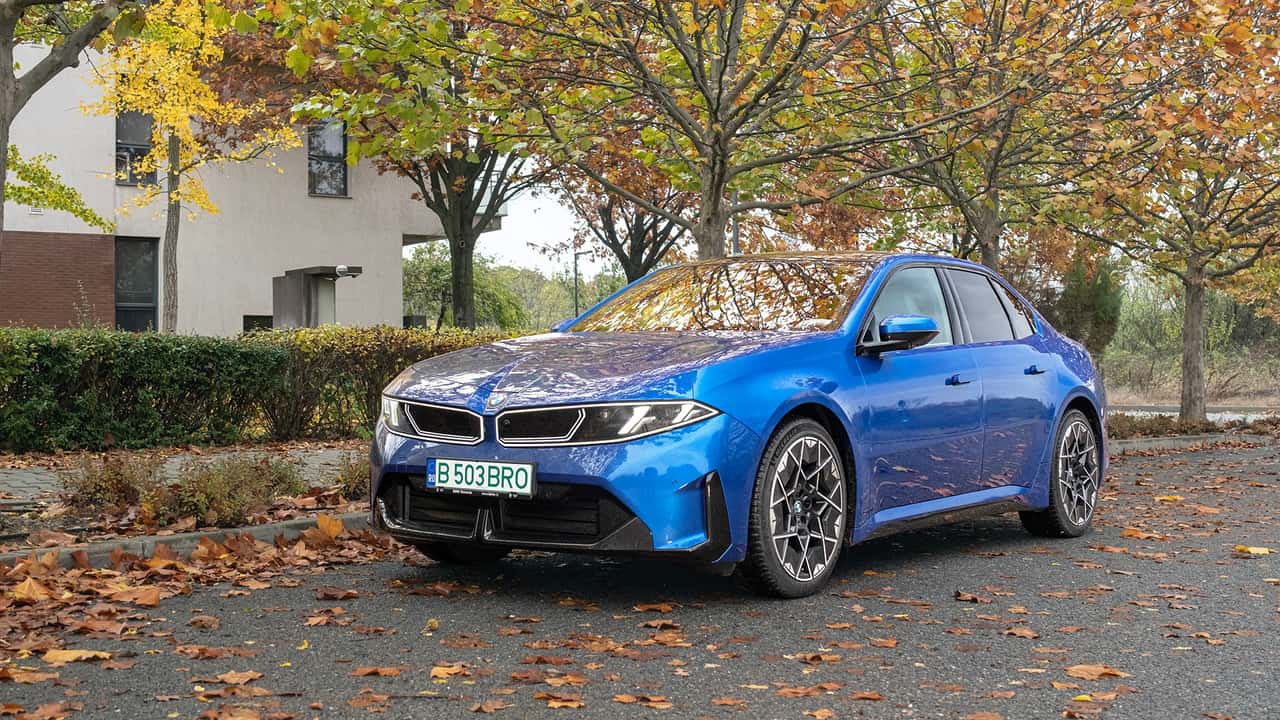
At the other end of the spectrum, the electric Porsche Boxster is attracting attention as a performance car that must preserve the character of a well-known sports-car nameplate without an internal-combustion engine. BMW’s electric 3 Series formula is also receiving praise for its driving fundamentals, although its interior design may require more adjustment from traditional buyers. Audi, meanwhile, is taking a mixed approach to controls by combining touch screens with physical buttons rather than choosing one philosophy exclusively.
Assistance systems are advancing as well. An over-the-air update is expected to bring BMW’s Highway & Commuting Assistant closer to the capabilities associated with Tesla’s driver-assistance software. These systems remain dependent on road conditions, regulations, and driver supervision, but software updates are allowing manufacturers to improve vehicles after delivery instead of treating the original specification as final.
Ownership challenges remain behind the headlines
The transition to electric power is not without costly surprises. One Audi SUV only five or six years old reportedly needed a battery-pack replacement, and the repair required extensive labor. Battery failures are not representative of every EV, but cases like this highlight concerns about repairability, warranty coverage, replacement costs, and the need for qualified technicians.
Used-EV demand and vehicle turnover offer another perspective. A Tesla pickup reportedly took an average of 39 days to find a buyer, compared with 72 days for a gas-powered Ford F-150, while the electric F-150 Lightning needed about a week longer than the Tesla. These figures suggest that demand is shaped by more than fuel type: pricing, incentives, brand perception, inventory, and vehicle specifications all influence how quickly a model sells.
The broader ecosystem is expanding beyond cars. Charging equipment is being adapted for electric machinery at ski resorts, including vehicles used to maintain slopes. Autonomous or semi-autonomous machines are also moving from demonstrations toward practical work, with early units being trained at a Volvo factory before deployment. Meanwhile, an apparently empty Huawei-equipped EV was seen moving around a parking garage for hours, illustrating both the progress and the uncertainty surrounding automated driving.
Overall, the feed portrays an EV market becoming more mature and more demanding. The next phase will depend less on proving that electric vehicles can be fast and more on making them affordable, dependable in extreme weather, convenient to charge, easy to repair, and useful across a wider range of lifestyles.