

The review
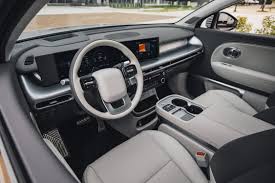
All EV Sales editorial review. Researched from official specifications, safety ratings and published expert reviews; not a first-hand owner review. Key facts Price from: US$61,055 including destination (2026 S RWD, US) · £64,995 (Premium, UK) · A$119,750 before on-road costs (Calligraphy AWD, Australia, launch price) Official range: 311–335 miles (EPA, US) · up to 385 miles (WLTP, UK) · up to 600 km (WLTP, Australia) 0–62 mph: 5.2 seconds (Performance AWD) Peak DC charging: up to 233 kW, 10–80% in about 24 minutes Safety: 5 stars Euro NCAP (2025) · 5 stars ANCAP (2025) · IIHS Top Safety Pick+ (2026) Overview The Ioniq 9 is Hyundai's largest electric car, a three-row SUV with six or seven seats. It is sold in the US, the UK and Europe, and Australia. Every version uses a 110.3 kWh battery. The US range starts with the rear-wheel-drive S at 215 hp, moves to a 303 hp all-wheel-drive version and ends with the 422 hp Performance; the Limited Performance AWD costs US$71,250 with destination. UK prices start at £64,995. Australia launched with one fully equipped Calligraphy AWD making 314 kW and 700 Nm. Design & Interior The Ioniq 9 has a smoother, more rounded shape than the boxy Kia EV9 it is related to. Inside, reviewers describe a calm, lounge-like cabin. Seven seats are standard in the UK, with six offered on the Calligraphy. Material quality is generally praised. The main criticism is of the infotainment software, which InsideEVs judged a generation behind the best systems, and CarExpert questioned whether the cabin justifies the Australian price. Driving Reviewers agree that the Ioniq 9 is built for comfort. The ride is soft and the cabin is very quiet at speed. Steering is light and the car is not engaging. CarExpert found the ride busy at low speed on the 21-inch wheels fitted in Australia, settling down on the open road, and thought body control good for a car weighing about 2.7 tonnes. The Performance version reaches 62 mph in 5.2 seconds; Hyundai quotes 4.9 seconds to 60 mph in the US. The rear-wheel-drive car is much slower but has the longest range. InsideEVs noted that the driver-assistance systems still need close supervision. Range & Charging The EPA rates the rear-wheel-drive car at 335 miles, the all-wheel-drive car at 320 miles and the Performance at 311 miles. In the UK the best WLTP figure is 385 miles, for the rear-wheel-drive Long Range on 19-inch wheels. Hyundai Australia quotes up to 600 km. Those are strong numbers for a seven-seater, helped by a very large battery. The 800-volt system charges at up to 233 kW and takes about 24 minutes from 10–80% on a 350 kW charger. US cars have a NACS port. InsideEVs reported that the same charge takes nearer 40 minutes on Tesla's older V3 Superchargers. Practicality Reviewers rate the third row as better than most, though it is still best for children on long trips. The UK figures are 338 litres of boot space with all seats up, 908 litres with the third row folded and 2,419 litres with both rows down in the seven-seat car. In US terms that is 21.9, 46.7 and 86.9 cubic feet. Hyundai Australia also lists a 52 litre front storage area. InsideEVs found the Ioniq 9 to have slightly more room than the Kia EV9. Safety Euro NCAP gave the Ioniq 9 five stars in 2025, with 84% for adult occupants, 87% for child occupants, 77% for vulnerable road users and 83% for safety assist. ANCAP also rates all Australian variants at five stars, with scores of 84%, 86%, 77% and 85%; part of that assessment draws on tests of the related Kia EV9. In the US the IIHS lists the 2026 model as a Top Safety Pick+. Verdict The Ioniq 9 suits large families who want the longest range available in a mainstream three-row electric SUV, and who value quietness and space over driving feel. InsideEVs called it the best-value three-row EV in the US. The weaknesses are clear. It is big and heavy, the low-speed ride on large wheels is unsettled, the software trails the class leaders, and it is expensive in Australia, where only the top grade launched. InsideEVs also pointed out that Hyundai's petrol Palisade costs about US$20,000 less. Buyers who want a lower entry price or a squarer cabin should compare the Kia EV9, which What Car? still prefers. Those who want a more premium badge and finish should look at the Volvo EX90. How we rated it Range 4.5 (311–335 miles EPA with fast 800-volt charging) · Performance 4.0 (quick and well controlled, but light steering and a busy low-speed ride) · Safety 5.0 (five stars from Euro NCAP and ANCAP, IIHS Top Safety Pick+) · Comfort 4.5 (very quiet and roomy, some low-speed fidget on 21-inch wheels) · Overall 4.5. The four scores average 4.5. No value adjustment: good value in the US, expensive in Australia. Sources EPA fueleconomy.gov Ioniq 9 listing: https://www.fueleconomy.gov/feg/PowerSearch.do?action=noform&path=1&year1=2026&year2=2027&make=Hyundai&baseModel=IONIQ%209&srchtyp=ymm Hyundai UK IONIQ 9 page: https://www.hyundai.com/uk/en/models/ioniq9.html Hyundai Australia IONIQ 9 page: https://www.hyundai.com/au/en/cars/eco/ioniq9 Hyundai newsroom Euro NCAP result: https://www.hyundai.news/eu/articles/press-releases/ioniq-9-five-star-euro-ncap-rating.html ANCAP Hyundai IONIQ 9 rating: https://www.ancap.com.au/safety-ratings/hyundai/ioniq-9/0b1756 IIHS 2026 Hyundai Ioniq 9 rating: https://www.iihs.org/ratings/vehicle/hyundai/ioniq-9-4-door-suv/2026 InsideEVs Hyundai Ioniq 9 review: https://insideevs.com/reviews/802603/hyundai-ioniq-9-ev-review-2026/ CarExpert Hyundai Ioniq 9 review: https://www.carexpert.com.au/car-reviews/2025-hyundai-ioniq-9-review