
EV Innovation Accelerates: From Free Tesla FSD Trials to Next-Gen Batteries and V2X Chargers
EV Innovation Accelerates: From Free Tesla FSD Trials to Next-Gen Batteries and V2X Chargers
The global electric vehicle (EV) landscape continues to evolve rapidly, bringing major technological innovations, new models, and strategic collaborations. Across markets—from Australia to the United States and Asia—automakers, energy companies, and environmental organizations are pushing electric mobility and clean energy integration further than ever. The latest stories in EV news offer a snapshot of an industry in transformation.
Tesla invites more drivers to test autonomous driving
Tesla has announced a free 30-day trial of its Full Self-Driving (FSD) Supervised software in key markets. With nearly 1.5 million eligible Tesla owners, the company aims to showcase the latest iteration of its driver-assist technology. The trial comes at a time when Tesla seeks to increase software adoption and revenue through its subscription-based model. Despite ongoing debate about the readiness of autonomous driving systems, Tesla continues refining its features and leveraging large-scale real-world data to advance supervised autonomy. This move could help accelerate public familiarity and trust in driver assistance systems, as well as reinforce the value of Tesla's broader software ecosystem.
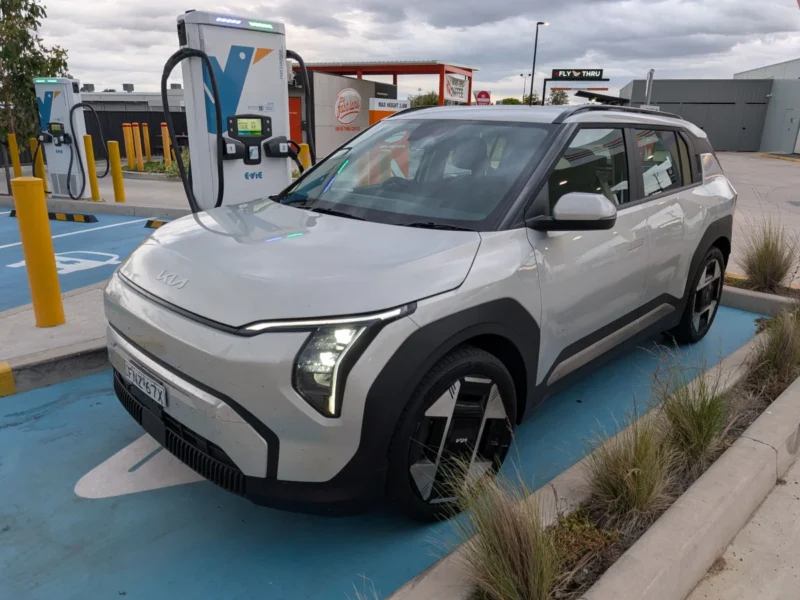
Kia’s EV3 Earth sets new benchmarks for compact electric SUVs
Kia’s EV3 Earth model has entered the spotlight with a strong review, touting its long range and roomy interior as standout qualities. Despite a few quirks, reviewers describe the EV3 as a compelling balance of efficiency, practicality, and affordability. Positioned as Kia’s most compact EV, it still manages to offer robust driving range—one of the top performers in its class—and a thoughtfully designed interior that makes urban EV ownership easier. The EV3 Earth represents a growing effort among automakers to produce smaller, more accessible EVs without compromising on performance or comfort, reflecting consumer demands for vehicles that blend sustainability with everyday usability.
Sinopec and LG Chem collaborate on sodium-ion battery breakthroughs
In a move that could reshape energy storage, Sinopec and LG Chem have announced a partnership to develop sodium-ion battery materials for low-speed EVs and grid energy storage. Sodium-ion technology is increasingly seen as a complement to traditional lithium-ion systems, particularly for applications where cost and resource availability play a greater role than energy density. Compared to lithium, sodium is far more abundant and geographically diversified, making it an attractive alternative amid global supply chain concerns. The collaboration’s focus on low-speed vehicles and stationary storage also suggests opportunities beyond passenger EVs—such as in public transportation, electric scooters, or distributed renewable energy systems.
Record EV sales show strong American demand, but questions remain
Record-breaking EV sales in the United States underline accelerating consumer interest in electrified vehicles. Yet, analysts warn that this is a critical juncture: American automakers must decide whether to maintain momentum or hesitate in the face of short-term economic uncertainty. With electrification now a pillar of industrial strategy in places like China and Europe, the U.S. cannot afford to retreat. This moment tests whether traditional automakers have the resilience to scale their EV supply chains, invest in manufacturing capacity, and compete globally. The data suggest that consumer demand is not the problem—the supply side must now match the pace of enthusiasm.
Australia launches homegrown V2X charger technology
Australia has entered the cutting-edge side of clean technology with its first locally made bidirectional V2X EV charger. The unit has received official certification, clearing the way for early adopters to use their EVs as mobile energy assets. The charger allows electricity to flow both ways—charging the car and sending power back to the home or grid. This technology is often referred to as Vehicle-to-Everything (V2X) and is a vital step toward smarter, decentralized energy systems. As renewable generation ramps up, V2X integration could make EVs key players in stabilizing grids, storing excess solar or wind energy, and enabling greater energy independence for households.
Greenpeace’s new vessel merges renewable energy solutions
In an unexpected but inspiring crossover of marine and electric technologies, Greenpeace is building a new flagship vessel equipped with a 3 MWh battery pack, solar panels, deployable sails, and hydrogen fuel cells. This hybrid setup highlights how maritime transportation is also moving toward decarbonization. The combination of multiple renewable power sources underscores a commitment to operational sustainability, as Greenpeace continues to campaign for global environmental change using cleaner technologies for its own missions.
Real-world insights into EV ownership and charging habits
Among the more personal accounts in the recent EV news cycle is a six-year analysis of Tesla Model 3 ownership data. The owner transferred years of detailed charging records—home, work, AC, and DC sessions—into a cumulative study to better understand charging behavior and cost efficiency. The findings demystify several EV myths, offering evidence that charging is straightforward, efficient, and increasingly sustainable when tied to renewable energy sources. Such transparency from real-world data helps prospective owners see electric mobility not as an experiment but as a practical reality.
Everyday EV adventures: A family’s electric lap around Australia
Another notable story features a family of four who completed a cross-country journey around Australia in a compact BYD Dolphin. Their trip served as both an adventure and a field test for EV infrastructure across long distances. Despite some logistical challenges—particularly with charging in remote Northern Territory areas—the experience proved that even modest EVs are capable of extensive travel when planning and patience align. Their account joins a growing number of testimonials showing that the electric lifestyle is not only possible but enjoyable.
Service experiences and brand maturity
Complementing that family’s story, another EV driver shared a positive resolution to multiple issues encountered with their BYD Dolphin. As the company expands rapidly, growing pains are inevitable, yet service experiences like this suggest manufacturers are learning quickly from customer feedback. Responsive service and post-sale support are essential ingredients for sustaining EV adoption.
The bigger picture
Taken together, these developments—software trials, compact EV innovation, new battery chemistries, grid-integrated chargers, and even electric ocean vessels—paint an inspiring picture of a future that’s no longer hypothetical. The EV ecosystem now encompasses not just cars, but complete networks of connected, intelligent, and renewable-powered systems. Every new story hints at a world increasingly defined by electrification and sustainability. The momentum is unmistakable: the electric revolution is charging ahead, faster and more creatively than ever before.