All EV Sales

Browse EVs

Enter details to find listings or scroll down to view more options.

Or, explore our range by:

Crossover

Research & reviews

Real-world ratings and specs for popular EV models.

See all reviews
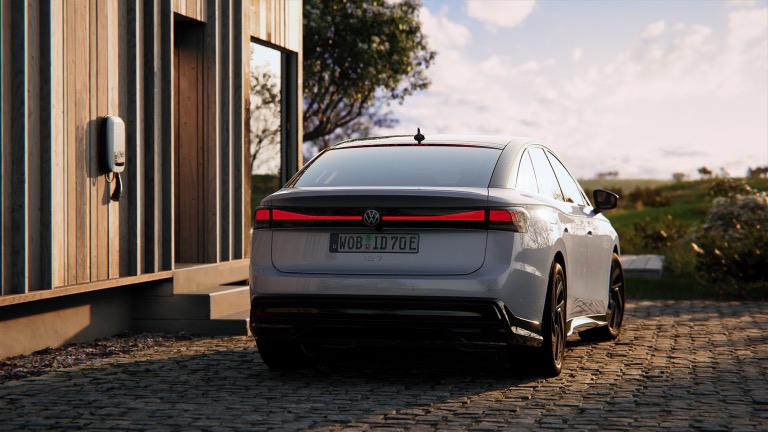
2026 volkswagen ID.7 4.5
2026 volkswagen ID.7

2026 Volkswagen ID.7: a long-range electric cruiser with space to spare

All EV Sales editorial review. Researched from official specifications, safety ratings and published expert reviews; not a first-hand owner review. Key facts Price from: £51,550 (Pro Match, UK) Official range: 364–434 miles (WLTP, UK) · up to 709 km (WLTP, Pro S fastback) 0–62 mph: 5.4–6.6 seconds depending on version Peak DC charging: 175–200 kW depending on battery Safety: 5 stars Euro NCAP (2023) Overview The ID.7 is Volkswagen's largest electric car in Europe, offered as a fastback and as a Tourer estate. It competes with the Tesla Model 3 and premium executive EVs, but at a lower price than most German rivals. It suits high-mileage drivers and families who want range and space. It is sold in the UK and Europe, and Volkswagen Australia has no current plans to import it. Design & Interior The ID.7 uses a smooth, low-drag body that helps its range. Inside, a 15-inch touchscreen dominates the dashboard. Reviewers say the software is much improved, with a customisable shortcut bar for common functions. An augmented-reality head-up display and a ChatGPT-linked voice assistant feature on UK models. Testers find the cabin bright and modern. They also note the materials feel closer to a well-equipped Golf than a true premium car. Driving UK trims include the Pro and Pro S, both rear-wheel drive with 286 PS, and the all-wheel-drive GTX with 340 PS. Acceleration runs from 6.6 seconds to 62 mph for the Pro to 5.4 seconds for the GTX. Reviewers describe the ride as composed and relaxing on UK roads, though it can feel floaty in its softest setting. Handling is secure and flat through corners rather than sporty. One UK test measured noise at 70 mph as slightly higher than a Tesla Model 3. Range & Charging Range is the ID.7's headline strength. UK WLTP figures are about 380 miles for the 77 kWh Pro and 434 miles for the 86 kWh Pro S. The GTX is rated at 364 miles. Volkswagen quotes up to 709 km for the Pro S fastback on the WLTP cycle. The 77 kWh battery charges at up to 175 kW, and the 86 kWh battery at up to 200 kW. One UK test returned 3.6 miles per kWh from the 77 kWh car, or roughly 277 miles of real-world range. Practicality The fastback's boot holds 532 litres, and the Tourer estate offers 605 litres. Both figures are generous for the class. Rear headroom is good, and legroom is acceptable, though some rivals offer more. There is no front storage compartment. Safety Euro NCAP awarded the ID.7 five stars in 2023. It scored 95% for adult occupants, 88% for children, 83% for vulnerable road users and 80% for safety assist. The rating covers both body styles. Euro NCAP noted maximum points in side impact tests and an active bonnet for pedestrian protection. Weaker areas included no pedestrian braking when reversing and a basic driver monitoring system. Verdict The ID.7 is a strong pick for drivers who cover long distances and want a spacious, comfortable EV. Its range, fast charging on the bigger battery and large boot stand out. Materials that fall short of premium rivals and a lack of front storage are the main reasons to look elsewhere. How we rated it Range 5.0 (among the longest WLTP ranges on sale) · Performance 4.0 (composed and quick enough, not sporty) · Safety 5.0 (strong five-star Euro NCAP result) · Comfort 4.5 (relaxed ride and roomy cabin, some plain materials) · Overall 4.5. Sources Volkswagen UK ID.7 page: https://www.volkswagen.co.uk/en/electric-and-hybrid/electric-cars/id7.html Volkswagen Newsroom, Pro S and GTX: https://www.volkswagen-newsroom.com/en/press-releases/new-id7-models-extremely-dynamic-gtx-and-a-wltp-range-of-up-to-709-kilometres-with-the-id7-pro-s-18434 Euro NCAP 2023 assessment: https://www.euroncap.com/assessments/vw/id.7/1025/ Autocar review (UK price and testing): https://www.autocar.co.uk/car-review/volkswagen/id-7 CarExpert, Australian availability: https://www.carexpert.com.au/car-news/volkswagen-no-closer-to-bringing-mg-4-and-model-3-rivals-to-australia

Read review
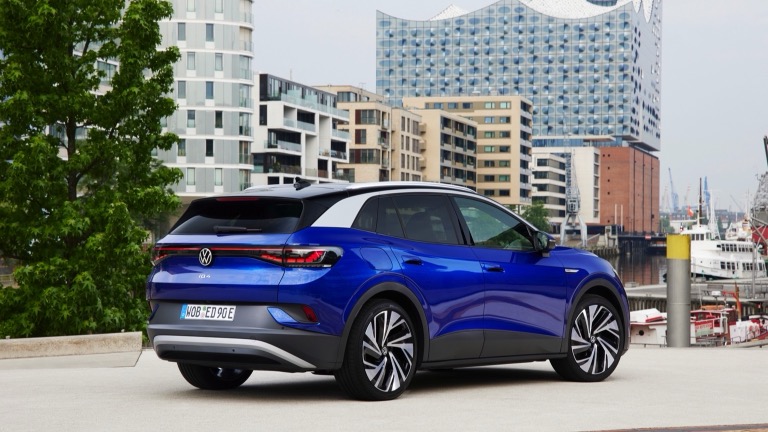
2026 volkswagen ID.4 4.0
2026 volkswagen ID.4

2026 Volkswagen ID.4: roomy and relaxed, with a replacement on the way

All EV Sales editorial review. Researched from official specifications, safety ratings and published expert reviews; not a first-hand owner review. Key facts Price from: US$45,095 (Pro RWD, US) · A$59,990 (Pro, Australia, before on-roads) · £39,590 (Match Pure, UK) Official range: 263–291 miles (EPA) · 222–351 miles (WLTP, UK) · 544 km (WLTP, Pro, Australia) 0–60 mph: 4.9–6.1 seconds (Edmunds testing, US models) Peak DC charging: 175 kW (Australian Pro) Safety: 5 stars Euro NCAP (2025) · 5 stars ANCAP (2021) Overview The ID.4 is Volkswagen's mid-size electric SUV, sold in the US, UK, Europe and Australia. US-market models have final assembly in the US. It suits families who want a spacious, comfortable electric SUV with a familiar brand badge. A heavily reworked successor, called the ID. Tiguan, is expected to debut by the end of 2026. Design & Interior The rounded shape has changed little since launch. Inside, the design is minimalist, with a 12.9-inch touchscreen and a small driver display. Reviewers find the latest software quicker and clearer than earlier versions. Haptic touch controls on the steering wheel draw steady criticism for being slow and easy to press by accident. Material quality is described as reasonable, with some cheaper plastics on the rear doors. Driving US models come with rear- or all-wheel drive. Edmunds recorded 0–60 mph in 6.1 seconds for the single-motor car and 4.9 seconds for the dual-motor version. Reviewers consistently praise a smooth, settled ride. Australian testers found the adaptive suspension absorbs bumps well in its softer settings. Handling is safe and predictable rather than sporty. Range & Charging In the US, the 2026 ID.4 uses an 82 kWh battery as standard. EPA range is 291 miles for rear-drive versions and 263 miles for all-wheel drive. Edmunds achieved 299 miles in its real-world test of a rear-drive car. UK WLTP figures run from 222 miles for the small-battery Match Pure to 351 miles for the GTX Edition. The Australian Pro is rated at 544 km and charges at up to 175 kW. Volkswagen quotes about 28 minutes for 10–80 per cent. Reviewers still rate charging speed as below average for the class. Practicality Space is the ID.4's strong point. The boot holds 543 litres with the seats up and 1,575 litres folded, based on Australian figures. Rear legroom is generous, and one UK review compares it to a large executive sedan. There is no front storage compartment, which some testers see as a packaging miss. Safety Euro NCAP reassessed the ID.4 in 2025 and awarded five stars. Scores were 89% for adult occupants, 87% for children, 84% for vulnerable road users and 76% for safety assist. ANCAP's five-star rating dates from 2021 and runs until December 2028. Euro NCAP flagged weak occupant excursion control in side impacts and no pedestrian detection when reversing. Verdict The ID.4 is a comfortable and practical family EV with competitive range in its latest US form. It rides well and offers plenty of cabin and boot space. Awkward touch controls, average charging and an imminent replacement are good reasons to compare deals and rivals carefully. How we rated it Range 3.5 (competitive EPA range, average charging speed) · Performance 3.5 (smooth ride, unexciting handling) · Safety 4.5 (five stars from Euro NCAP and ANCAP, modest safety assist) · Comfort 4.0 (spacious and comfortable, frustrating touch controls) · Overall 4.0. Sources Volkswagen US ID.4 page: https://www.vw.com/en/models/id-4.html Volkswagen UK ID.4 page: https://www.volkswagen.co.uk/en/electric-and-hybrid/electric-cars/id4.html Euro NCAP 2025 assessment: https://www.euroncap.com/assessments/vw/id.4/1116/ ANCAP rating: https://www.ancap.com.au/safety-ratings/volkswagen/id-4/1f8b08 Edmunds review (US testing): https://www.edmunds.com/volkswagen/id4/ carsales review (Australia): https://www.carsales.com.au/editorial/details/volkswagen-id-4-pro-2026-review-151531/ Autocar review: https://www.autocar.co.uk/car-review/volkswagen/id-4 electrek, ID. Tiguan successor: https://electrek.co/2026/03/17/volkswagen-turning-id-4-into-electric-tiguan-suv-images/

Read review
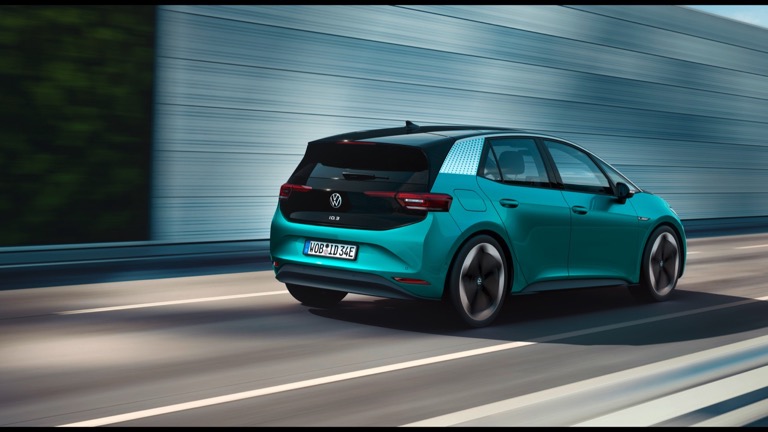
2026 volkswagen ID.3 4.0
2026 volkswagen ID.3

2026 Volkswagen ID.3 Neo: proper buttons and longer range for VW's electric hatch

All EV Sales editorial review. Researched from official specifications, safety ratings and published expert reviews; not a first-hand owner review. Key facts Price from: £33,080 (Life 50 kWh, UK, before £1,500 Electric Car Grant) · €33,995 (Trend 50 kWh, Germany) Official range: 258–390 miles (WLTP, UK) · 417–630 km (WLTP) 0–62 mph: 7.1–8.6 seconds depending on version Peak DC charging: 105–183 kW Safety: 5 stars Euro NCAP (2025, pre-facelift ID.3) Overview The ID.3 is Volkswagen's Golf-sized electric hatchback. For 2026 it has been heavily updated and renamed ID.3 Neo. The changes target its biggest weaknesses: fiddly controls and an underwhelming cabin. It is sold in the UK and Europe, but not in the US or Australia. Design & Interior The exterior has a new front and rear, though reviewers find the look fairly plain. The bigger changes are inside. The dashboard is more conventional, with a 10-inch driver display and a 12.9-inch touchscreen. Physical buttons return to the steering wheel, and climate controls use simple rocker switches. Each door also gets its own window switches again. Testers describe the materials as denser and more convincing than before, though rivals can feel more premium. Driving All versions are rear-wheel drive, with 170, 190 or 231 PS depending on battery. Volkswagen quotes 0–62 mph in 7.1–8.6 seconds. Reviewers have long rated the ID.3 as composed and easy to drive, and early tests of the Neo agree. The tight turning circle suits town driving. Testers highlight very low cabin noise and a more precise brake feel. One-pedal driving is now available. Range & Charging WLTP range is 258 miles for the 50 kWh battery, 306 miles for the 58 kWh and 390 miles for the 79 kWh. Those translate to 417, 494 and 630 km. The two smaller batteries charge at up to 105 kW, and the largest at up to 183 kW. Volkswagen quotes about 26–29 minutes for a 10–80 per cent charge. In one independent test, the 58 kWh car averaged about 15 kWh/100 km. The same test saw charging peak above the official figure. Practicality Reviewers describe the rear seats as comfortable and airy, though the floor is quite high. Boot space is the main complaint, with testers calling it middling against rivals. There is no front storage compartment. A new centre console storage design adds useful cabin space. Safety Euro NCAP awarded the ID.3 five stars in 2025, testing the pre-facelift ID.3 Pro. It scored 86% for adult occupants, 87% for children, 78% for vulnerable road users and 76% for safety assist. Weak points included marginal driver chest protection and no pedestrian detection when reversing. Euro NCAP has not stated whether the result covers the updated Neo. Verdict The ID.3 Neo fixes most of what held the original back. It is quiet, easy to drive and available with a long-range battery. The physical controls make it much easier to live with. A smallish boot, plain styling and slower charging on smaller batteries are the reasons to look elsewhere. How we rated it Range 4.0 (strong range on the largest battery, slower charging on smaller ones) · Performance 3.5 (composed and easy, not sporty) · Safety 4.5 (five-star Euro NCAP for the pre-facelift car) · Comfort 4.0 (quiet, improved controls) · Overall 4.0. Sources Volkswagen UK ID.3 Neo page: https://www.volkswagen.co.uk/en/electric-and-hybrid/electric-cars/id3-neo.html Volkswagen Newsroom, drive system: https://www.volkswagen-newsroom.com/en/the-new-id3-neo-world-premiere-20312/the-drive-system-20316 electrek, UK pricing: https://electrek.co/2026/08/12/volkswagen-launches-id-3-neo-uk-390-miles-range/ electrive, German pricing: https://www.electrive.com/2026/04/17/germany-vw-id-3-neo-starts-at-33995-euros/ Euro NCAP 2025 assessment: https://www.euroncap.com/assessments/vw/id.3/1101/ Electrifying review: https://www.electrifying.com/reviews/volkswagen/id-3/review electrive road test: https://www.electrive.com/2026/09/10/volkswagen-id-3-neo-test-the-underrated-electric-car/

Read review
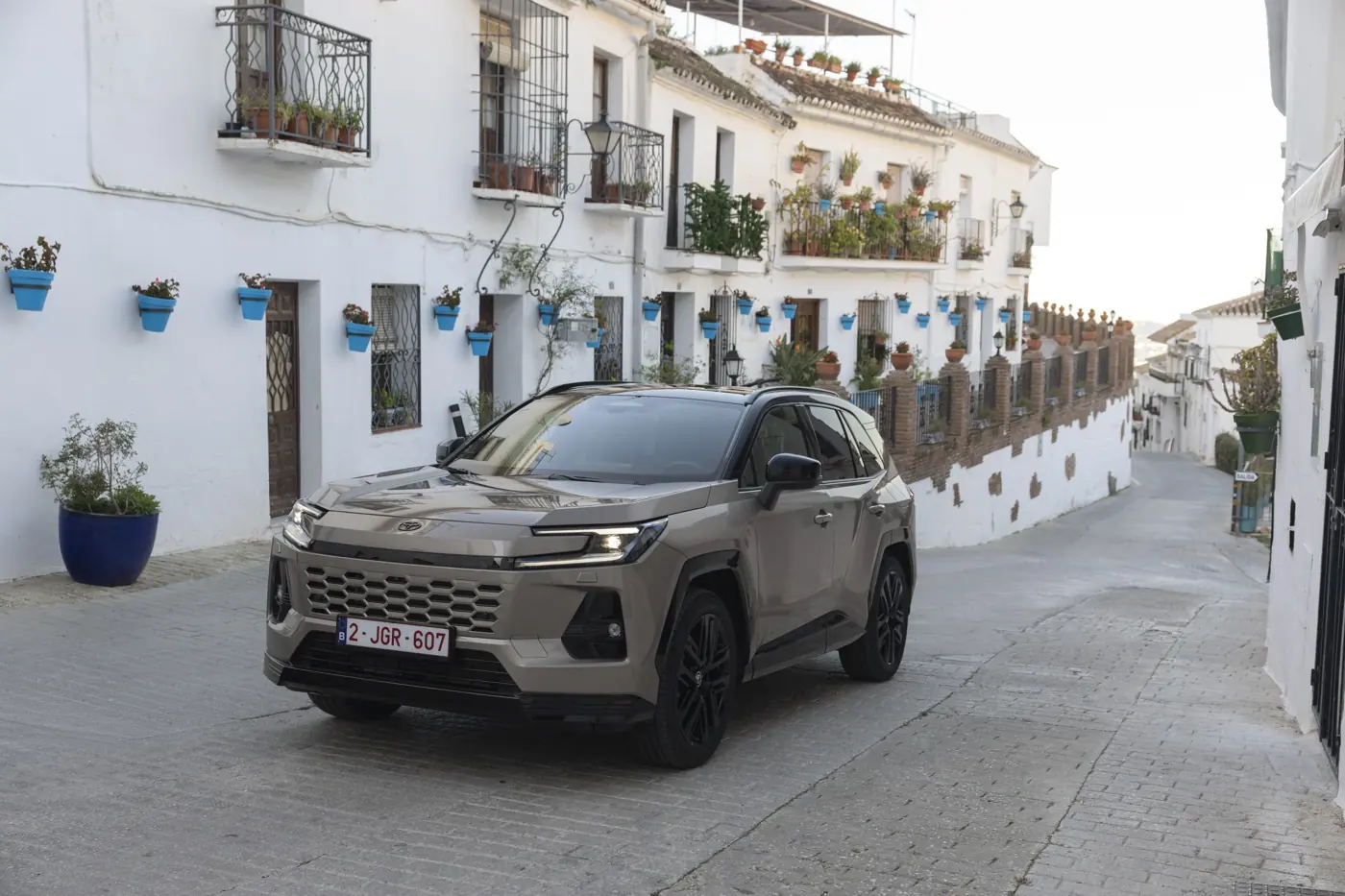
2026 Toyota RAV4 4.0
2026 Toyota RAV4

2026 Toyota RAV4 Hybrid: the world's favourite hybrid SUV gets smarter, quieter and pricier

All EV Sales editorial review. Researched from official specifications, safety ratings and published expert reviews; not a first-hand owner review. Key facts Price from: US$31,900 (before destination, US) · A$45,990–A$60,340 (Australia, before on-roads) Power: 226 hp FWD / 236 hp AWD (US) · 143 kW combined (Australia) Official fuel use: 41 mpg combined (EPA) · 4.5–4.6 L/100 km Boot: up to 705 litres Safety: not yet rated by ANCAP (new generation, from March 2026 build) Overview The sixth-generation RAV4 is now hybrid-only in most markets, and it was Australia's best-selling hybrid by a wide margin in 2025. The new model focuses on technology and refinement rather than a radical redesign. A plug-in hybrid version is also offered but isn't covered here. Design & Interior The cabin is the biggest step forward. A 12.3-inch digital instrument display and a touchscreen of up to 12.9 inches run Toyota's new software platform, with wireless Apple CarPlay and Android Auto as standard. Unlike many rivals, key functions keep physical controls, so there's little menu diving. A built-in dash cam is a useful addition. Reviewers note the seats are comfortable but offer limited side support. Driving The hybrid system delivers 226–236 hp in US tune and 143 kW in Australia. That's plenty for everyday driving, and the transition between petrol and electric power is seamless. The suspension is tuned for comfort and soaks up rough roads well. Steering is light rather than engaging, and the CVT-style transmission can make the engine drone when you accelerate hard. Fuel economy Economy is the RAV4's strongest suit. The official figure is 41 mpg in the US and 4.5–4.6 L/100 km in Australia. Independent testers have matched or beaten the US figure in normal driving, while hard driving on hilly roads pushed it to around 7–8 L/100 km. The 55-litre tank gives a long touring range. It can't be plugged in, so it's best suited to buyers not yet ready for a full EV. Practicality Rear seat space is generous and storage is well thought out. Boot space is up to 705 litres depending on grade, among the largest in the mid-size SUV class. Australian buyers get a five-year unlimited-kilometre warranty and up to 10 years' battery cover with dealer servicing. Safety The RAV4 comes with a comprehensive suite of driver-assistance features. However, the new generation had no ANCAP rating at the time of writing, and ANCAP has cautioned buyers about purchasing unrated vehicles. Toyota has said safety upgrades will be added to later production. We'll update this score when an official rating is published. Verdict The new RAV4 Hybrid is more refined, better equipped and still remarkably economical. It's an easy recommendation for families who want low running costs without switching to a plug-in car. The main drawbacks are higher prices in Australia, some engine drone under load and the missing crash rating on early builds. How we rated it Range 4.5 (excellent economy for its size) · Performance 3.5 (adequate, comfortable, not sporty) · Safety 3.5 (strong standard kit, but no official rating yet, capped until rated) · Comfort 4.0 (quieter, comfortable ride, flat seats) · Overall 4.0.

Read review
2026 Toyota Corolla 4.0
2026 Toyota Corolla

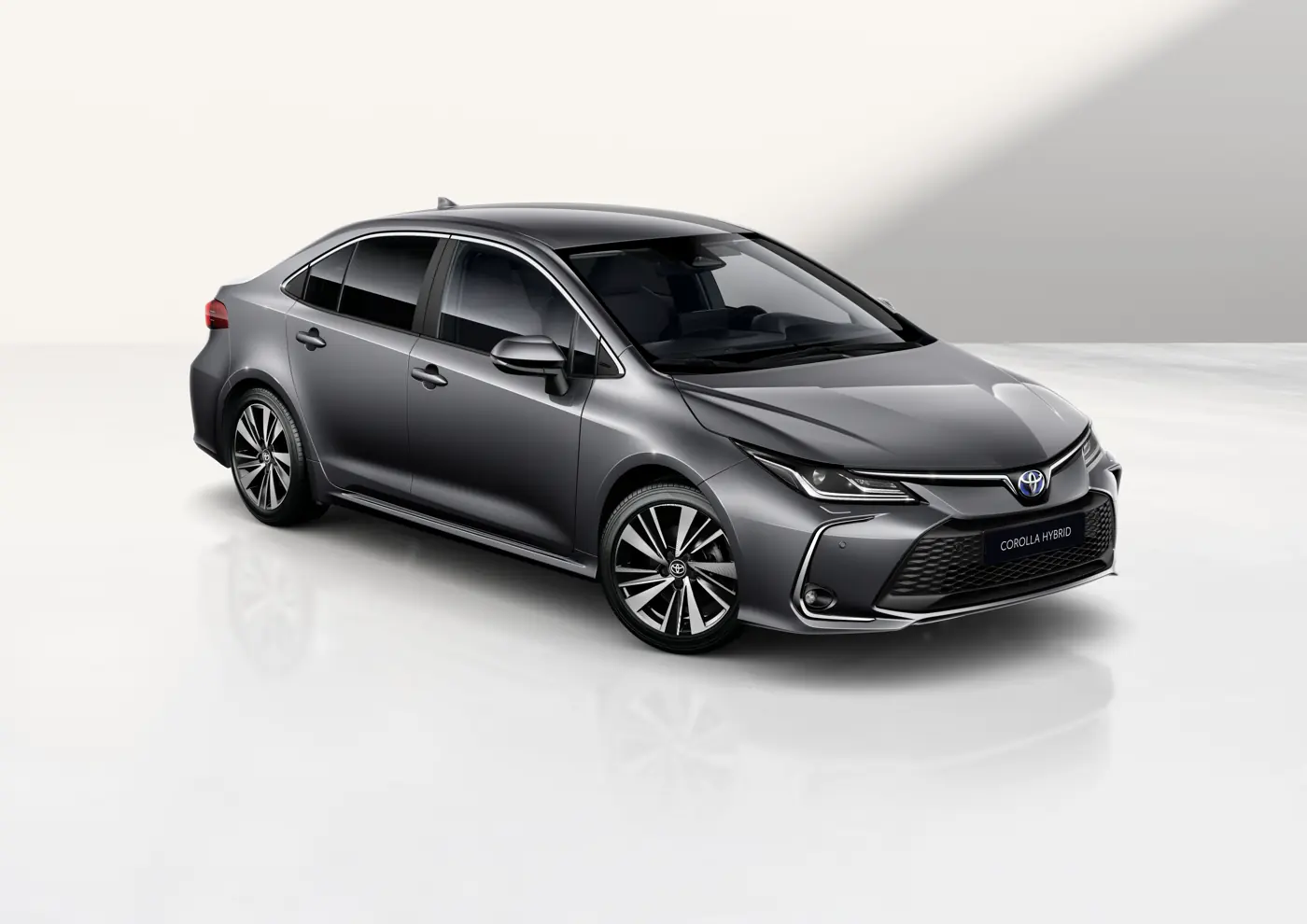
2026 Toyota Corolla Hybrid: 50 mpg for the price of a basic small car

All EV Sales editorial review. Researched from official specifications, safety ratings and published expert reviews; not a first-hand owner review. Key facts Price from: US$24,575 (LE, US, before destination) · A$32,110 (Ascent Sport hatch, Australia, before on-roads) Official fuel use: 44–50 mpg combined (EPA) · 3.9–4.0 L/100 km (Australia) Power: 138 hp combined (US) · 103 kW combined (Australia) 0–60 mph: 9.6 seconds (Edmunds test) Safety: unrated by ANCAP (built from January 2025) · IIHS: Good in most tests, Marginal in updated moderate overlap (2026) Overview The Corolla Hybrid is one of the cheapest ways to buy a car that returns around 50 mpg. It is sold as a sedan in the US and as a hatch or sedan in Australia, where every Corolla is now a hybrid. It suits commuters and first-car buyers who value low running costs over space or pace. Design & Interior The current Corolla dates from 2018, and the cabin shows its age in places. Reviewers describe a tidy dashboard let down by hard plastics in areas you touch often. US models gain a 7-inch digital gauge cluster as standard for 2026, with a 12.3-inch display on the XLE. The touchscreen supports Apple CarPlay and Android Auto, and climate controls keep their own physical switches. US testers found the screens sharp but occasionally slow to respond. Driving Performance is modest. The 1.8-litre hybrid system makes 138 hp in US tune and 103 kW in Australia. Edmunds recorded 0–60 mph in 9.6 seconds, and testers note it runs short of pull at highway speeds. The engine becomes loud when you accelerate hard or climb hills. On the positive side, the steering is accurate and the chassis feels settled. Australian reviewers found the handling more engaging than expected, though the ZR's 18-inch wheels add road noise. Fuel economy Economy is the reason to buy one. The EPA rates the front-drive LE at 50 mpg combined. SE trims and all-wheel-drive versions range from 44 to 48 mpg. Australian claims are 4.0 L/100 km for the hatch and 3.9 L/100 km for the sedan. Real-world results fall short of the label but remain strong. Edmunds saw about 41 mpg on a highway-heavy route, and CarExpert averaged 5.1 L/100 km. The system cannot be plugged in, so there is no charging to plan around. Practicality Space is the main compromise. Reviewers consistently describe the rear seat as tight for adults, with limited head and knee room. The US sedan's trunk is about 13 cubic feet, with a narrow opening. The Australian hatch is worse, at just 217 litres, well behind the Hyundai i30 and Mazda 3. Electronic on-demand all-wheel drive is available on US LE and SE grades, which is rare in this class. Australian buyers get a five-year unlimited-kilometre warranty. Safety Toyota Safety Sense 3.0 is standard, including pedestrian-detecting automatic braking, adaptive cruise and lane-centring assistance. Blind-spot monitoring with rear cross-traffic alert is now standard on every US grade. The IIHS rates the 2026 Corolla sedan Good for small-overlap, side and pedestrian-braking tests. It scored Marginal in the updated moderate-overlap test, mainly for rear-passenger protection. In Australia, the 2018 five-star ANCAP rating has expired, so cars built from January 2025 are unrated. Verdict The Corolla Hybrid remains a sensible buy for anyone focused on fuel bills and low purchase cost. It is cheap to run, easy to drive and well equipped with safety technology. Look elsewhere if you need rear-seat or boot space, stronger acceleration, or a current ANCAP rating. A lightly updated US 2027 model starts at $25,175. An all-new Corolla is also expected soon, so discounts on 2026 stock are worth pursuing. How we rated it Range 4.5 (50 mpg combined, among the best of any non-plug-in car) · Performance 3.0 (slow and noisy under load, tidy handling) · Safety 3.5 (full driver-assist suite, but a Marginal IIHS result and no current ANCAP rating) · Comfort 3.0 (settled ride, cramped rear seat and small boot) · Overall 4.0 (average 3.5, adjusted up 0.5 for low price and running costs). Sources Toyota US 2026 Corolla Hybrid announcement: https://pressroom.toyota.com/the-toyota-corolla-hybrid-brings-efficiency-and-style-into-2026/ Toyota US 2027 Corolla announcement: https://pressroom.toyota.com/built-for-generations-toyota-corolla-celebrates-60-years-with-2027-special-edition/ EPA fuel economy (LE FWD): https://www.fueleconomy.gov/feg/noframes/49804.shtml EPA fuel economy (SE AWD): https://www.fueleconomy.gov/feg/noframes/49805.shtml CarExpert Australian pricing and specs: https://www.carexpert.com.au/car-news/2026-toyota-corolla-price-and-specs CarExpert review (Australia): https://www.carexpert.com.au/car-reviews/2026-toyota-corolla-review Edmunds review (US): https://www.edmunds.com/toyota/corolla-hybrid/2026/ IIHS ratings: https://www.iihs.org/ratings/vehicle/toyota/corolla-4-door-sedan/2026 ANCAP rating status: https://www.ancap.com.au/safety-ratings/toyota/corolla/732138 CarExpert on the next-generation Corolla: https://www.carexpert.com.au/car-news/2027-toyota-corolla-what-we-know-about-the-next-generation-small-car

Read review
2026 Toyota Corolla Cross 4.0
2026 Toyota Corolla Cross

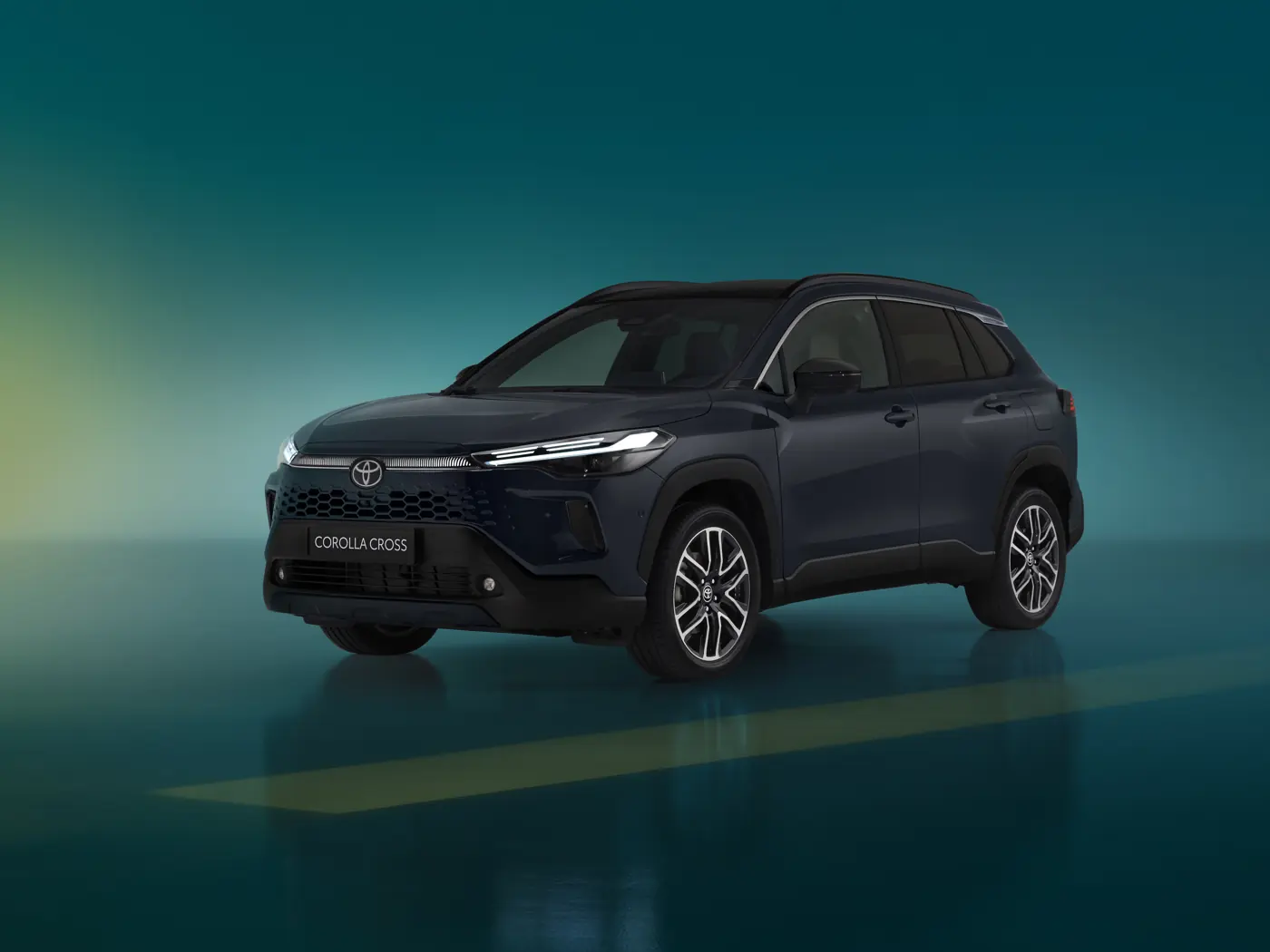
2026 Toyota Corolla Cross Hybrid: frugal small SUV with a tight back seat

All EV Sales editorial review. Researched from official specifications, safety ratings and published expert reviews; not a first-hand owner review. Key facts Price from: US$28,995 (S AWD, US, before destination) · A$37,440 (GX FWD, Australia, before on-roads) Official fuel use: 42 mpg combined (EPA) · 4.2–4.5 L/100 km (Australia) Power: 196 hp combined (US) · 146 kW combined (Australia) 0–60 mph: 8.0 seconds (Toyota claim) · 7.8 seconds (Edmunds test) Safety: 5 stars ANCAP (2022) · IIHS Top Safety Pick (2026) Overview The Corolla Cross Hybrid is Toyota's small SUV, sitting below the RAV4 in size and price. It combines Corolla running costs with a higher seating position and more cargo room than the sedan. It appeals to singles, couples and small families who want strong economy without paying RAV4 money. Design & Interior The 2026 update brings a new body-coloured front end and LED daytime running lights on every grade. Inside, the centre console has been reworked, and a 10.5-inch touchscreen is now available. An 8-inch screen is standard, and wireless Apple CarPlay and Android Auto are included. Reviewers like the physical climate controls and the logical layout. They also agree the cabin looks plain and uses a lot of hard plastic for the price. Driving The 2.0-litre hybrid system makes 196 hp, or 146 kW in Australia. Toyota claims 0–60 mph in 8 seconds, and Edmunds recorded 7.8 seconds. Testers describe smooth, eager low-speed response from the electric motors. Push harder and the engine becomes loud and busy, and some reviewers found it strained at sustained highway speeds. The ride is comfortable around town, though it can feel floaty or unsettled on rougher country roads. Grip and steering are adequate rather than engaging. Fuel economy The EPA rates every US version at 42 mpg combined, which is excellent for an all-wheel-drive SUV. Australian claims range from 4.2 L/100 km for front-drive versions to 4.5 L/100 km for the GR Sport. Real-world results are close to the labels. Edmunds recorded 45.6 mpg in testing, beating the official figure. CarExpert averaged 4.9 L/100 km in an Atmos AWD with plenty of highway use. There is no plug to worry about; the battery charges while driving and braking. Practicality Rear-seat space is the weak point. Reviewers in both markets describe it as among the tightest in the class for adults. Edmunds quotes about 21.5 cubic feet of cargo space behind the rear seats in the hybrid. Australian boot space is 425 litres in front-drive models and 380–390 litres in all-wheel-drive versions, which carry a rear electric motor. All US models have standard all-wheel drive. Australian buyers get a five-year unlimited-kilometre warranty and low capped-price servicing. Safety Toyota Safety Sense 3.0 is standard, including pedestrian-detecting automatic braking, adaptive cruise and lane-centring assistance. ANCAP awarded five stars in 2022, valid until December 2028. Scores were 85% for adult occupants, 88% for children, 87% for vulnerable road users and 83% for safety assist. That rating excludes the GR Sport. The IIHS named the 2026 model a Top Safety Pick, with Good small-overlap and side results and an Acceptable moderate-overlap score. Verdict The Corolla Cross Hybrid is an easy car to live with and very cheap to fuel. Standard all-wheel drive, a proven crash record and Toyota's reputation make it a low-risk purchase. Look elsewhere if you regularly carry adults in the back or want a quieter highway cruiser. Australian buyers should note that upper grades are expensive, and reviewers point to the front-drive GXL as better value. How we rated it Range 4.0 (42 mpg with standard AWD, strong real-world results) · Performance 3.5 (brisk off the line, noisy and soft when pushed) · Safety 4.5 (five-star ANCAP and IIHS Top Safety Pick, dated 2022 ANCAP test) · Comfort 3.5 (supportive seats and easy urban ride, cramped rear seat) · Overall 4.0. Sources Toyota US 2026 Corolla Cross announcement: https://pressroom.toyota.com/assembled-in-america-and-arriving-now-2026-toyota-corolla-cross/ EPA fuel economy (Hybrid AWD): https://www.fueleconomy.gov/feg/noframes/49870.shtml CarExpert Australian pricing and specs: https://www.carexpert.com.au/car-news/2026-toyota-corolla-cross-price-and-specs CarExpert review (Australia): https://www.carexpert.com.au/car-reviews/2026-toyota-corolla-cross-review Edmunds review (US): https://www.edmunds.com/toyota/corolla-cross-hybrid/ ANCAP rating: https://www.ancap.com.au/safety-ratings/toyota/corolla-cross/530bf9 IIHS ratings: https://www.iihs.org/ratings/vehicle/toyota/corolla-cross-4-door-suv/2026

Read review
2026 Toyota Camry 4.5
2026 Toyota Camry

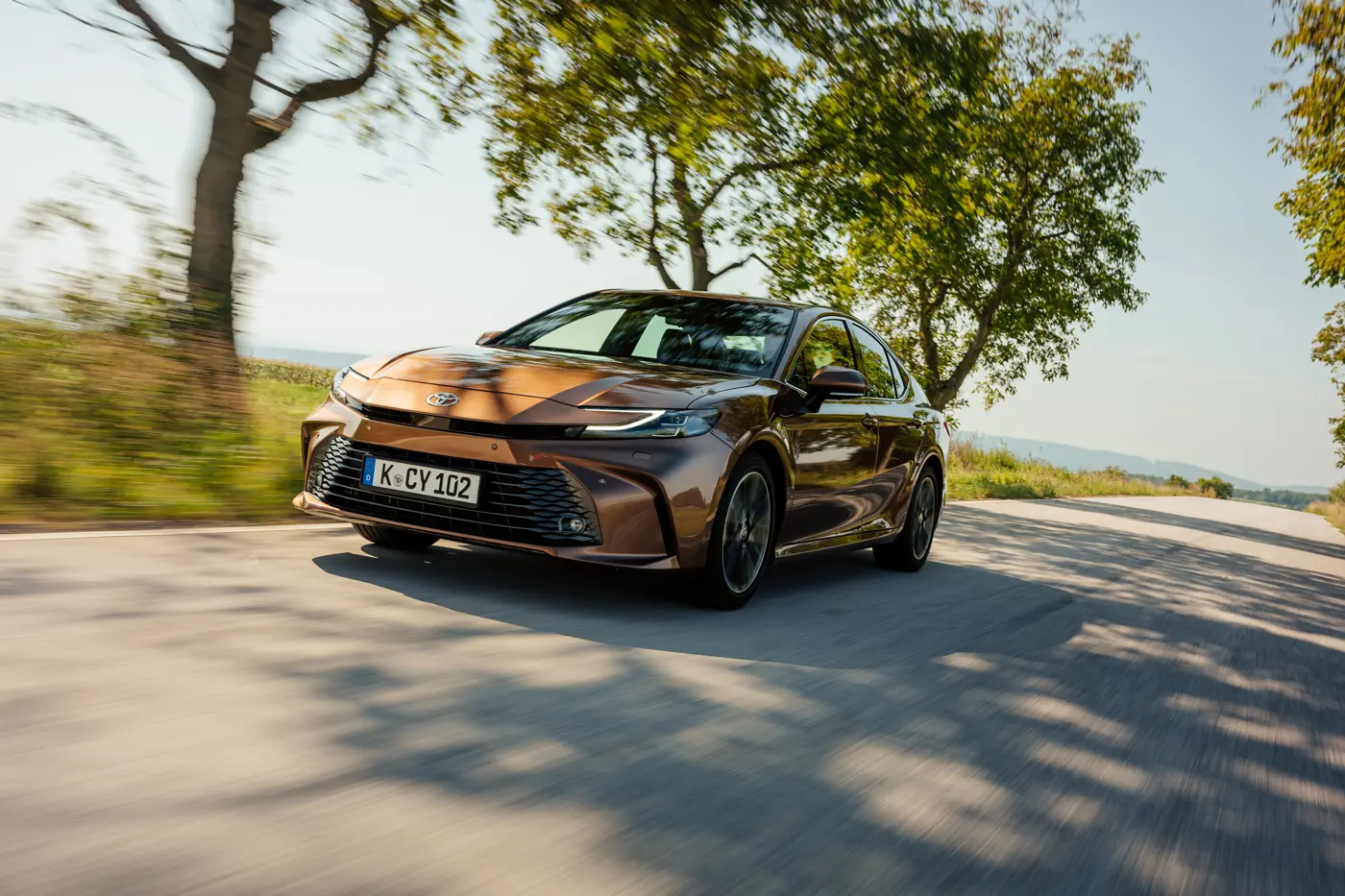
2026 Toyota Camry Hybrid: the mid-size sedan that barely needs fuel

All EV Sales editorial review. Researched from official specifications, safety ratings and published expert reviews; not a first-hand owner review. Key facts Price from: US$29,300 (LE, US, before destination) · A$39,990 (Ascent, Australia, before on-roads) Official fuel use: 43–51 mpg combined (EPA) · 4.0 L/100 km (Australia) Power: 225 hp FWD / 232 hp AWD (US) · 170 kW combined (Australia) 0–60 mph: 7.8 seconds (Edmunds test) Safety: 5 stars ANCAP (2024) · IIHS Top Safety Pick+ (2026) Overview The ninth-generation Camry arrived for 2025 and is now sold only as a hybrid in the US and Australia. It remains one of the best-selling mid-size sedans, prized for reliability, space and low running costs. It suits families, commuters and fleet buyers who want SUV-like space without SUV fuel bills. Design & Interior The current Camry has a sharper, lower look than before, and the cabin is a clear step up in design and ergonomics. Base models use an 8-inch touchscreen and a 7-inch driver display, while higher grades get a 12.3-inch screen. Wireless Apple CarPlay and Android Auto are included, and reviewers rate the phone integration highly. Criticisms centre on small screens in entry versions and a plastic steering wheel rim. For 2026, US buyers can add a panoramic roof on XLE and XSE grades, and a blacked-out Nightshade edition joins the range. Driving The 2.5-litre hybrid system makes 225 hp with front-wheel drive and 232 hp with all-wheel drive. Australian cars produce 170 kW. Edmunds recorded 0–60 mph in 7.8 seconds, which is brisk for a family sedan. Reviewers in both markets praise the composed ride and tidy, responsive handling. The main complaint is engine noise, which becomes coarse under hard acceleration. At a steady cruise, road and wind noise are well suppressed. Fuel economy Economy is outstanding for a car this size. The EPA rates the front-drive LE at 51 mpg combined, and the all-wheel-drive LE at 50 mpg. Other grades range from 43 to 46 mpg, depending on drivetrain and wheel size. Australian Camrys claim 4.0 L/100 km. Testers came close to the official figures. Edmunds recorded 45.9 mpg in a 46 mpg grade, and CarExpert averaged 4.5 L/100 km. No plug-in charging is needed. Practicality Reviewers describe both rows as roomy, with a wide rear bench and easy entry through large door openings. The central tunnel reduces foot space for a middle passenger. Edmunds quotes 15.1 cubic feet of trunk space, while Australian figures list 524 litres with no awkward load lip. All-wheel drive is available on every US grade, which few mid-size sedans offer. Australian private buyers get a five-year unlimited-kilometre warranty and low capped-price servicing. Safety The Camry is one of the safest cars in its class. The IIHS named the 2026 model a Top Safety Pick+, with Good ratings in every crash test. ANCAP awarded five stars in 2024, valid until December 2031. Scores were 95% for adult occupants, 87% for children, 84% for vulnerable road users and 81% for safety assist. Toyota Safety Sense 3.0 is standard, with automatic emergency braking that includes junction assistance. Verdict The Camry Hybrid is an easy recommendation for anyone who wants a spacious, economical and very safe family car. It rides well, handles tidily and returns fuel figures that many smaller cars cannot match. Reasons to look elsewhere include a noisy engine under load, firm front seats and a plain base-model cabin. In Australia, reviewers suggest stepping up to the Ascent Sport for better equipment. How we rated it Range 4.5 (around 50 mpg in a mid-size sedan, strong real-world results) · Performance 4.0 (quick, composed and agile, coarse engine when pushed) · Safety 5.0 (IIHS Top Safety Pick+ and 95% ANCAP adult score) · Comfort 4.0 (quiet cruiser with generous space, firm seats) · Overall 4.5. Sources Toyota US Camry range and pricing: https://www.toyota.com/camry/ Toyota US 2026 Camry announcement: https://pressroom.toyota.com/toyota-camry-brings-bold-new-nightshade-edition-to-lineup-in-2026/ EPA fuel economy (LE FWD): https://www.fueleconomy.gov/feg/noframes/49823.shtml EPA fuel economy (LE AWD): https://www.fueleconomy.gov/feg/noframes/49825.shtml EPA fuel economy (XSE AWD): https://www.fueleconomy.gov/feg/noframes/49822.shtml CarExpert review (Australia): https://www.carexpert.com.au/car-reviews/2026-toyota-camry-review Edmunds review (US): https://www.edmunds.com/toyota/camry/ ANCAP rating: https://www.ancap.com.au/safety-ratings/toyota/camry/f584ba IIHS ratings: https://www.iihs.org/ratings/vehicle/toyota/camry-4-door-sedan/2026

Read review
2026 tesla Model 3 4.0
2026 tesla Model 3

2026 Tesla Model 3: still the efficiency benchmark, now quieter and more refined

All EV Sales editorial review. Researched from official specifications, safety ratings and published expert reviews; not a first-hand owner review. Key facts Price from: US$36,990 (Standard RWD, US) · A$54,900 (Premium RWD, Australia, before on-roads) Official range: 309–363 miles (EPA) · up to 750 km (WLTP, Premium Long Range RWD) 0–60 mph: 2.9–5.8 seconds depending on version (Tesla figures) Peak DC charging: 225–250 kW Safety: 5 stars Euro NCAP (2025) · 5 stars ANCAP (2025) Overview The Model 3 is Tesla's midsize electric sedan, and the "Highland" update that entered production in September 2023 is still the current version. It suits buyers who want long range, low running costs and simple road-trip charging without moving to an SUV. For 2026, Tesla added a cheaper, simpler Standard trim in the US and a Long Range RWD version in Australia. Design & Interior The Highland update brought slimmer lights, a smoother nose and a much better-finished cabin. Reviewers praise the soft-touch materials, ventilated front seats on Premium versions and the 8-inch screen for rear passengers. Nearly every function still runs through the central touchscreen, including gear selection, which Australian testers found fiddly when parking. Early Highland cars used steering-wheel buttons for the indicators. Edmunds reports that a conventional stalk has returned on 2026 US cars, and Tesla sells a retrofit for 2024–25 US cars. Apple CarPlay and Android Auto are still not available. The US Standard trim removes the rear screen, ventilated seats, FM radio, power steering-column and mirror adjustment, and Autosteer. Driving Every version feels brisk, and Tesla claims 2.9 seconds to 60 mph for the Performance. Edmunds quotes 4.8 seconds for the Premium RWD and 4.2 seconds for the Premium AWD. Steering is quick and body control is tight, so it remains one of the more satisfying EVs to drive on a winding road. Frequency-selective dampers and softer springs make the ride calmer than before. Testers still note a thump over sharp road joins and large speed bumps. Acoustic glass and quiet tyres keep noise low on the highway. Australian reviewers found the rear-drive version can struggle for traction in the wet. The US Standard trim does without the frequency-selective dampers. Range & Charging Efficiency is the Model 3's biggest strength. EPA ratings run from 309 miles for the Performance to 363 miles for the Premium RWD, with the Standard at 321 miles. In Edmunds' real-world tests the Premium RWD covered 393 miles and the Standard 339 miles, both beating their EPA figures. In Australia, the Premium Long Range RWD is rated at 750 km on the WLTP cycle with 18-inch wheels. CarExpert recorded 13.3 kWh/100 km in that car, close to Tesla's claim. Peak DC charging is 250 kW, or 225 kW for the US Standard. Tesla's Supercharger network remains the easiest in the industry for long trips. Practicality A sedan can't match a hatchback or SUV for bulky loads, but the Model 3 uses its space well. Edmunds measures 24.1 cubic feet of total cargo space, including a 3.1 cubic-foot front trunk and a deep underfloor well. CarExpert lists 594 litres in the boot and 88 litres in the front trunk. Rear legroom is tighter than in many rivals, although headroom suits most adults. Two deep centre-console bins handle small items. Safety Euro NCAP awarded five stars in 2025: adult occupants 90%, children 93%, vulnerable road users 89% and safety assist 87%. ANCAP's five-star rating, issued in May 2025, covers cars built since September 2023, with scores of 90%, 95%, 89% and 88%. NHTSA gives the 2026 model five stars overall and in every category. In IIHS testing, the updated moderate overlap front test was rated Acceptable and seat belt reminders Marginal. It does not currently hold an IIHS Top Safety Pick award. Verdict The Model 3 remains the benchmark for range, efficiency and charging convenience at its price. The Highland changes made it quieter, better finished and more comfortable without dulling its handling. The US Standard trim is good value if you can live with fewer features. The screen-based controls, lack of smartphone mirroring and snug rear seat are the main reasons to consider a rival. How we rated it Range 4.5 (class-leading efficiency and charging network) · Performance 4.0 (quick and agile, firm over sharp bumps) · Safety 4.5 (five stars from Euro NCAP, ANCAP and NHTSA, weaker IIHS results) · Comfort 3.5 (quiet, but tight rear legroom and touchscreen-reliant controls) · Overall 4.0. Sources EPA range figures (fueleconomy.gov): https://www.fueleconomy.gov/feg/Find.do?action=sbs&id=50251&id=50038&id=50037&id=50036 US lineup, prices and specs: https://evchargingstations.com/chargingnews/2026-tesla-model-3-all-versions-compared/ Australian pricing: https://www.evee.com.au/blog/2026-tesla-model-3-australia-price-specs-range/ CarExpert, Australian range update: https://www.carexpert.com.au/car-news/2026-tesla-model-3-now-australias-longest-range-ev CarExpert review: https://www.carexpert.com.au/car-reviews/2026-tesla-model-3-premium-long-range-rwd-review Edmunds review: https://www.edmunds.com/tesla/model-3/ InsideEVs, Standard trim range test: https://insideevs.com/news/783143/tesla-model-3-standard-beats-epa-range/ InsideEVs, indicator stalk retrofit: https://insideevs.com/news/775189/tesla-model-3-us-turn-signal-stalk-retrofit/ Euro NCAP 2025 assessment: https://www.euroncap.com/assessments/tesla/model+3/1110/ Drive, ANCAP rating: https://www.drive.com.au/news/tesla-model-3-earns-new-five-star-safety-rating-after-hiatus-for-latest-model/ NHTSA rating (2026 RWD): https://api.nhtsa.gov/SafetyRatings/VehicleId/22553 IIHS ratings: https://www.iihs.org/ratings/vehicle/tesla/model-3-4-door-sedan/2026

Read review
2026 skoda Enyaq 4.0
2026 skoda Enyaq

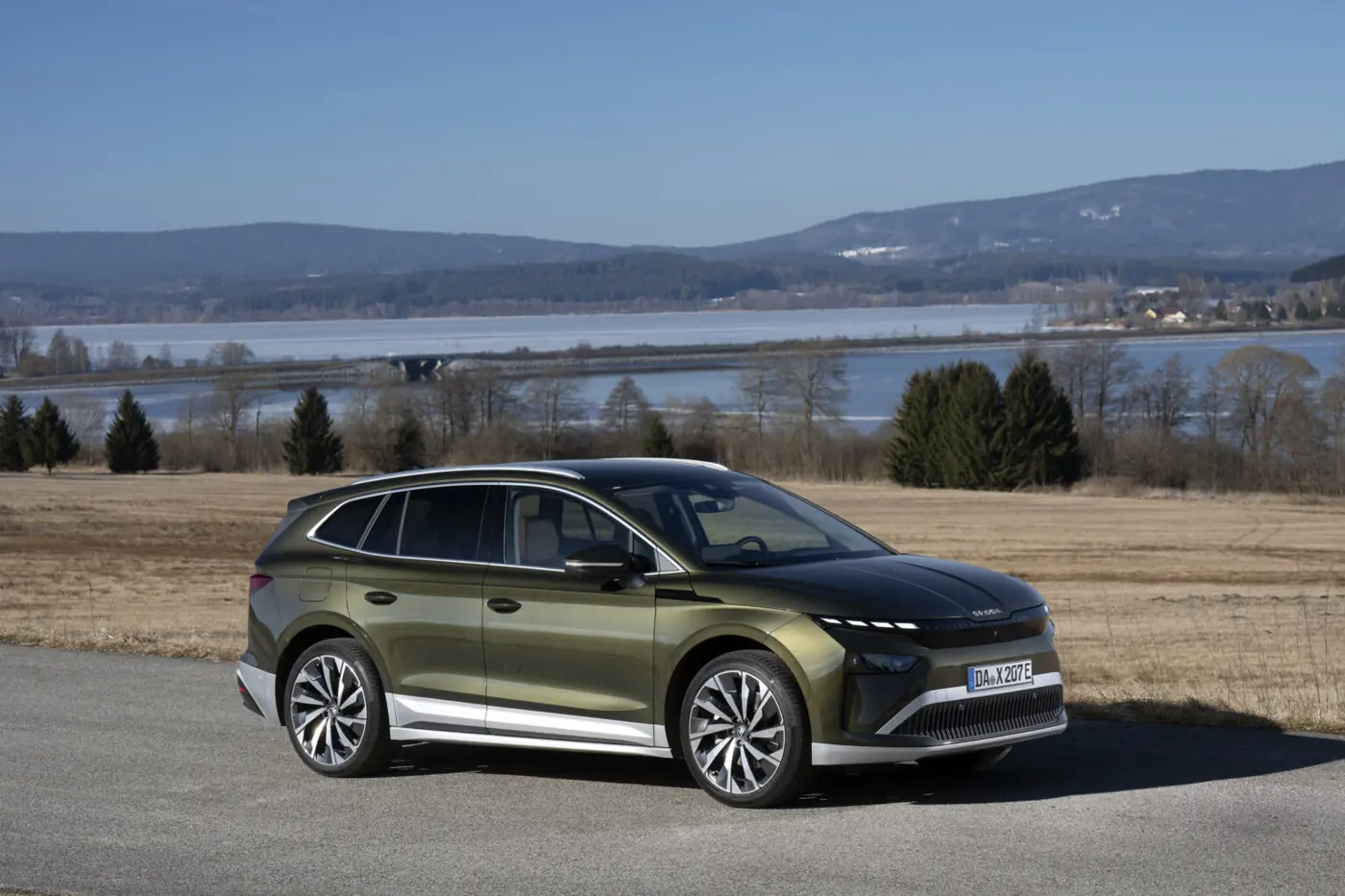
2026 Skoda Enyaq: long range and a huge boot make a strong family case

All EV Sales editorial review. Researched from official specifications, safety ratings and published expert reviews; not a first-hand owner review. Key facts Price from: £39,520 (SE L 60, UK) · A$50,990 (60 Select, Australia, before on-roads) Official range: 283–378 miles (WLTP, UK) · 410–561 km (WLTP, Australia) 0–62 mph: 5.4–8.6 seconds depending on version Peak DC charging: 105–175 kW depending on battery and build date Safety: 5 stars Euro NCAP (2025 reassessment) Overview The Enyaq is Skoda's mid-size electric SUV and one of Europe's most popular family EVs. A 2025 facelift brought a new front end, more range and a lower entry price in some markets. It suits families who want space and long range without paying premium-brand prices. Design & Interior The facelift added Skoda's newer front design with slim lights and a flatter nose. A coupe-style body is also available. Inside, reviewers praise the logical layout, soft-touch materials and useful storage. A 13-inch touchscreen runs the main functions, and wireless Apple CarPlay and Android Auto are standard. Testers say the software is far better than earlier Volkswagen Group systems. Some still want more physical buttons. Mid-2026 cars gain a new Android-based system, a phone key and vehicle-to-load power. Driving The UK range includes rear-drive 60 and 85 models, a dual-motor 85x and a vRS. Acceleration runs from 8.6 seconds to 62 mph for the 60 to 5.4 seconds for the vRS. Reviewers describe the Enyaq as well balanced and polished. Several note the standard ride could be softer, while the optional adaptive suspension earns praise. Testers mention an awkward paddle-based regenerative braking control and a slightly wooden brake feel at low speed. Range & Charging Current UK figures run from 283 miles for the 60 to 378 miles for the rear-drive 85. The dual-motor 85x is rated at 360 miles and the vRS at 349 miles. In Australia, the 60 is rated at 410 km and the 85 Sportline at 547 km. Launch-spec cars charge at up to 165 kW (60) and 175 kW (85x). The mid-2026 update moves the 60 to a lithium iron phosphate battery that charges at up to 105 kW. Updated larger batteries charge at up to 165 kW. One Australian test recorded 16.2 kWh/100 km, close to the official figure. Practicality Practicality is the Enyaq's strongest suit. The SUV's boot holds 585 litres with the seats up and 1,710 litres folded. Rear legroom is generous, though the cabin is best for four adults rather than five. Reviewers highlight typical Skoda touches such as an umbrella stored in the door. Safety Euro NCAP first rated the Enyaq in 2021 and reassessed it in 2025, again awarding five stars. The 2025 scores are 90% for adult occupants, 87% for children, 77% for vulnerable road users and 78% for safety assist. The rating shares test data with the closely related Elroq. Weak points included marginal chest protection in the full-width test and poor pedestrian head protection at the windscreen pillars. Verdict The Enyaq is an easy recommendation for families who need a big boot and long range. It feels well built and is priced below premium rivals with similar space. A firm standard ride, limited physical buttons and costly options are the main drawbacks. How we rated it Range 4.5 (long WLTP range and good real-world efficiency) · Performance 3.5 (polished but not sporty) · Safety 4.5 (five-star Euro NCAP, modest safety assist) · Comfort 4.0 (roomy and refined, standard ride could be softer) · Overall 4.0. Sources Skoda UK model range and prices: https://www.skoda.co.uk/new-cars/enyaq/enyaq-range Skoda UK launch prices and specifications: https://www.skoda.co.uk/news/details/skoda-announces-final-uk-prices-specifications-for-the-new-enyaq Skoda model year update (batteries and charging): https://www.skoda-storyboard.com/en/press-releases/skodas-electric-bestsellers-elroq-and-enyaq-receive-model-year-updates/ Euro NCAP 2025 assessment: https://www.euroncap.com/assessments/skoda/enyaq/1128pm/ Euro NCAP 2025 result notice: https://news.euroncap.com/safercars/-koda-enyaq---euro-ncap-2025-results---5-stars/s/083a644d-e47a-4339-9b89-6bd4a6192878 Drive, Australian pricing: https://www.drive.com.au/news/2026-skoda-enyaq-price-and-specs-suv-bodystyle-arrives-coupe-gets-a-facelift/ Chasing Cars review (Australia): https://www.chasingcars.com.au/reviews/midsize-suvs/skoda-enyaq-2026-review/ Top Gear review: https://www.topgear.com/car-reviews/skoda/enyaq

Read review

Browse Our Range

Explore the range of electric vehicles on our global buy-and-sell marketplace.

Browse

Learn about the Latest EV Developments

Explore breaking stories and expert analysis from the fast-evolving world of electric vehicles

Go to News
EV

FOR EV DEALERSHIPS

List your entire electric vehicle fleet on
All EV Sales, completely free

Create your own dealership page with a unique subdomain, unlimited listings, and a direct link to your website. Attract more buyers, showcase your EV stock, and promote your brand on the world's leading electric vehicle marketplace.

Register as a Dealer
EV Service Provider

FOR EV SERVICE PROVIDERS

Promote your EV services through our platform

Support the EV community and grow your business, completely free. Join our partner network to showcase your services, attract more EV customers, and grow your visibility.

Apply to Partner