
 Buy & Sell
 All EV Sales
 Explore
 Account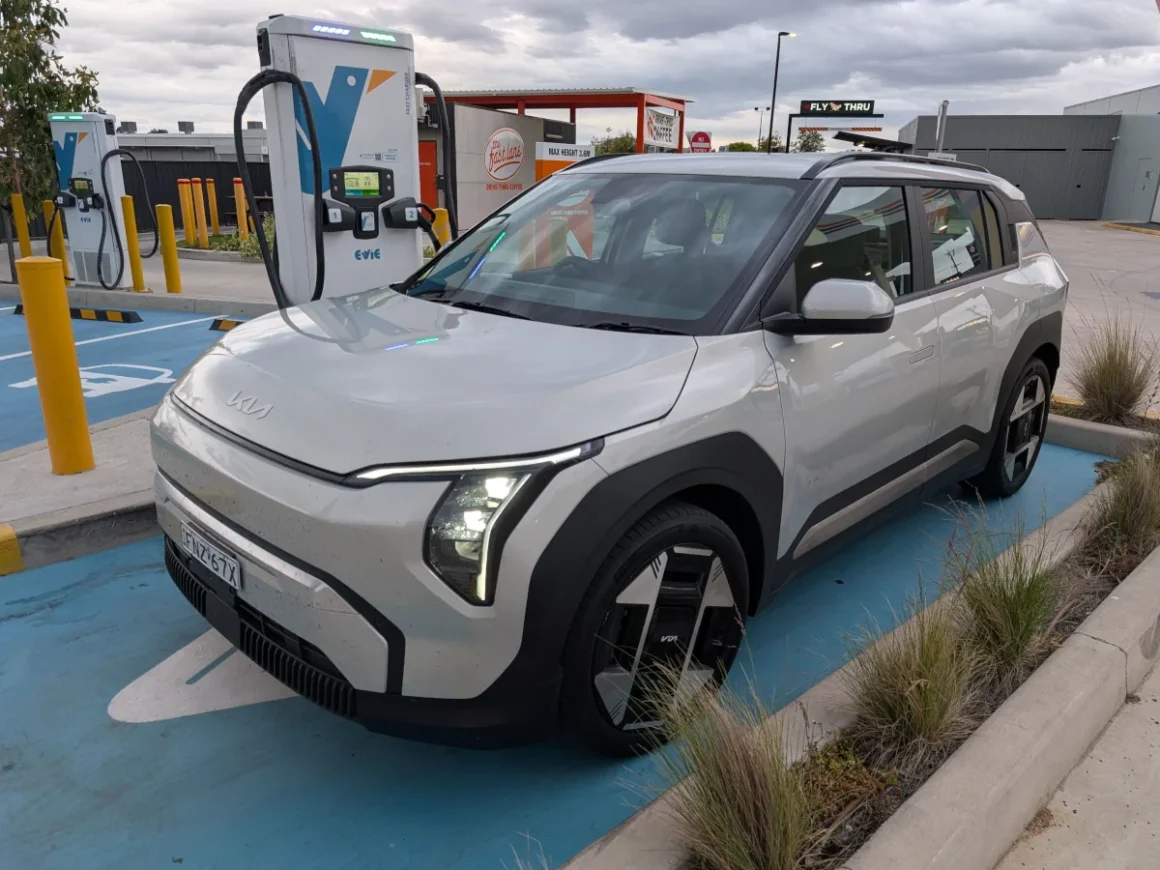
The electric vehicle (EV) sector continues to charge ahead on multiple fronts, as global developments illustrate a clear transformation across markets, technologies, and consumer engagement. From policy-driven affordability initiatives in Europe to major battery innovations in Asia and significant infrastructure progress in Australia, the current wave of EV news underscores the unstoppable shift toward sustainable mobility.
Germany’s €3 Billion Boost for EV Affordability
In one of the boldest national EV support packages of recent times, the German government has agreed to dedicate €3 billion (around A$5.3 billion) toward making electric mobility accessible to lower- and middle-income households. This significant financial stimulus aims to bridge the affordability gap that still prevents mass EV adoption among regular motorists. The move reinforces Europe’s leadership in climate-driven policy and signals that equitable electrification is now a political priority. If executed effectively, the program could set a precedent across the continent, ensuring that the electric transition does not become a luxury reserved only for the wealthy.
Xpeng’s $5,000 Cashback as Competition Heats Up
Meanwhile in China, Xpeng Motors has unveiled aggressive deal sweeteners to clear existing stock of its G6 electric SUV. The company’s offer of up to $5,000 cashback, flexible financing, and service discounts is designed both to maintain sales momentum and to prepare the ground for upgraded 2026 models. China’s EV marketplace remains highly dynamic, with dozens of automakers fighting for share through pricing strategy and rapid product refresh cycles. Xpeng’s initiative showcases how the pressure to innovate continuously is reshaping not just products, but also retail and pricing paradigms.
Tesla Expands Access to FSD Supervised Trial
Across the US and select global markets, Tesla is launching a 30-day free trial of its Full Self-Driving (FSD) Supervised software. Targeting over 1.5 million owners, the initiative seeks to convert hesitant buyers into long-term subscribers by demonstrating the progress of its advanced driver-assistance capabilities. The move could have far-reaching implications for Tesla’s software-as-a-service (SaaS) revenue model, which forms an increasingly important part of its long-term profitability. For consumers, it presents an opportunity to evaluate the company’s most ambitious technology at no additional cost—a marketing strategy blending confidence with user engagement.
Kia’s Compact EV3 Gains Praise for Range and Practicality
In the compact EV segment, Kia’s EV3 Earth variant is drawing attention for achieving long-range performance within a smaller footprint. Reviewers highlight its spacious “big boot,” ergonomic interior, and intuitive driving experience, positioning it as a practical option for those moving from traditional hatchbacks to their first electric model. Despite minor software and handling quirks, the EV3 is being celebrated as one of the most balanced entrants in the compact SUV class—an important milestone for Kia’s expanding electrified lineup.
Breakthrough Battery Collaboration: Sinopec and LG Chem
Energy storage innovation remains central to sustaining EV growth, and the latest collaboration between Sinopec (China) and LG Chem (South Korea) marks an important step. The two industrial giants are partnering to develop sodium-ion battery materials, an emerging alternative to the more expensive lithium-based chemistries currently dominating the market. These batteries, expected to power low-speed city EVs and stationary grid systems, may drastically reduce costs while improving scalability. For developing markets, sodium-ion technology could represent an accessible route to electrification with lower dependence on critical minerals.
US EV Sales Surge Amid Automaker Uncertainty
Recent data points to record EV sales in the United States, emphasizing rising consumer demand even as some domestic carmakers appear to hesitate on their electric commitments. Analysts warn that this is a crucial inflection point—whether manufacturers double down on innovation or retreat to legacy models will determine their competitiveness in the next decade. With federal incentives still active and public charging infrastructure expanding, signals suggest that retreating now could mean ceding leadership to foreign brands better attuned to EV economics.
Australian Innovation: V2X Charging Comes Home
Australia is also making headlines with its first homegrown bidirectional charger now entering the market. This V2X (vehicle-to-everything) product allows an EV to discharge power back to the home, grid, or other devices, effectively turning cars into mobile batteries. This innovation links personal transport with energy resilience—an approach likely to redefine how homeowners interact with their own electricity supply. Local certification ensures the technology can integrate safely within existing networks, laying the foundation for a domestic smart-grid revolution.
Beyond Cars: Greenpeace’s Zero-Emission Flagship
Sustainability initiatives are expanding beyond road transport. Greenpeace has announced its forthcoming flagship vessel, incorporating a 3 MWh battery, solar panels, sails, and hydrogen fuel cells for propulsion. The vessel symbolizes the organization’s commitment to decarbonize maritime operations, an often-overlooked but critical contributor to global emissions. The integration of multiple renewable energy systems represents a blueprint for future oceanic mobility, balancing endurance with zero-emission ambition.
Everyday Electric Adventures: Family Road Trip in a BYD Dolphin
Amid major industrial announcements, individual experiences continue to spotlight the progress and practicality of EVs. A family’s recent cross-Australia journey in a small BYD Dolphin reveals how far public charging networks have come—and where improvement is still needed. The narrative is one of adaptability and enthusiasm: long distances proved manageable, and even remote regions became accessible through careful planning. It is a human-scale reminder that electric mobility is not just viable but enjoyable for everyday users.
Tesla’s Expanding Model Lineup
Rounding out the latest developments, Tesla is reportedly preparing to release a seven-seater Model Y variant in key markets, particularly in Europe. This move acknowledges demand from families seeking larger electric options without sacrificing efficiency. The addition will strengthen Tesla’s versatility across demographics, catering to both small households and multi-passenger utility needs.
Together, these stories paint a vibrant picture of an EV ecosystem gaining not only speed but depth. Governments are intervening with affordability measures, automakers are refining software and value propositions, researchers are diversifying battery chemistry, and consumers are embracing the experience. Each step represents collective motion toward a cleaner, more connected, and more resilient transport future—one increasingly defined not by if the electric transition happens, but how fast it reaches every road, home, and horizon.
All EV Sales Research Team
11/30/2025