
Global EV Market Update: Range Tests, Sales Shifts, and Regulatory Revisions Define the End of 2025
Electric Vehicle Market Snapshot — December 2025
The electric vehicle (EV) landscape continues to evolve rapidly as new market data, range tests, and policy shifts shape the story at the end of 2025. The latest updates from The Driven’s coverage highlight an industry that’s expanding fast but also confronting significant challenges, from range accuracy to charging standards and regulatory roadblocks.
Real‑World Range Concerns Shake Confidence
Recent Australian real‑world range testing has revealed that several major EVs are falling short of their promised performance. Vehicles such as the Tesla Model Y and Kia EV3 were among four models that did not meet their advertised driving ranges according to tests conducted by Australia’s top motoring body. These results underscore a growing tension between laboratory estimates and everyday driving results. While official figures often rely on standardised test cycles under controlled conditions, real‑world driving introduces variables such as terrain, temperature, and driving habits—all of which can significantly affect range.
This shortfall reinforces the importance of transparent communication between automakers and buyers. Consumers increasingly expect real‑world accuracy, and regulatory agencies may be prompted to tighten testing standards to reduce discrepancies. This conversation is especially relevant as EVs become mainstream purchases rather than niche, early‑adopter products.
Charging Standard Debate: NACS vs CCS2
As adoption grows, so does the debate over charging protocols. The Driven’s discussion comparing Tesla’s North American Charging Standard (NACS) with CCS2, the plug used across Australia and much of Europe, highlights a key infrastructure crossroads. The NACS plug, recently opened for use by other manufacturers, is smaller and lighter, giving it ergonomic advantages. However, widespread compatibility and investment in CCS2 networks make an outright shift difficult.
The global charging landscape is becoming a mosaic of regional standards, and Australia sits at a strategic juncture between the U.S.‑led NACS expansion and Europe’s entrenched CCS2 ecosystem. The eventual outcome will affect how easily Australian drivers can charge when travelling, and whether domestic infrastructure remains fragmented or moves toward universal interoperability.
Hyundai Streamlines Its Ioniq 5 Lineup
In product news, Hyundai has overhauled its Ioniq 5 range, announcing the removal of its smaller battery option and the digital side mirrors. The revised lineup simplifies offerings while expanding practical range across variants. This decision reflects a broader trend: manufacturers are trimming underperforming variants to streamline production and target customer sweet spots.
The Ioniq 5 remains a cornerstone for Hyundai’s electric strategy, capturing a solid share of global mid‑size EV SUV sales. Its redesign signals maturity in the EV market—manufacturers are now refining, not merely launching.
EV Sales Surge: Zeekr and BYD Join Top Ranks
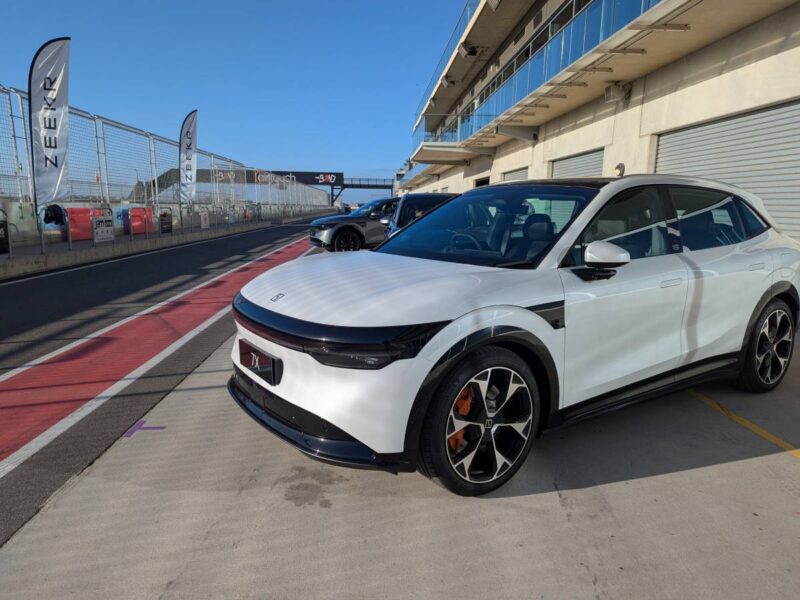
Sales results for November 2025 show strong signs of recovery in Australia. After months of plateauing growth, national data reveals a bounce‑back in both unit volumes and brand diversity. Tesla has reclaimed the leading spot, reinforcing its dominance, while China’s Zeekr 7X has leaped into the top three positions alongside the BYD Atto 2. The rapid rise of these entrants illustrates the deepening competition within the affordable‑premium and compact SUV categories.
This resurgence reflects wider global momentum: consumers are responding positively to new models with distinctive designs and strong performance‑per‑dollar ratios. Even as macroeconomic pressures linger, the EV transition appears resilient.
Tracking the Market: Monthly Breakdown
Complementing the sales rebound, The Driven has compiled detailed datasets breaking down Australia’s EV sales by month and by model. The November figures confirm accelerating penetration across brands, from established leaders like Tesla to newer models from Polestar, Hyundai, and newer Chinese brands. Analysts suggest that fleet electrification commitments and expanded dealership support have both contributed to the steady upward trajectory.
Europe Rethinks Its 2035 Ban
Across the world, policy has re‑entered the EV conversation. The European Union’s proposed 2035 ban on new combustion‑engine cars is under review amid mounting pressure from German manufacturers. Berlin’s lobbying to allow hybrid and synthetic‑fuel options has forced Brussels to soften its hard line, floating language that supports being “open to all technologies.” This marks a notable pivot from earlier commitments to phase out all internal combustion engines entirely.
If the revised proposal passes, it may reshape investment priorities at major automakers. The possibility of new exemptions for low‑emission combustion could slow full electrification in some segments, even as EV momentum continues overall.
Norway Nears Complete Electrification
Norway’s progress, on the other hand, shows the potential future for mature EV markets. Data from November indicates that 97.6% of new vehicles sold were battery electrics—an astounding figure that positions Norway as the global benchmark for EV adoption. Tesla remains the dominant player there, exemplified by the Model Y’s continued popularity. Norway’s success underscores how policy consistency, charging infrastructure, and consumer incentives combine to accelerate transition when all align.
Expanding EV Fleet in Germany
Meanwhile, Germany’s electric vehicle count is poised to exceed two million units by year end. While this signals significant momentum in Europe’s largest auto market, it also highlights the gap between current performance and the nation’s ambitious 2030 targets. Experts cite inconsistent government incentives and lagging charging infrastructure as barriers.
Still, even with slower uptake than hoped, Germany’s market trajectory confirms electrification as irreversible. Entire supply chains—from battery production to recycling—are being reshaped to support the new automotive norm.
Looking Ahead
From regional range testing to global policy re‑evaluations, the EV industry closes 2025 at a crossroads. Manufacturers are consolidating their lineups and refining technology; governments are balancing ambition with pragmatism; and consumers are growing more discerning as expectations mature. Whether through the whisper‑quiet glide of a Hyundai Ioniq 5, the enduring appeal of Tesla’s Model Y, or the meteoric rise of Chinese newcomers, the transition toward electric mobility continues to accelerate—sometimes imperfectly, always unstoppably.