
Electric Momentum: Australia’s EV Market Surges Ahead as Global Trends Reshape the Landscape
Electric Momentum: Australia’s EV Market Surges Ahead as Global Trends Reshape the Landscape
Australia’s electric vehicle (EV) market is entering a defining phase. Over the last few years, the electric transition has moved from niche to mainstream, driven by new models, expanding infrastructure, and policy initiatives. But 2025 seems to be the year when the pieces start to form a coherent picture — one that blends local growth with international technological shifts.
Recent updates across the EV landscape highlight a tapestry of developments, ranging from surging sales in Australia to new challenges and breakthroughs in Europe and Asia. The stories from The Driven’s latest feed illustrate how innovation, competition, and consumer demand are creating new momentum for cleaner transport.
Australian EV Sales Climb, Led by BYD and Kia
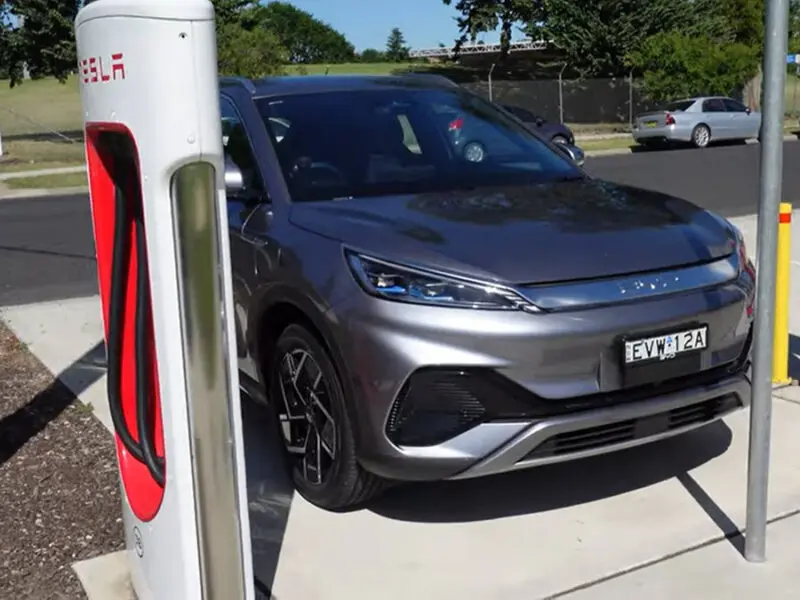
A key headline in the December 2025 feed reports that EV sales in Australia surged by 10% compared to the previous year, even as deliveries from Tesla slowed. The expansion is largely attributed to the rising influence of BYD, Kia, and a collection of emerging Chinese automakers who are reshaping vehicle affordability and accessibility in the Australian market. These brands have captured a broad swath of consumers seeking practical, efficient EV options — a sign that competition is intensifying across multiple segments.
The trend also suggests a more mature buyer landscape. While early adopters were drawn to premium and high-performance EVs, newer buyers are prioritizing range, price, and reliability. The resulting uptake is positioning Australia to finally overcome the adoption stagnation seen earlier in the decade.
Renault’s European Triumph — and the Limits of Global Supply
Meanwhile, in Europe, the Renault 5 E-Tech has emerged as a standout success story, topping the continent’s electric light and small car segment. Its retro-inspired design and affordable pricing have resonated with European consumers. Yet, despite its favorable reception abroad, there are no immediate plans to bring the Renault 5 E-Tech to Australia, illustrating the country’s ongoing challenge of lagging access to low-cost EV imports.
Global automakers still view Australia as a secondary market due to limited incentives and logistical considerations, even as local demand grows. This gap between supply and desire continues to frustrate potential buyers and underscores why Chinese and Korean automakers have succeeded in filling the vacuum.
Engineering Ingenuity and the Next Generation of EV Experts
On a more grassroots level, a fascinating development comes from Australian universities, where engineering students are building and racing open-wheeler electric cars. These fast, lightweight prototypes showcase not only raw performance but also the technical skill sets needed for the national transition to clean mobility.
The four-day event offers a glimpse into Australia’s growing interest in EV-related engineering. The students’ designs often incorporate regenerative braking, advanced battery systems, and lightweight composite materials. For many participants, this is more than just a competition — it serves as a launchpad for careers in sustainable energy and automotive innovation.
Anker’s Next-Generation Home Battery Solution
Beyond the vehicles themselves, the supporting ecosystem is rapidly advancing. Anker’s SOLIX X1 ultra-thin home battery is emerging as a favorite for EV owners looking to power their garages using solar energy. Compact and “integration-ready,” the device combines storage and optimization, allowing users to charge their cars with renewable power even in space-constrained environments.
This convergence of household energy management and EV charging marks a pivotal shift: the home garage is becoming a personal energy hub. It’s a critical step toward decentralizing grid reliance and making clean energy self-sufficiency attainable for suburban households.
EV Infrastructure Expands — Kerbside Charging Goes Mainstream
Infrastructure expansion continues apace. EVX, a provider of on-street EV charging solutions, has announced that hundreds of new kerbside chargers are now featured on the Chargefox platform. This step significantly improves access for urban Australians — particularly those without off-street parking. By embedding charging options into existing neighborhoods, EVX and similar providers are tackling one of the biggest barriers to EV adoption.
The practical effect is that EV ownership is no longer limited to those with driveways or garages. In cities like Sydney and Melbourne, this marks a turning point for equitable access to electric transportation.
Range Gaps and Consumer Realities
While adoption is growing, not all metrics are ideal. The latest real-world range testing conducted by Australian motoring groups found that several popular models — including the Tesla Model Y, Kia EV3, and MG vehicles — failed to match their advertised distances on a single charge. The discrepancies suggest manufacturers’ lab ratings still struggle to account for local conditions such as highway speeds, temperature variations, and hilly terrain.
However, these findings might ultimately benefit consumers by driving transparency and pushing automakers to focus on genuine real-world efficiency rather than regulated measurement cycles.
Standards and Simplification: NACS vs. CCS2
Australia continues to watch with interest as the global battle of charging standards plays out. A recent technical analysis from The Driven notes that while the North American Charging Standard (NACS) is gaining global traction thanks to Tesla and its partners, Australia’s infrastructure — heavily invested in CCS2 connectors — is unlikely to transition.
For now, the nation will likely remain on the CCS2 path. Yet, adapters and multi-standard stations could soon make compatibility concerns less of a barrier.
Hyundai Streamlines Its EV Lineup
Rounding out the latest headlines, Hyundai has revised its Ioniq 5 lineup, axing the smaller battery option and removing digital side mirrors in a bid to simplify production and reduce costs. The move aligns with a broader pattern among automakers: tightening their portfolios to improve efficiency and profitability amid global competition.
The Road Ahead
Taken together, these stories underscore a vibrant moment for the electric transition. EV adoption in Australia is accelerating, infrastructure is finally catching up, and innovation — from home batteries to student-built racers — is flourishing. Yet, critical challenges remain: vehicle affordability, range reliability, and charging standardization.
What’s clear is that electric mobility is no longer just a future aspiration — it’s fast becoming Australia’s new normal. The global momentum, from European design revolutions to Asian innovation pipelines, is converging on this once-skeptical market. The result is a dynamic, competitive era for transportation that promises cleaner roads, smarter energy use, and an abundance of choice for the modern driver.