
EV Momentum: Global Expansion, New Models, and a Record-Breaking Year
A Year of Acceleration: The Electric Vehicle Landscape Through 2025
The global electric vehicle (EV) industry entered the end of 2025 with remarkable vigor. New technologies, expanding infrastructure, and milestone achievements marked a transformative period for automakers and consumers alike. From the bold presence of new entrants to groundbreaking advancements by established players, 2025 underscored how the EV transition has shifted from a niche movement into a dominant force shaping the future of mobility. The latest stories from The Driven reveal not just a year of accomplishments, but a preview of a more electrified world ahead.
Tesla’s Growing Footprint: Charging Networks and Cutting-Edge Models
Tesla continued to reinforce its leadership position with two major developments before the close of the year. The company opened nearly fifty new Supercharger stalls across Australia, strategically expanding connectivity ahead of summer travel peaks. This growth means drivers can now traverse the continent—from Adelaide to Cairns—relying solely on Tesla’s network. This advancement signifies a step closer to parity between electric and internal combustion vehicle (ICE) travel, addressing one of the most persistent concerns among long-distance drivers: access to reliable fastcharging.
The company also achieved another key milestone with the arrival of the first German-made Model Y units in Australia. The Model Y, manufactured at Giga Berlin, represents not only Tesla’s rapid scaling of production capacity but also the globalization of its supply and assembly network. Local customers celebrated the arrival of these vehicles as early holiday gifts, emphasizing Tesla’s ability to merge performance and availability through global logistics.
Perhaps more strikingly, spy sightings confirmed that Tesla’s long-awaited autonomous taxi, the Cybercab, began testing on public roads in Texas. This event marks a significant moment in the company’s drive toward full autonomy. While details remain under wraps, the vehicle’s appearance signals that Tesla is pushing closer toward realizing a robotaxi future—an innovation that could redefine both urban transport and car ownership models.
Complementing these milestones, Tesla also introduced a new iteration of its Model 3 Long Range, boasting over 600 kilometers of real-world range at highway speeds. This capability effectively enables ICElike travel times, bridging the gap between electric convenience and fossil-fuel familiarity. The evolution of energy density, efficiency, and battery management in this model demonstrates how incremental yet strategic innovations are reshaping consumer expectations around range anxiety.
BYD: Scaling Up and Diving Deeper into Global Markets
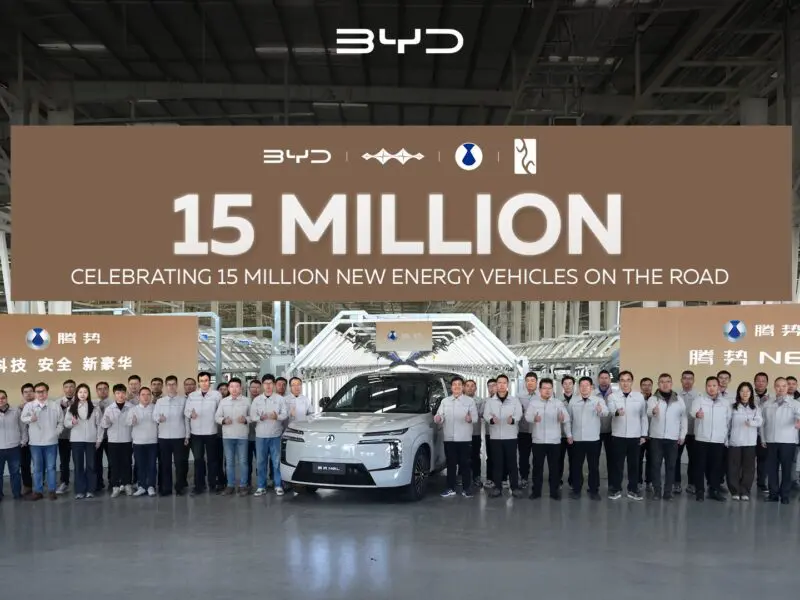
BYD, China’s leading EV manufacturer, continued its meteoric growth by achieving an extraordinary milestone: the production of its 15 millionth new energy vehicle (NEV). The event exemplifies the company’s unmatched scale and its relentless global expansion. Beyond manufacturing, BYD made headlines for testing a new small electric hatchback expected to launch in 2026. Spy photos indicate a compact yet modern design that could rival established city EVs in both price and practicality. This dual approach—mass production at scale and diversification into multiple market segments—positions BYD as both a disruptor and a stabilizing force in the global EV ecosystem.
The company’s ongoing expansion also reflects a deeper shift within the market. Historically, high-end electric models dominated headlines, but BYD’s focus on accessible vehicles brings the EV revolution to a broader demographic, accelerating mainstream adoption across continents.
Emerging Contenders: Zeekr and Jaecoo Make Their Mark
While legacy manufacturers and large-scale disruptors continue to lead, 2025 has also seen strong entries from ambitious newcomers. Zeekr’s 7X, newly introduced to Australia, captured attention as a spacious, fast, and meticulously finished SUV. The vehicle’s arrival showcases a confidence often reserved for long-established brands. Reviewers praised its rapid performance, premium cabin, and refined handling, positioning Zeekr as a serious contender in a segment once dominated by Western automakers.
Similarly, the Jaecoo J5 EV turned heads with its bold combination of modern styling, impressive build quality, and a surprisingly attainable price tag. Described as an ideal family SUV with adventure-ready credentials, the J5 exemplifies the rapid maturation of Chinese and Asian automakers whose vehicles increasingly rival—or even surpass—the quality benchmarks set by traditional players.
Innovation Beyond the Road: Off-Grid and Remote Charging
EV adoption in Australia and other remote regions relies on creative infrastructure solutions. An episode of The Driven Podcast highlighted innovations by eLumina, an enterprise integrating off-grid, battery-supported charging solutions for remote highways. Such systems are critical to expanding EV viability in large, sparsely populated territories. These developments demonstrate that the electrification journey is not just about vehicles, but also about intelligent energy ecosystems that make long-distance travel self-sustaining.
Reflecting on the Year and Looking Forward
In its annual wrap-up, The Driven Podcast brought together industry experts Tim Eden and Riz Akhtar to assess 2025’s defining EV stories and forecast trends for 2026. From regulatory momentum to consumer adoption curves, their discussion underscored one clear theme: the electrification tipping point has arrived. The convergence of affordability, range efficiency, and charging accessibility has transformed EVs from futuristic experiments into practical, everyday choices. Predictions for 2026 suggest continued advancements in solid-state batteries, increased collaboration on charging standards, and perhaps even wider rollout of autonomous fleets.
As 2025 closes, the EV landscape stands more dynamic and interconnected than ever. The surge of innovation—from Tesla’s infrastructure and autonomy breakthroughs to BYD’s monumental production achievements, from new entrants like Zeekr and Jaecoo to localized charging solutions—reveals not just progress, but a paradigm shift. The road ahead is unmistakably electric, and the pace of change suggests the coming decade will be defined not by if EVs take over, but how quickly they reshape our world.