
Electric Momentum: The Latest Wave of EV Innovation, Incentives, and Challenges Across Global Markets
The Evolving Electric Era: A Snapshot of the Latest Shifts in the Global EV Landscape
The electric vehicle (EV) ecosystem is changing faster than ever, driven by innovation, affordability, and a rapidly shifting consumer mindset. From Australia to Europe, recent developments highlight that EVs are no longer a niche product or an environmental statement—they are becoming the centrepiece of a new mobility movement. A look across this week’s major news in the EV space shows how automakers, buyers, and regulators are adapting to the growing electrified future.
EVs and Hybrids Power Into the Used Car Market
The second-hand car market in Australia is undergoing a noticeable transformation as buyers increasingly look for fuel-efficient and low-emission options. Hybrid and electric models, once scarce in used listings, are now capturing a larger market share. This momentum signals a key shift: not only are new EVs becoming mainstream, but their resale value and demand are solidifying their place in everyday transportation. Experts suggest that this change is partly due to improved consumer confidence in battery reliability and a growing recognition of long-term ownership savings.
Ford’s Electric Commercial Gamble: The E-Transit Custom
Ford is betting big on electric vans with its new E-Transit Custom, a one-tonne all-electric model designed to convince businesses that productivity and sustainability can go hand in hand. This move indicates Ford’s confidence that electrification in the logistics and service industries is viable today—not a decade from now. The new van promises sturdy range figures, practical charging times, and load capacity that mirrors its diesel predecessors. If widely adopted, models like the E-Transit Custom could redefine commercial fleets in urban centres where emissions regulations are tightening.
Tesla Expands Accessibility With Its Cheapest Model 3 Yet
Tesla has introduced its most affordable Model 3 to date in major right-hand-drive markets. This new variant reduces the entry barrier for consumers and intensifies competition across the mid-range EV segment. The lower price point, combined with Tesla’s continuously improved manufacturing efficiencies, reflects the company’s push to dominate not just the premium segment but also the mainstream market. Analysts note that a cheaper Tesla could fast-track adoption in countries like Australia and the UK, where pricing has often been a deterrent to mass uptake.
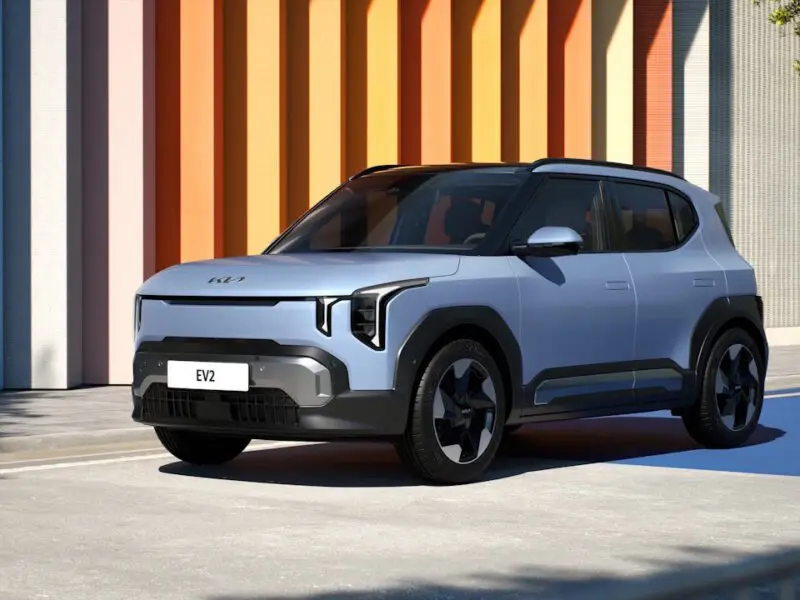
Kia’s Compact Future: The EV2 Makes Its World Debut
At the 2026 Brussels Motor Show, Kia unveiled the EV2—its smallest and most affordable all-electric vehicle yet. Despite its compact form, the EV2 boasts a driving range of around 448 kilometres on a single charge and supports bidirectional charging, hinting at the growing trend of vehicles designed as potential power storage hubs. Kia’s approach exemplifies how automakers are scaling EV accessibility without compromising on technology or range, targeting younger or urban customers who value practicality and price.
Volvo EX30 Owners Face Critical Charging Advisory
Not all EV headlines this week are about progress and celebration. Approximately 3,000 Australian owners of the Volvo EX30 were urged to limit charging to 70% amid concerns about potential fire risks. The advisory underscores that as EV technology expands, the industry still faces challenges around quality control and component safety. However, this openness and swift reaction from manufacturers also illustrate how seriously safety protocols are now treated within the EV ecosystem.
Mazda’s Third Electric Offering: The CX-6e SUV Arrives in 2026
Mazda is setting its sights on deepening its electrified lineup with confirmation of the CX-6e, an all-electric SUV bound for Australia. Arriving in 2026, the new SUV will be Mazda’s third fully electric entry in the region, marking another milestone for a brand known historically for internal combustion innovation. With this model, Mazda is positioning itself to appeal to family and lifestyle buyers seeking an EV that fits traditional SUV expectations.
Hyundai’s Minimalist Answer: The Inster
In a detailed video walkthrough, Hyundai’s Inster—a compact, affordable EV—was explored in depth, raising the question: Is this the small electric car that finally balances price, practicality, and technology? As one of the most affordable EVs Hyundai has produced, the Inster targets urban commuters and small households who value accessibility over luxury. The focus on affordability reflects broader industry trends toward democratizing EV adoption through smaller, efficient models.
Zeekr’s High-Voltage Ambition: The 7GT Wagon
Chinese manufacturer Zeekr has revealed its global expansion strategy through the debut of the 7GT performance wagon, featuring next-generation ultra-fast charging technology. Aimed squarely at premium European rivals like Porsche and BMW, the 7GT combines long-range capabilities with sport touring aesthetics. Its rollout across international markets highlights how emerging brands are pushing innovation into segments traditionally dominated by legacy automakers.
Geely’s Incentive Play: A Factory Bonus for the EX5
Price remains a key battleground, and Geely has responded with financial incentives to attract more buyers. The company is offering a $2,500 factory bonus on its EX5 electric SUV—one of Australia’s better-selling models. This move reflects a broader industry pattern where manufacturers use incentives and rebates to keep sales strong while global EV supply expands rapidly.
BYD Integrates LiDAR Into Low-Cost EVs
BYD continues to challenge the definition of ‘budget EV’ by incorporating advanced LiDAR-based self-driving technology into its most affordable models. By integrating high-end autonomous features into lower-priced hatchbacks, BYD is setting a new benchmark for value-driven tech deployment. It exemplifies how Chinese automakers are using innovation as their primary export advantage, offering features once limited to luxury brands at accessible prices.
The Broader Trend: Electrification Maturing Across Every Category
Together, these stories capture a critical inflection point in the EV market. From small city cars to vans and performance wagons, from safety recalls to discounts and new launches, the electric transition is maturing—becoming complex, multifaceted, and truly global. The race toward efficiency, innovation, and affordability is accelerating faster than ever, signaling not just the future of driving, but the redefinition of mobility itself.