
Electric Mobility in Motion: A Global Snapshot of the Growing EV Ecosystem in 2026
Electric Mobility in Motion: A Global Snapshot of the Growing EV Ecosystem in 2026
As the electric vehicle (EV) revolution enters 2026, the global landscape of sustainable mobility is experiencing both rapid innovation and emerging challenges. From compact city cars to commercial vans, from policy-driven market shifts to safety warnings, the latest wave of stories reveals a dynamic and maturing industry striving to balance ambition with practicality.
Range, Reliability, and Real-Life EV Experiences
For many new adopters, the question of range anxiety remains central. A recent journey chronicled by The Driven highlights how everyday users are learning fast when taking EVs into remote areas. The article, recounting a mission to install a charger in a distant region, underscores how critical accessible infrastructure is for building driver confidence. It reminds us that long trips shouldn’t require owning a $70,000 flagship EV — instead, the future success of electrification lies in making rural charging both reliable and affordable.
Small Batteries, Big Hopes: Compact EVs Take the Stage
Amid this push toward inclusivity and affordability, a striking development comes from China’s BYD, which teased its smallest EV yet — one featuring a modest 20 kWh battery pack. Dubbed the ‘Racco,’ this model is initially bound for the Japanese market, reflecting a growing appetite for compact, city-friendly electric mobility. The announcement signals a noteworthy trend: manufacturers are exploring creative ways to reduce vehicle weight, costs, and energy consumption without sacrificing usability.
Similarly, Kia’s unveiling of the EV2 at the 2026 Brussels Motor Show reinforces this shift toward smaller, more attainable models. The EV2 boasts a respectable driving range of up to 448 kilometers and introduces bidirectional charging — enabling energy sharing between vehicle and home or grid. The debut expands Kia’s family of dedicated EVs, positioning the brand as a contender in the global quest for efficient, stylish entry-level electric models.
Electric Two-Wheelers Power Ahead Worldwide
Stepping beyond the four-wheel market, electric two-wheelers have quietly staged a global revolution. In 2025, they captured roughly 15 percent of global market share, driven primarily by explosive adoption in Asia. China leads with a staggering 55 percent share, while Vietnam follows with over 21 percent. The rise of electric scooters and motorbikes hints at how developing regions are leapfrogging combustion engines, finding in battery-powered mobility a cleaner, cheaper, and more adaptable alternative. This growth also reflects how electrification can thrive where infrastructure might not yet support widespread EV charging networks.
Second-Hand Market Electric Shift
In Australia, the second-hand car market is witnessing a noticeable tilt toward low-emission vehicles. The surge of interest in pre-owned hybrids and EVs highlights an important milestone: sustainable mobility is no longer limited to new car buyers or early adopters. As prices drop and models become more diverse, more Australians are joining the transition through more affordable, previously owned options. This development could rapidly accelerate national adoption rates while easing the pressure on manufacturing new vehicles.
Addressing Safety and Battery Concerns
Yet alongside enthusiasm and innovation, the industry continues to face serious challenges. Continuing reports surrounding the Volvo EX30’s battery safety have raised critical concerns. A cautionary advisory in Australia warned nearly 3,000 EX30 owners not to charge their vehicles above 70 percent due to fire risk. Subsequent analyses have sought to determine whether these issues might extend to other models built on similar platforms. These headlines serve as reminders that as EV technology evolves, rigorous safety standards and transparent communication must remain at the core of manufacturing.
The Commercial Shift: Electric Vans for Real Work
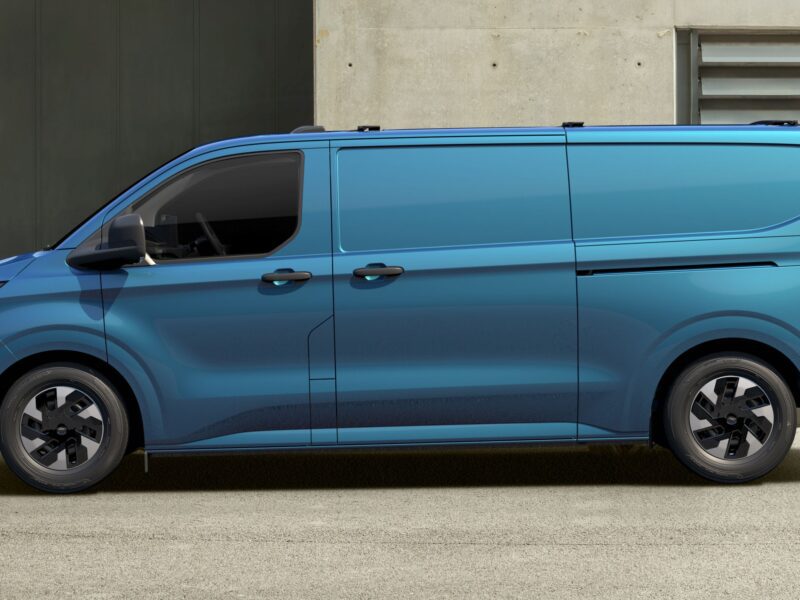
Commercial fleets represent another frontier for electrification. Ford’s E-Transit Custom, a fully electric one-tonne van, has entered the spotlight with reviews examining its potential to transform business logistics. Offering practicality without tailpipe emissions, the E-Transit brings a major automaker’s engineering heft to a category where diesel dominance has long prevailed. If accepted by mainstream businesses, such vehicles could significantly reduce urban emissions and prove that electrification is viable even in demanding commercial scenarios.
Tesla and Mazda Continue to Broaden EV Access
On a different front, Tesla has introduced its cheapest Model 3 variant in key right-hand-drive markets, trimming costs further and making its lineup more accessible to a broader audience. It’s a strategic move that reinforces Tesla’s competitive positioning while intensifying price pressure across the segment.
Meanwhile, Mazda has confirmed its third fully electric model for Australia — the CX-6e SUV, scheduled to arrive in 2026. Its entry strengthens Mazda’s relatively young EV portfolio and symbolizes how traditional automakers are fully pivoting toward electrification, even if cautiously. The addition of the CX-6e illustrates a larger trend: legacy brands are aligning their strategies to meet increasingly ambitious national and international emission goals.
Looking Ahead: A Connected and Competitive Future
Together, these stories illustrate that the EV movement is no longer a novelty — it’s a complex, interconnected ecosystem evolving at multiple speeds worldwide. Whether through microcars in Japan, electric delivery vans in Europe, or growing second-hand markets in Australia, each development contributes to a larger narrative of technological democratization.
Challenges remain — from battery safety and raw material sourcing to public infrastructure gaps — but the direction of travel is clear. Electric mobility in 2026 is not about luxury statements or isolated innovation. It’s about inclusion, adaptation, and a growing realization that the shift to cleaner transport must touch every corner of society. As automakers, governments, and consumers continue to push forward, the coming years promise to transform not just how we drive, but how we think about energy, community, and the open road itself.