
Electric Momentum: A Look at the Latest Developments in the Global EV Landscape
In recent weeks, the landscape of electric vehicles (EVs) has continued to evolve at a remarkable pace. From major automakers rolling out new models and battery upgrades to governments crafting policy incentives and infrastructure changes, the shift toward electrification has shown no sign of slowing. A collection of recent stories paints a vivid picture of an industry maturing into its next phase — more accessible, more capable, and more mainstream than ever.
New Entrants Hit the Market
The announcement that Chinese manufacturer GAC Aion will bring its Aion UT electric hatchback to Australia marks another leap in the growing globalization of EVs. Once dominated by European and American brands, the Australian EV market is now seeing increased competition from Asia. The Aion UT represents China’s continued ambitions to expand internationally and its ability to develop EVs suitable for diverse markets. It also underscores the speed at which new players are entering regions that only a few years ago had limited electric offerings.
Safety Becomes a Major Selling Point
Crash test data is reshaping perceptions of electric vehicles in Australia. New test results show that battery-powered cars now dominate safety rankings — six of the seven best performers are EVs. This development contradicts early misconceptions that electric cars were more dangerous in collisions. Improved battery architecture and optimized weight distribution have contributed to improved occupant safety. As mainstream consumers prioritize safety alongside sustainability, these statistics could accelerate broader acceptance.
The Rise of Affordable EVs
One of the most consequential stories comes from BYD, a manufacturer that has been steadily redefining affordability in the EV market. The short test drive of the BYD Atto 1 highlights how even an inexpensive electric car can feel refined and familiar. This marks a significant shift from the days when electric cars were branded as luxury novelties. The Atto 1 challenges traditional pricing assumptions by showing that low-cost innovation can deliver real-world usability and comfort. As more buyers seek to make the switch from internal combustion engines, affordability could become the ultimate disruptor.
Refinement Without the Premium — Kia’s Updated EV6
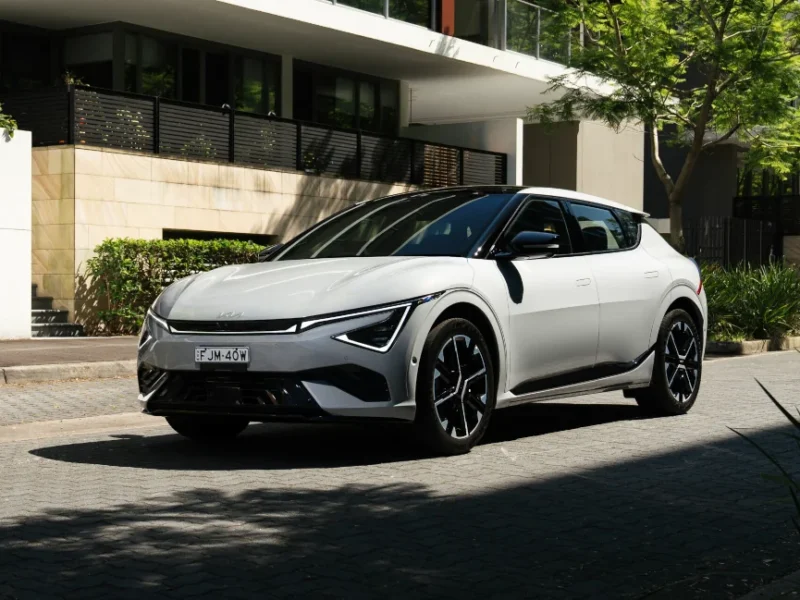
Meanwhile, Kia continues to solidify its position as a leader in the midrange EV category. Its updated EV6 model now features a larger battery, extended range, and improved infotainment systems — for only a marginal $70 price increase across all trims. Design tweaks have modernized the look, while performance and efficiency enhancements ensure the car remains competitive in a rapidly advancing segment. Kia’s incremental improvements demonstrate how EV manufacturers are entering an iterative phase, similar to what smartphones experienced: regular, software-like updates that refine features without overhauling the core product.
Policymaking and Incentives: A Trans-Pacific Contrast
Across the Pacific, policy battles have heated up. California has proposed a $US200 million clean vehicle incentive program as a counterweight to potential federal rollbacks on EV tax credits. The program aims to reinforce the state’s commitment to climate-friendly transportation, helping residents afford zero-emission models. This move underscores the growing political divide over energy policy and the tension between state-level sustainability initiatives and national agendas. California remains a bellwether; what happens there often shapes the future of clean transport incentives across the United States.
Infrastructure Shifts and Challenges
Infrastructure remains a key enabler of EV adoption, but it is not without challenges. A recent examination of charging fees at hotels and motels across Australia exposes an emerging issue: destination charging is becoming increasingly expensive. Once a convenience that often came free, charging at accommodation sites now frequently involves steep fees. Critics argue that this trend mirrors the early days of excessive Wi-Fi charges and risks undermining the accessibility and practicality of EV travel. Whether regulatory pressure or market forces will correct this remains to be seen.
Technology in the Driveway: Portable Charging Solutions
Not all charging solutions need to be fixed installations. A recent review of the MSI EZgo portable EV charger sheds light on how portable charging is evolving from niche gadget to practical necessity. The device allows users to bypass slow, basic chargers included with most cars while maintaining flexibility when traveling. As infrastructure gaps persist, portable chargers represent an important bridge technology — giving EV owners more options and independence.
Industry Realignments and Strategic Shifts
Tesla, long the flagbearer of EV innovation, has surprised many by announcing that it will stop selling its Full Self-Driving (FSD) package outright. Instead, access will move exclusively to a subscription model. This represents a strategic pivot that could redefine how software-driven features are monetized. While it offers flexibility to customers who prefer not to commit thousands upfront, it also signals Tesla’s emphasis on recurring revenue streams. This transition mirrors trends in broader technology sectors, suggesting the EV industry is aligning more closely with subscription-based economics.
A Decline in Hydrogen Ambitions
In Europe, hydrogen’s role as a transport fuel continues to shrink. The number of hydrogen refueling stations has dropped sharply as battery-electric vehicles dominate. Despite early hype, hydrogen technology has struggled to achieve either cost efficiency or infrastructure scale. The collapse of hydrogen’s passenger car prospects underscores how decisively BEVs (battery electric vehicles) have won the near-term mobility race.
Global Progress Anchored by Established Automakers
Rounding out recent developments is the strong showing from Volkswagen, which has boosted global EV deliveries by 32 percent in 2025, reaching nearly one million all-electric units sold. Even as total vehicle sales dipped slightly, VW’s EV segment thrived — demonstrating that the company’s electrification roadmap is delivering tangible results. Its commitment to scaling production capacity across global markets signals confidence in sustained demand.
The Road Ahead
Taken together, these stories illustrate an EV sector that is diversifying rapidly — from entry-level models and portable accessories to high-performance upgrades and forward-looking policy frameworks. Consumers are no longer merely early adopters; they are mainstream drivers exploring practical options that offer safety, affordability, and convenience. As infrastructure, pricing, and regulatory conditions evolve, the electric transition is becoming less about experimentation and more about everyday life.
The momentum is unmistakable: electric mobility is no longer a niche pursuit but a defining feature of the modern automotive era.