
EVs Surge Ahead: Tesla’s Innovations, MG’s Electric Ute, and a Nation Plugging In
A transformative week in electric vehicle (EV) news
Australia’s EV revolution continues to accelerate, as major automakers and infrastructure players announce bold new steps to electrify transport on both the consumer and commercial fronts. From Tesla’s new foldable superchargers to MG’s first all-electric ute, the pace of innovation and adoption has shifted dramatically. Meanwhile, rising fuel costs, changing consumer attitudes, and nationwide infrastructure rollouts are creating conditions for a large-scale tipping point. The latest EV headlines paint a clear picture: the electric era is here, and it’s expanding faster than many expected.
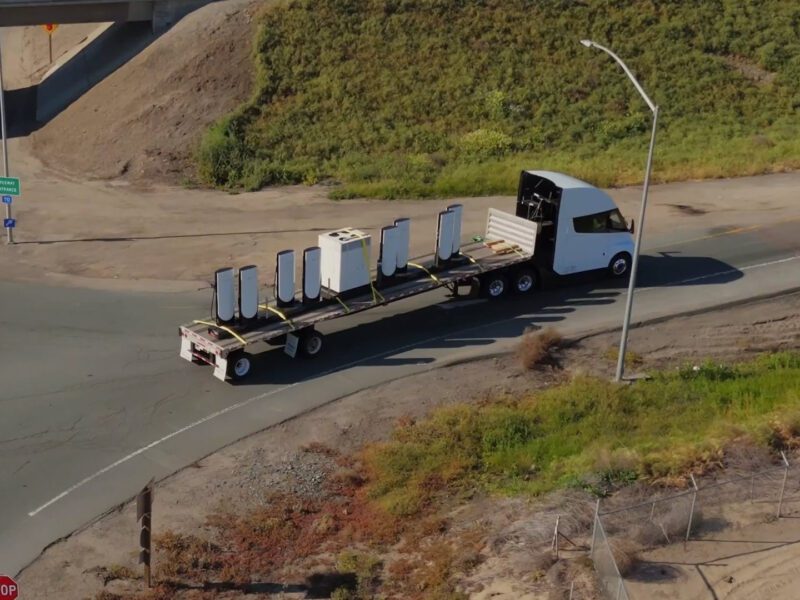
Tesla pushes forward with foldable superchargers
A standout story in the EV world this week comes from Tesla, which announced the rollout of foldable Supercharger units. This innovation promises a faster and far more affordable deployment process for charging stations. The company says the foldable design allows quicker setup, reduced installation costs, and easier expansion in both metropolitan and regional areas. It’s a move with significant implications — one that positions Tesla not only as the dominant EV automaker but also as an infrastructure provider capable of scaling faster than anyone else.
These modular chargers will enable Tesla to blanket high-traffic routes and new territories in record time, addressing one of the key barriers to widespread EV adoption: charging accessibility. For Australia, where long-distance travel and sparse population density have historically made EV planning difficult, this represents a tangible leap toward nationwide coverage.
EV demand skyrockets as Australians embrace electric life
At the consumer level, enthusiasm for EVs is surging. A recent feature captures this cultural shift with the now-common refrain: “I bought two, and another for the parents-in-law.” It’s not just new car buyers either — interest in used EVs has more than doubled. Rising petrol and diesel prices have pushed many Australians to reconsider EVs as both an environmental and economic choice. Auction houses report a “hockey-stick” jump in second-hand EV demand, an indicator that electric mobility has entered the mainstream.
This consumer wave is being backed by visible signs of change on city streets and at major events. At Everything Electric Sydney 2025, attendance and sales inquiries shattered previous records, confirming that electric models from Tesla, Hyundai, MG, and BYD are now household names.
Renault makes a comeback with the Scenic E-Tech
Renault has officially returned to the Australian EV market with the new Scenic E-Tech, boasting 625 km of range and vehicle-to-grid (V2G) functionality — allowing owners to feed power back into the grid or their homes. The Scenic’s arrival comes at a time when mid-size EV SUV competition is fierce, yet its pricing and energy features may attract families looking for practicality without compromise. More importantly, it signals renewed manufacturer interest in Australia, a market that was previously sluggish in EV uptake.
Electric trucks take centre stage — and may even save farms
Another powerful narrative this week spotlights electric freight transport. Amid geopolitical tensions and oil price volatility, electric trucks are emerging as a vital economic buffer. Reports highlight how electric trucks could “save the farm,” mitigating the risks associated with fuel dependency in Australia’s freight-reliant economy. With models from Volvo and other major manufacturers entering service, the transition to electric heavy vehicles could reshape rural logistics and reduce operational costs.
Jay Leno also added celebrity weight to the discussion, featuring the Tesla Semi in a new video that revealed massive running cost savings. The Semi, already in production, is delivering real-world results with drastically lower energy and maintenance costs compared to diesel counterparts.
Toyota and Volkswagen face new challenges
Not every headline was celebratory. Volkswagen announced a recall of nearly 100,000 EVs due to high-voltage battery issues that can cause performance loss and potential fire risks. The recall underscores the complexity of scaling battery technology safely and efficiently.
Meanwhile, Toyota’s only dedicated electric vehicle, the bZ4X, was put under renewed scrutiny. In a new video review, long-time Toyota supporters questioned whether the refreshed model can truly compete with rivals such as the Tesla Model Y, Hyundai Ioniq 5, and MG4. While improved over its initial iteration, many drivers still view Toyota as a laggard in pure electric innovation despite its hybrid legacy.
MG breaks new ground with an all-electric ute
On the brighter side, MG continues to ride a streak of momentum. The company has received regulatory approval for its first all-electric ute in Australia — a 325 kW powerhouse that promises to meet the country’s love affair with utility vehicles while producing zero tailpipe emissions. Its towing capability, described as sufficient to “tow your boat,” directly targets one of the core arguments that skeptics often raise about EV practicality. MG’s success with previous EV models like the MG4 and ZS EV gives confidence that the ute could quickly find a market niche.
Charging infrastructure expands into everyday life
Infrastructure stories completed this week’s picture of progress. Melbourne is now home to the Southern Hemisphere’s largest residential EV charging hub, a massive installation serving high-rise residents. The project demonstrates how body corporates and strata committees can adapt parking structures to support multi-vehicle charging systems. As urban density increases, such retrofits are becoming essential to sustain EV growth.
The collective momentum
Taken together, these developments reflect a defining moment for Australia’s electric future. Modular superchargers simplify infrastructure growth, electric utes and SUVs broaden the market, and consumer enthusiasm breaks records at every level. Challenges remain — from recalls to range anxiety — but the momentum is unmistakable. What was once niche has gone mainstream, and by 2026, the electric vehicle transformation is not just a prediction; it’s the new normal on Australian roads.