
Global EV Landscape 2024: Growth, Innovation, and the Race for Efficiency
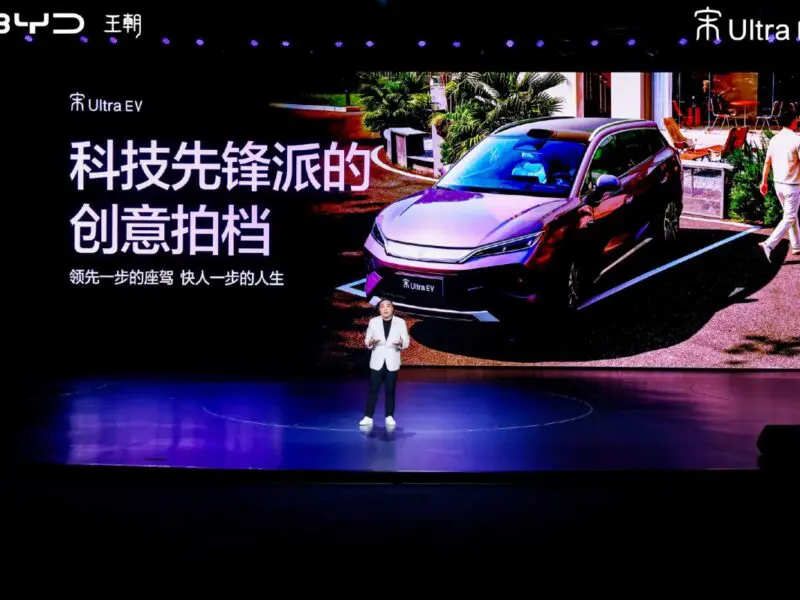
Electric Vehicle Industry 2024 Overview
The global electric vehicle (EV) landscape in 2024 continues its relentless expansion. Across every major market — from North America and Europe to China and Southeast Asia — the pace of EV adoption has exceeded expectations. The convergence of technological innovation, supportive public policy, and shifting consumer awareness of sustainability have led to the most competitive year in the EV space to date.
Following a record-breaking 2023, the first half of 2024 saw a surge in EV deliveries as manufacturers scaled production and new models entered the market. Major automakers expanded their EV lineups, transitioning flagship internal combustion engine (ICE) vehicles into battery-electric versions while startups pushed boundaries with design and software-driven features.
Record Sales and Market Share Expansion
According to recent industry reports, global EV sales in the first quarter of 2024 grew by more than 35% compared to the same period in 2023. China still leads all regions in volume, accounting for nearly two-thirds of total EV sales, while Europe remains the second-largest EV market. North America, propelled by new subsidies and an expanding charging network, logged the fastest growth rate among mature markets.
This acceleration highlights the stabilization of the EV sector following supply chain bottlenecks and semiconductor shortages that plagued previous years. As battery costs per kilowatt-hour continue to decline, EV prices are approaching parity with traditional vehicles in multiple segments.
Battery Innovations and Energy Density
Battery technology remains the cornerstone of the EV revolution. Manufacturers are investing heavily in improving energy density, longevity, and recyclability. In 2024, breakthroughs in lithium iron phosphate (LFP) and solid-state battery research have made their way into pre-production testing across several brands. These advancements promise improved range and faster charging times while also addressing concerns around resource scarcity and mining ethics.
Global battery manufacturing capacity is expected to triple by the end of 2025. New gigafactories in Germany, India, and the U.S. are positioned to ease dependency on China-dominant supply chains. Recycling programs for battery materials such as nickel, cobalt, and lithium are also scaling to create closed-loop systems that strengthen sustainability and lower environmental impact.
Charging Infrastructure Expansion
The success of EV adoption relies not only on vehicles themselves but also on the availability and reliability of charging infrastructure. Governments and private enterprises are significantly ramping up deployment of ultra-fast chargers across highways, urban centers, and rural areas.
In 2024, the U.S. National Electric Vehicle Infrastructure (NEVI) program achieved tangible momentum, with thousands of new high-voltage chargers operational along major routes. Similarly, Europe’s Combined Charging System (CCS) standard continues to unify the continent’s public charging protocols, while China’s network remains unmatched in density and accessibility.
Emerging markets in Southeast Asia, Latin America, and Africa are beginning to see pilot programs that couple renewable energy installations — such as solar carports and microgrids — with charging networks. This renewable integration supports energy resilience and reduces dependence on fossil-derived grid electricity.
Software and Vehicle Intelligence
The sophistication of digital systems in modern EVs is now a defining competitive differentiator. Large automakers and startups alike are integrating advanced driver-assistance software, over-the-air (OTA) firmware updates, and enhanced infotainment ecosystems that mirror consumer electronics experiences.
AI-powered route optimization helps maximize range, while predictive maintenance systems monitor component health in real time. These data-driven applications reduce costs, improve safety, and enhance customer satisfaction. Moreover, vehicle-to-grid (V2G) technologies are being piloted globally, enabling EVs to provide energy back to the power grid during peak demand.
Sustainability and Policy Momentum
Governments continue to shape the trajectory of electrification through subsidies, regulations, and infrastructure grants. Several European nations have reaffirmed their 2035 ICE vehicle phase-out deadlines, while others — including the United Kingdom and Japan — have refined standards for lifecycle emissions accounting.
In the U.S., new tax credits, tied to local manufacturing and raw material sourcing, are strengthening domestic supply chains. China’s tightening of EV subsidy structures is pushing automakers to enhance product quality and cost efficiency rather than rely on incentives alone.
Meanwhile, corporate sustainability pledges are setting internal targets for net-zero operations, including the electrification of logistics fleets and employee transport. The cumulative effect of these pushes is tangible: emissions in the transport sector are finally beginning to plateau and, in some markets, decline.
Consumer Shifts
The modern EV consumer has evolved rapidly. Early adopters focused on performance and environmental benefits, while mainstream buyers in 2024 emphasize practicality, affordability, and brand trust. Compact crossovers remain the most popular EV segment globally, but there is rising interest in smaller urban vehicles and electric pickups — especially in North America.
Range anxiety, once a persistent psychological barrier, continues to fade as public charging improves and confidence grows. Education campaigns highlight total cost-of-ownership advantages and long-term maintenance savings, further enlarging the potential customer base.
Looking Ahead
The EV market’s trajectory is not without challenges. Battery material sourcing, charging grid strain, and software standardization remain pressing issues. However, collaboration across automakers, governments, and the energy sector is stronger than ever. The pursuit of greener transport has evolved into a defining industrial shift — one that combines environmental responsibility with technological ambition.
By the end of the decade, electric vehicles are expected to represent more than half of global new car sales. The momentum visible in 2024 marks more than a trend; it signals the realization of an irreversible transformation in how mobility, energy, and technology intersect to define a sustainable future.