
 Buy & Sell
 All EV Sales
 Explore
 Account
 Back to News
 Charging Toward Tomorrow: The Latest Developments from the EV World
In the ever-evolving landscape of electric mobility, the past weeks have been a whirlwind of innovation, competition, and expansion across the global EV industry. Automakers, charging infrastructure providers, and policymakers are all racing to define the speed and shape of this transformation. From new vehicle launches to advances in battery technology and charging infrastructure, the electric vehicle (EV) movement is accelerating faster than ever before.
The Surge of New Models
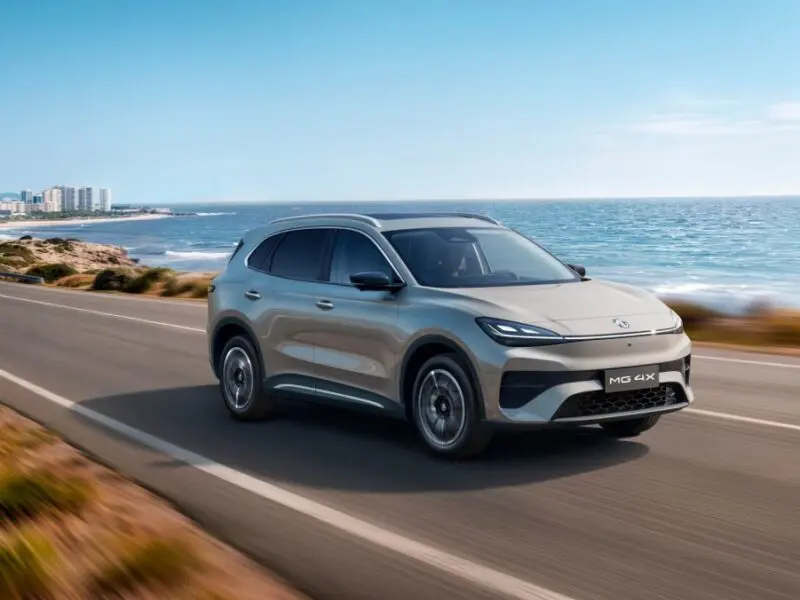
The EV segment is expanding well beyond early adopters, with manufacturers launching new models across price points and categories. Multiple automakers introduced updated compact SUVs and performance sedans featuring improved range and faster charging capabilities. Advances in lithium-iron phosphate (LFP) battery chemistry are enabling more affordable options without compromising reliability. Similarly, premium marques are embedding longer-range solid-state prototypes into their upcoming fleets, signaling that luxury and sustainability can coexist seamlessly.
The rise of urban-focused EVs—small yet technologically rich vehicles designed for dense cities—also made headlines. Compact mobility solutions equipped with regenerative braking and smart connectivity features are gaining popularity in Europe and Asia, where urban congestion and sustainability goals are top priorities.
Charging Networks Expand and Adapt
While automakers refine their lineups, charging infrastructure continues to evolve rapidly. Public and private operators are working to build out dense, interoperable charging networks. The emphasis has increasingly shifted toward ultra-fast chargers capable of delivering 300–400 kW per session, drastically cutting charging time for the latest EVs. Partnerships among utilities, infrastructure providers, and fleets are driving this growth, particularly along long-distance transport corridors.
Recent announcements also emphasize the role of vehicle-to-grid (V2G) technology. This innovation allows EVs to serve as mobile energy storage units—feeding electricity back into the grid during peak demand. Countries aiming to stabilize renewable-heavy power systems view this as a crucial component in future smart grids, merging sustainable transportation with energy resilience.
Policy Pushes and Incentive Shifts
Governments continue to refine incentive frameworks as EV adoption accelerates. Several regions adjusted tax credits or rebates to favor domestic manufacturing and battery supply chain localization. This move is intended to strengthen national economies while reinforcing sustainability missions. Meanwhile, stricter emissions regulations are pushing manufacturers to accelerate zero-emission timelines.
Infrastructure funding announcements signal a long-term commitment to electrification: significant investments are being earmarked for installing urban chargers, upgrading electrical grids, and supporting heavy-duty EV deployment. These policy milestones highlight the intersection between mobility and climate goals—framing EVs not just as consumer products but as integral elements of energy transition strategies.
Battery Innovation and Resource Dynamics
Battery technology remains central to the EV conversation. Researchers and manufacturers are converging on methods to improve energy density, reduce dependency on critical minerals, and enhance recyclability. Progress on sodium-ion and solid-state batteries shows promise in diversifying supply chains and reducing costs.
However, the sourcing and processing of essential minerals continue to raise sustainability questions. To address this, several automakers are entering direct partnerships with mining firms committed to ethical and low-carbon extraction practices. Efforts to establish closed-loop recycling systems are also intensifying, ensuring that end-of-life batteries contribute to new production rather than landfill waste.
The Rise of Electrified Fleets
Another sector gaining momentum is commercial electrification. Delivery and logistics companies are rapidly adopting electric vans and medium-duty trucks to meet emission targets and lower operation costs. Fleet managers are increasingly considering total cost of ownership (TCO) advantages, with EVs proving cost-competitive despite higher upfront investments due to lower maintenance and fuel expenses.
Municipal fleets—from buses to service vehicles—are also transitioning, aided by targeted government funding. These widespread deployments not only cut emissions but also enhance public familiarity and trust in electric mobility technologies.
Global Market Perspective
Regionally, North America continues to focus on infrastructure and consumer incentives, while European countries prioritize regulatory benchmarks and inter-country charging interoperability. In Asia, particularly in China and India, the EV market’s dynamism stems from both government mandates and consumer enthusiasm for cost-efficient, connected vehicles.
Emerging markets in South America and Africa are also starting to see early-stage EV introductions, with a focus on electrified two- and three-wheelers that align with local mobility patterns. These shifts indicate that while the pace differs by region, electrification is a truly global movement.
Challenges and the Road Ahead
Despite impressive progress, challenges remain. Battery costs, though declining, still make entry-level EVs more expensive than internal combustion engine (ICE) equivalents. Charging accessibility—especially for those without home charging options—remains an ongoing issue, highlighting the need for equitable infrastructure planning.
Still, the mood across the industry is one of optimism rooted in tangible progress. With improving technology, robust policy support, and growing consumer confidence, the electric mobility revolution is gaining irreversible momentum.
Conclusion
The feeds from across the EV sector paint an inspiring picture: one of innovation, responsibility, and collective determination. The rapid convergence of technology, infrastructure, and policy underscores that the electrification of transport is no longer a future dream; it is today’s reality, evolving before our eyes. Whether through refined battery science, rapid-charging corridors, or the launch of new models that broaden access and appeal, the story of electric vehicles continues to energize the global narrative of sustainable progress.
All EV Sales Research Team
5/9/2026