
2026 Toyota C-HR EV Review: A Quirky Comeback That Still Feels a Step Behind
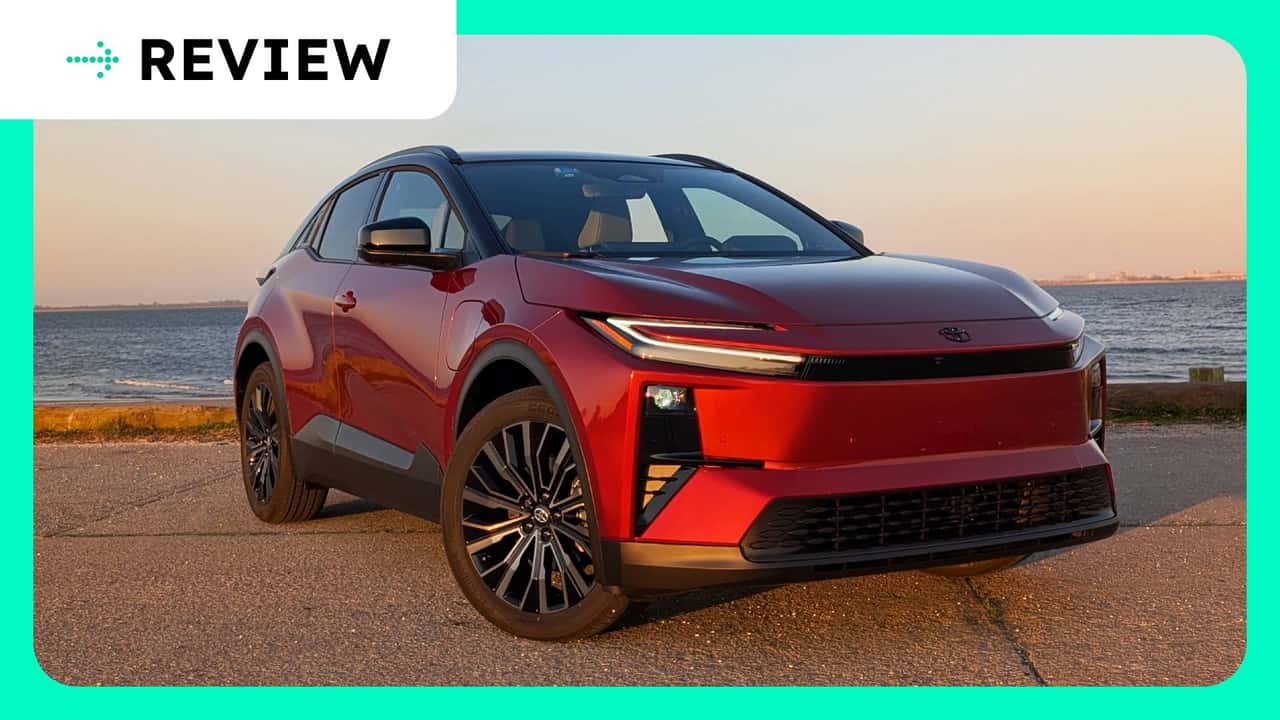
Toyota’s subcompact C-HR is making a return to U.S. dealerships, but this time it’s gone fully electric. Once discontinued in 2022 due to weak demand, the 2026 Toyota C-HR EV reenters a very different automotive world—one where electric vehicles are no longer a novelty but a necessity. Despite the brand’s growing efforts to electrify its lineup, this small crossover finds itself trying to prove its worth in a segment that’s becoming intensely competitive.
Compact Package, Familiar Approach
Slotting below Toyota’s bZ series, the new C-HR EV is a small, all-wheel-drive subcompact crossover aimed at buyers who want a nimble, city-friendly electric option. In a category dominated by front-wheel-drive contenders such as the Nissan Leaf and Chevrolet Bolt, the C-HR sets itself apart by offering standard AWD. It even has a twin—the Subaru Uncharted—built on the same platform and offering similar performance, but with slightly more range.
On paper, the 2026 C-HR brings attractive numbers. A 74.7 kWh battery delivers an EPA-estimated range of 273 miles for the higher trim and 287 miles for the base version. Power comes from dual motors producing 338 horsepower, helping it sprint from 0 to 60 mph in 4.9 seconds. Starting at $38,595 (and just over $41,000 as tested), it sits neatly in the increasingly crowded sub-$40,000 EV zone.
Charging and Range: Competitive but Not Groundbreaking
During real-world testing, the C-HR’s range figures proved reliable. Observed efficiency hovered around 3.7 miles per kWh during highway drives, rising to about 5.0 miles per kWh in city use. That’s respectable but not class-leading. Charging performance, too, is solid if not spectacular. Toyota’s official estimate of 10–80% in 30 minutes matched observed results—a 15–80% session took 26 minutes, adding roughly 191 miles of usable range. A full charge to 100% required 48 minutes.
While those times don’t rival the lightning-fast speeds of EVs with 800-volt systems like the Hyundai Ioniq 5, they’re still within the realm of practicality. The C-HR’s consistent charging curve—maintaining high power delivery through 60% state of charge—helps make the experience predictable and convenient for everyday use. Once charged, range anxiety rarely becomes an issue, especially in regions like the New York metropolitan area where charging networks have expanded rapidly.
Driving Experience: Fast Yet Flawed
On the road, the C-HR is lively and engaging. Its compact footprint and AWD traction allow for spirited acceleration and confident cornering. With traction control off, there’s even a dose of front-wheel drama reminiscent of old-school hot hatches. However, the ride quality doesn’t quite deliver the refinement expected of a modern EV. The suspension transmits sharp jolts over bumps and feels unsettled at lower speeds. At highway pace it improves, but the ride still can’t match the poise of rivals like the Ioniq 5 or Chevrolet Equinox EV.
Handling, on the other hand, emerges as one of the C-HR’s stronger suits. The shorter body makes it nimble in tight turns and urban environments. Unfortunately, steering feel disappoints—it lacks precision and road feedback, leaving the driver somewhat detached from what’s happening at the front wheels.
Cabin Tech and Ergonomics Miss the Mark
Inside, Toyota’s design and quality feel serviceable but dated, especially in a market where software and user experience are increasingly central to an EV’s appeal. The 14-inch central display looks impressive but runs on an older infotainment system that predates the brand’s latest “Arene” platform featured in the new RAV4 and Lexus EVs. That means slower response times, occasional lag, and a general absence of modern EV-focused features such as built-in route planning with charging integration.
Wireless Apple CarPlay and Android Auto provide some relief for tech-savvy drivers, and growing smartphone-based EV navigation tools like Apple Maps’ EV routing can fill the gaps. Still, the lack of native smart features makes the C-HR feel like it’s lagging behind the competition.
Ergonomics add another layer of frustration. The positioning of the digital gauge cluster is problematic—the steering wheel obscures key driving information like speed and battery percentage for many drivers. Adjusting the seat and steering column can partially fix this, but at the expense of driving comfort. The overall layout feels like an afterthought rather than a driver-first design.
Market Position: A Tough Sell in a Crowded Field
The 2026 C-HR EV enters a segment that’s maturing quickly. Buyers now expect quicker charging, cutting-edge software, and refined ride quality—all areas where Toyota’s new electric crossover struggles to stand out. Alternatives such as the Hyundai Ioniq 5, Chevrolet Equinox EV, or even a used Tesla Model 3 offer more capability and polish for similar money. Meanwhile, Toyota’s own gasoline-powered RAV4 continues to feel more modern and practical for less, underlining how uneven the brand’s transition to full electrification remains.
Verdict: Progress, but Not Enough
Toyota deserves credit for refining the basic EV formula compared to its earlier efforts. The C-HR’s performance, charging consistency, and energy efficiency all mark real progress over the company’s first-generation electric vehicles. Yet, its outdated infotainment system, questionable ergonomics, and harsh ride prevent it from being a truly convincing all-around package.
As a city-friendly crossover, it’s competent and enjoyable in doses. But in 2026, being merely competent isn’t enough. For the same or less money, buyers have access to EVs that feel faster, smarter, and more sophisticated. The new Toyota C-HR EV might be a decent step forward for the company—but for consumers, it’s a reminder that this brand’s electric journey is still very much a work in progress.